
 E-Paper



US Open: Slow court forces Federer to change his game
The DecoTurf courts at Flushing Meadows are resurfaced every year and a court generally speeds up slightly during the tournament because the top layer of acrylic paint, which contains sand, gets worn away as more and more matches are played on it

 Prefer HTon Google


Roger Federer has a new game. On his way to the third round of the US Open, the five-time champion has had to play a different kind of tennis than what is usual for him.
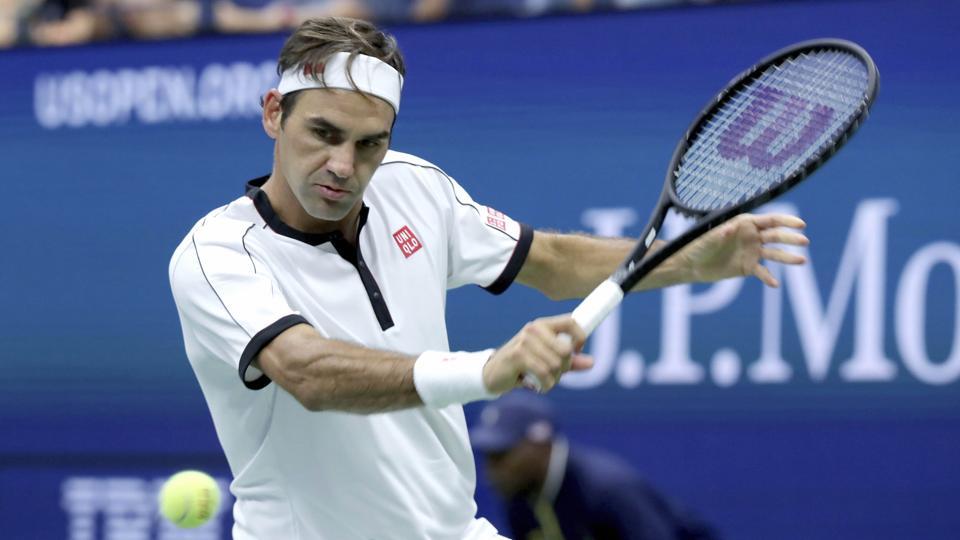
A game where he is looking for the winner immediately, instead of controlling the flow, crafting rallies, and waiting for the right moment.
This risky approach has cost the World No 3; in his two victories so far, he has had to make his way back from being a set down against opponents ranked far below him—Indian qualifier Sumit Nagal (190) in the first round and Bosnian Damir Dzhumhur (99) in the second—spending around two-and-a-half hours on court in each outing.
In those matches, Federer hit 12 and 16 aces respectively, higher than his overall US Open per match average of 11.1; his double faults too have gone up simultaneously from an overall tournament average of 2.8 to 7 in the first match and 4 in the second. He hit 62 and 58 winners respectively, also considerably higher than his per match average of 48 last year at Flushing Meadows. Again, his unforced errors too have gone up. Against Nagal it was 57 and against Dzhumhur it was 45, both above his last year’s per match average of 42.2. “I didn’t expect to hit 15-20 unforced errors which is basically an entire set, donated,” he said.
Need to adapt
Immediately after the second- round match, Federer revealed just why he has had to adapt.
“It’s hard court, but the ball is not even bouncing,” he said. “It’s a pretty dead court in some ways. I do believe it’s slower than it has (been) in previous years. I’m not sure if it’s the balls or the speed of the court, but it’s definitely not on the faster side.”
At 38, the 20-time Grand Slam winner, who is closely followed by Rafael Nadal with 18 Slams and Novak Djokovic with 16, is not getting any quicker on court. A slow surface, which brings with it long rallies and seemingly endless slugging from the baseline, does not suit Federer. In fact, it never did—just one of his 20 slam wins have come at the French Open, the slowest surface at the Majors.
“I’m really disappointed about the surface here: it’s like playing on clay,” Federer told German media after the post-match press conference after his second round win.
Federer finds himself already out of his comfort zone in a tournament he has won five successive times from 2004 to 2008, but hasn’t won since.
The courts at the Arthur Ashe Stadium underwent changes before last year’s tournament, and tournament director David Brewer had said then that it was deliberately made a little slower after players had complained that it was too fast.
“In the general feedback we’ve gotten from players the last couple of years, a range of players, both male and female, the commonality we seemed to have been getting was: The courts were sort of gradually creeping up in speed,” Brewer had said in an interview to ESPN last year. “We just felt we needed to address that a little bit.”
The base of the courts was changed from asphalt to cement but Brewer denied that the courts had slowed down because of that.
“The amount of sand or other granular items in the surface’s top layer can be adjusted to make a court faster,” he had said during the 2018 US Open.
On Wednesday, Federer said: “I was also told they were going to make it faster than last year. I don’t feel it that way yet. It’s a bit flat, it’s not crazy bouncy, it doesn’t skid like mad.”
The DecoTurf courts at Flushing Meadows are resurfaced every year and a court generally speeds up slightly during the tournament because the top layer of acrylic paint, which contains sand, gets worn away as more and more matches are played on it.
Higher temperature
Another factor that can speed up hard courts is temperature. Higher temperatures help the ball travel faster through the air and the mercury at New York has stayed below 30°C so far, compared to above 33°C during most parts of the tournament last year and around 32°C the year before.
“I’ve just got to figure out how to play and how to use the conditions to my advantage,” Federer said on Wednesday.
“This was like an indoor match so it’s great for ball striking, for big servers,” Federer said.
Was he hinting at advantage John Isner, USA’s best hope in men’s singles?


