
 E-Paper



'Long queues, no water': Attendees describe experience at AI Summit in Delhi
Attendees at Delhi's AI Impact Summit flagged long queues, closed gates and lack of water, with many raising concerns about poor management.

 Prefer HTon Google


The opening day of the AI Impact Summit 2026 in New Delhi saw massive crowds and strong participation, but for many attendees, conversations quickly shifted from artificial intelligence to complaints about long queues, restricted access, and alleged mismanagement.
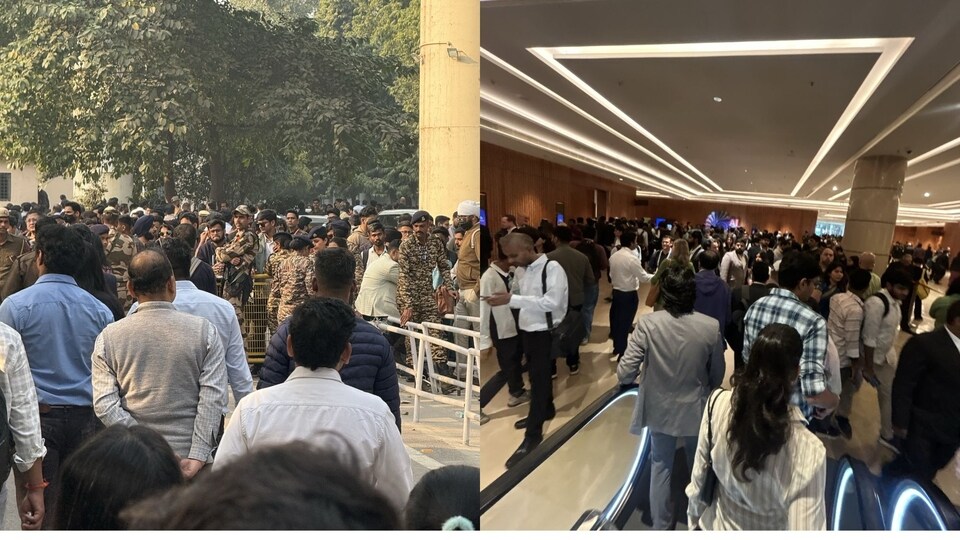
Hosted at Bharat Mandapam, the summit has drawn policymakers, technologists, founders, and industry leaders from around the world. However, several visitors took to X to describe logistical challenges that made it difficult to navigate the venue.
One attendee, Kritika Kapoor, wrote that the event was “too crowded,” adding that people could barely move around. She also criticised the lack of visible AI showcases, calling it “just another well-marketed event.”
Ashutosh Ranka, an IIT Kanpur alumnus, said he was proud of India’s strides in artificial intelligence but was disappointed by the organisation. “I came here to attend the Summit. Today was the first day. And the gates were suddenly closed at 3PM (heard some were closed by 12PM). Citing heavy crowd inside. Went from gate to gate, no luck. Thousands of people left stranded outside. Including exhibitors.” he wrote.
“India is perfectly capable of hosting such summits smoothly. Just need right people planning the event properly. I don’t get why we still struggle,” he added.
Punit Jain, founder of Reskill, questioned the planning in a sharply worded X post. Listing “7 AM queues” and a “12 PM full evacuation,” he alleged that exhibitors, delegates, and startup founders were left outside without water or clear communication.
“Media shows celebration. Ground reality was chaos. If access was limited to select high-value guests, just say it upfront. Don’t mobilize the ecosystem and then displace them. This is not how we build India’s AI future,” Jain wrote.
Another attendee, Yavanika Shah, described heavy traffic, long queues, and even “cash only food counters” at the venue. “Can we maybe deploy some AI to manage… the summit?” she quipped.
Dhananjay Yadav, co-founder and CEO of NeoSapien, alleged that the first day turned into a “painful” experience for his team. According to him, security personnel sanitised and cordoned off areas ahead of PM Modi’s visit, forcing them to vacate their booth.
Yadav claimed that there appeared to be a lack of coordination among security staff and said his company’s AI wearables later went missing. “We paid for flights, accommodation, logistics and even the booth. Only to see our wearables disappear inside a high-security zone,” he wrote, calling the incident “extremely disappointing.”
(Also Read: Bengaluru founder says he couldn’t access own stall at AI Summit: ‘May set up mini-booth at Connaught Place cafe 😂’)
AI Impact Summit 2026
The summit, described as one of the world’s largest AI gatherings, will continue until February 20. According to official details, it features around 300 pavilions and live demonstrations organised across three themes: people, planet, and progress.
The accompanying expo includes participation from 13 countries, such as Australia, Japan, Russia, the United Kingdom, France, Germany, and Italy, reflecting growing international collaboration in the AI ecosystem.


