E-Paper



Nepal flood: Green house owner calls it a ‘second birth’ after surviving raging waters
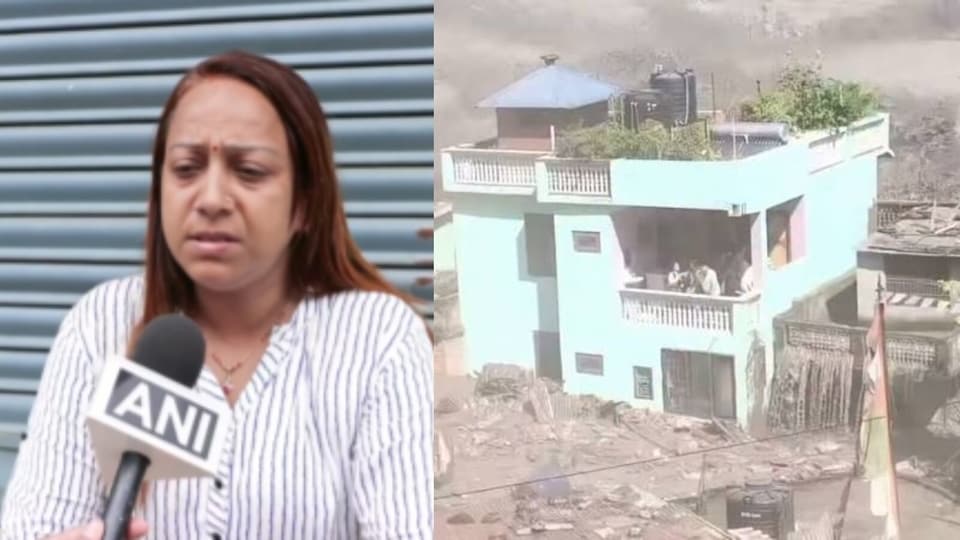
The owner of the green house that survived Nepal’s flash floods said the ordeal had felt like a “second birth” for the family.

 Prefer HTon Google


A green-coloured house in Nepal has drawn widespread attention online after it appeared to remain standing even as a powerful flash flood carrying huge boulders, mud and debris swept through the surrounding area.
(Also read: Concrete frame, mud ramp: How Nepal's ‘green house’ survived devastating flash floods)
Flash floods struck parts of Nepal early on Wednesday, August 26, sending a massive surge of freezing water, rocks and debris through villages and towns. Videos from the affected areas showed the scale of destruction, with the floodwaters appearing taller than some buildings as they rushed through settlements.
Amid the devastation, visuals of one green house in Trishuli caught social media users’ attention. The structure could be seen standing amid a violent torrent of muddy water and rocks, while the surrounding landscape appeared severely damaged.
‘It is like a second birth for us’
Speaking to news agency ANI, Laxmi Pandey, the owner of the house, recalled the terrifying moments as floodwater entered the building.
“We feel lucky to have survived. It is like a second birth for us. We had climbed to the upper floor as flood water had entered my house. Even during the Nepal earthquake, we felt very strong tremors, and the nearby houses collapsed. We were rescued and saved by our neighbours,” Pandey said.
Check out the clip here:
As videos of the house circulated widely, many social media users wondered how the building had managed to withstand the force of the debris-laden flood.
How did the house survive?
An architecture enthusiast on X offered a possible explanation, pointing to the building’s construction, location and the way the floodwater moved around it.
“This lone structure took a direct hit from a massive debris flow, a dense slurry of mud and car-sized boulders moving at highway speeds, and refused to fall,” the X user said.
According to the explanation, unlike many houses in Himalayan valleys constructed using unreinforced stone masonry, the green house reportedly had a reinforced concrete frame.
(Also read: Nepal Army rescues young man stranded on rooftop amid deadly flash floods)
“Continuous steel rebar tied the columns, beams and foundation together into a single rigid skeleton,” the user explained.
Reinforced concrete structures use concrete to withstand compression and steel bars to handle tensile forces, helping the building resist pressure from different directions.
Position may have also helped
The enthusiast also suggested that the house was positioned slightly away from the deepest central channel of the debris flow and stood on marginally higher ground.
Its compact shape may have caused the rushing mass to split and move around both sides of the structure. Mud deposited around the house then “quickly built a natural ramp”, which may have helped deflect subsequent surges away from the building.
Take a look here at the post:
While the explanation offers possible structural reasons for the house’s survival, its remarkable endurance amid the flood has made the footage one of the most striking visuals to emerge from the disaster.