E-Paper



Super Typhoon Yagi exposes China’s cashless society flaws as people flock to charge phones. Watch
In Hainan, citizens created a generator station for phone charging after Super Typhoon Yagi. The incident raised concerns about cashless society risks.

 Prefer HTon Google


A viral video shows how enterprising citizens in China set up a generator in the marketplace to allow people to charge their phones after Super Typhoon Yagi disrupted power supply in parts of the country. The video, filmed in the Chinese island province of Hainan, shows a large crowd gathered around a small stall, waiting for their phones to power up.
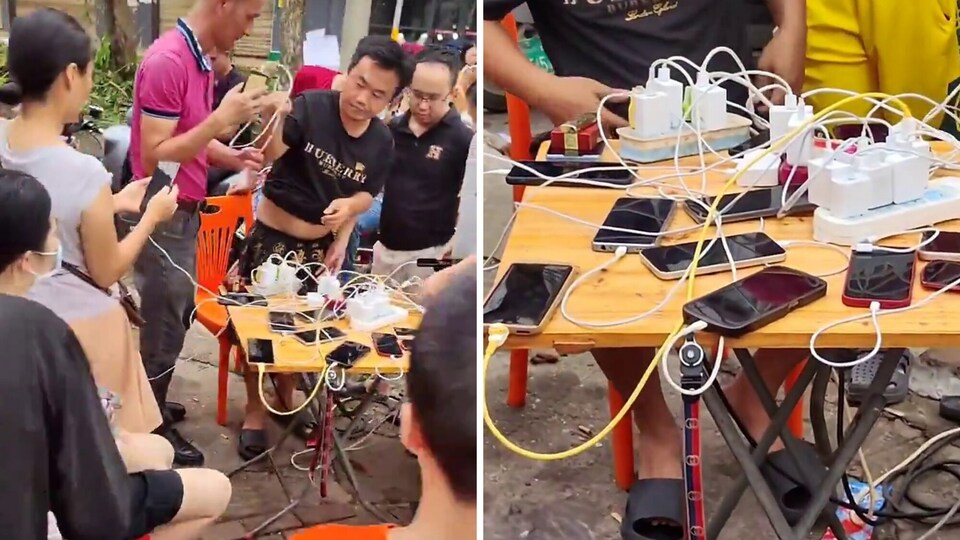
The video was shared on the social media platform X with the caption: “Downside of cashless society. After the typhoon, the water and electricity were cut off, Chinese people desperately wanted to charge their phones.”
The X account that posted the video explained that China’s bid for a cash-free society has meant that people don’t carry banknotes. Instead, all their money is in their mobile phones - and any disruption to power supply exposes huge flaws in this cashless society.
“Because all your money is in your mobile phone. Without a mobile phone, you can’t even buy a piece of bread,” the X account explained.
Take a look at the video below:
While some people on social media applauded the enterprising spirit of the citizens who set up the generator, others said it highlighted the downside of a cashless society where people need phones even to buy essentials like bread.
According to The Guardian, less than one year ago, Chinese state media was calling it one of the world’s top countries for cash-free transactions. Xinhua even reported cash had dropped to just 3.7% of the total money in circulation as more and more people turned to payments apps like Alipay and WeChat pay.
Super Typhoon Yagi made landfall in Hainan on Friday. Known as Makar in China, it brought strong winds to the island and disrupted the supply of essentials like water and electricity.