E-Paper



Optical Illusions: Understand how they fool your brain with these 5 examples
Find out how optical illusions can trick your brain with the help of these five examples.

 Prefer HTon Google


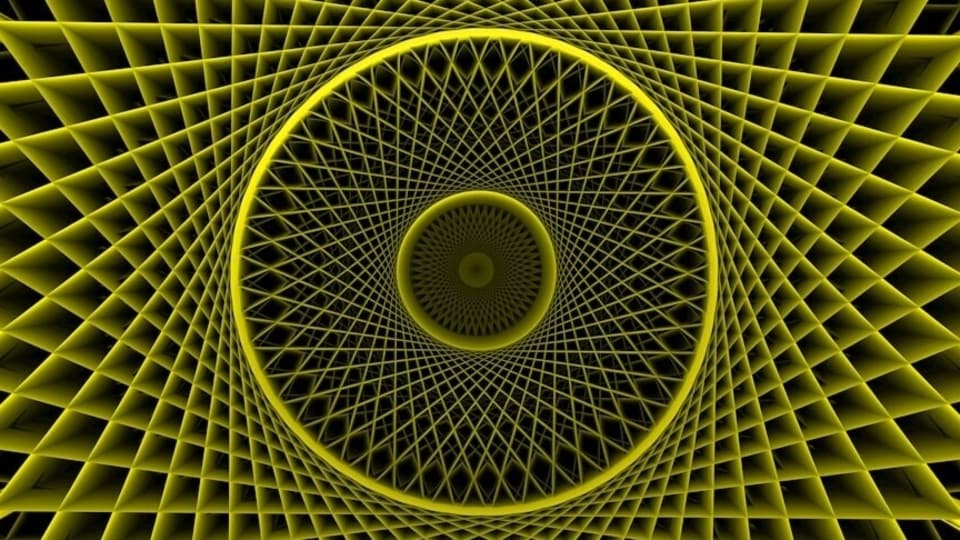
Have you ever looked at an image and doubted what your eyes were telling you? Well, you are not the only one because such optical illusions commonly take place when your brain wrongly interprets what your eyes see. This is not a worrying fact because such illusions occur for various reasons, like when patterns are repeated, there is extra contrast, or due to mental shortcuts that your brain may be used to taking. There are several examples of optical illusions in everyday life, like the moon illusion, mirage, converging lines of roads or railroads, and more.
Also read: TikTok's new obsession: All you need to know about the ‘Nicki Minaj pose’
Types of optical illusions
As per science, optical illusions are put into three main types:
Literal illusions: They happen when multiple similar images create something unexpected in the brain.
2. Physiological Illusions: Makes the brain see something which is not there in reality due to overload in the visual system.
3. Cognitive optical illusion: Happens when the brain uses assumptions to create a wrong perception.
Still confused? Here are seven examples that can help you understand optical illusions in a better way
5 examples of optical illusions
1. Lilac illusion or Pac-Man illusion
Jeremy Hinton came up with this illusion, which makes a green dot appear as fading purple dots, but what? The illusion takes place due to a combination of the phi phenomenon and negative afterimages, which reflect how the brain can cover color gaps.
2. Cornsweet illusion
Have you ever felt that two areas of identical colors look completely different? It happens due to a border of opposing gradients. This is due to top-down processing, where the brain uses light to understand whatever is in front of your eyes.
3. Scintillating Starburst
The Scintillating Starburst is designed using overlapping polygons into wreath-like patterns. When you take a look at its image, you will see bright rays of light emerging from the center of the image. They are formed near the intersection points on the outer peaks of each wreath.
4. Hermann grid
When you take a look at the image of a Hermann grid, the white intersections between the evenly shaped black boxes appear as gray blobs. This illusion is sparked based on how retinal ganglion cells understand contrast, which researchers are still understanding
5. Curvature blindness
Wavy lines in the image suddenly appear as zigzags in areas of high contrast. The illusion hints that your brain puts angular recognition as a priority over the curves where they meet.
All these types of illusions make us understand that the Optical illusion is not just any brain trick. They tell how our brain alters reality before we see something carefully, which proves that perception isn't always the reality.
FAQs
What is the main cause of optical illusion?
Optical illusions happen based on how the human brain interprets visual information.
2. What does it mean if you can see an optical illusion?
Seeing an optical illusion means your brain is interpreting visual information differently from reality.
3. What triggers an optical illusion?
Optical illusions are caused by a mix of sensory input and how the brain understands that input.
4. What is the psychology behind optical illusions?
Optical illusion takes place by exploiting how our visual system processes information, altering what we see.