E-Paper



After weeks of hostilities, US-Iran finally seal a temporary ceasefire deal
Iran Foreign Minister Abbas Araghchi credited Pakistan’s Prime Minister Shehbaz Sharif and Field Marshal Asim Munir for their “tireless efforts” to end the war.

 Prefer HTon Google


The United States and Iran have agreed on a two-week ceasefire deal that will end the bombing of Iran and re-open the Strait of Hormuz for maritime traffic, said US President Donald Trump on Wednesday. Trump’s declaration of a ceasefire, which came just hours before a deadline the US President had set for talks with Iran, was subsequently confirmed by Iranian Foreign minister Abbas Aragchi. Pakistan’s Prime Minister Shehbaz Sharif invited Washington and Tehran to restart diplomatic talks on 10 April in Islamabad.
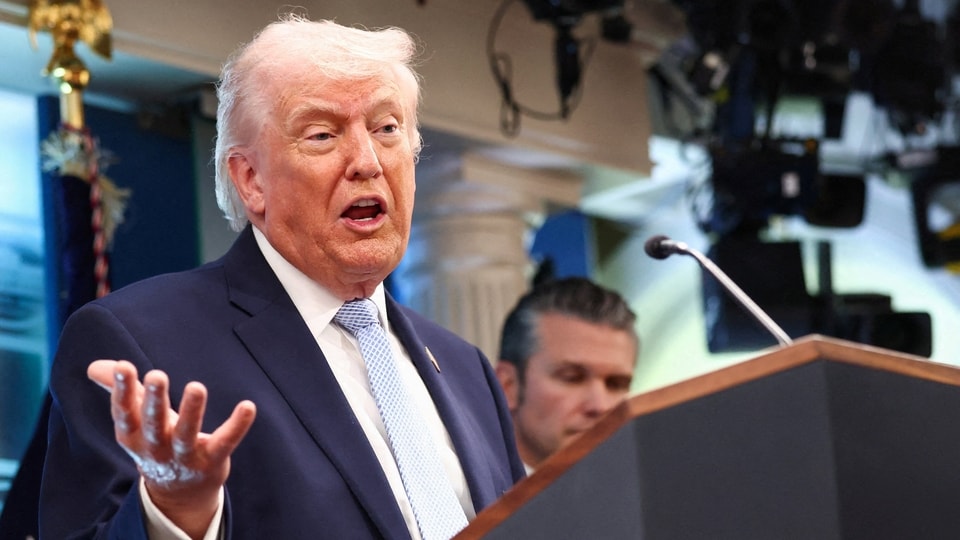
“Based on conversations with Prime Minister Shehbaz Sharif and Field Marshal Asim Munir, of Pakistan, and wherein they requested that I hold off the destructive force being sent tonight to Iran, and subject to the Islamic Republic of Iran agreeing to the COMPLETE, IMMEDIATE, and SAFE OPENING of the Strait of Hormuz, I agree to suspend the bombing and attack of Iran for a period of two weeks. This will be a double sided CEASEFIRE! The reason for doing so is that we have already met and exceeded all Military objectives, and are very far along with a definitive Agreement concerning Longterm PEACE with Iran, and PEACE in the Middle East,” Trump said in a post on Truth Social
Iran's 10-point proposal
The US President added that Washington had received a 10-point proposal from Iran which will form the basis for further negotiations over the next two weeks. Israel also released a statement accepting the ceasefire with Iran.
Iran’s Foreign Minister Abbas Araghchi also credited Pakistan’s Prime Minister Shehbaz Sharif and Field Marshal Asim Munir for their “tireless efforts” to end the conflict, which began on February 28.
“If attacks against Iran are halted, our powerful armed forces will halt their defensive operations. For a period of two weeks, safe passage through the Strait of Hormuz will be possible via coordination with Iran’s armed forces and with due consideration of technical limitations,” said Araghchi in a statement on behalf of Iran’s National Security Council. The senior Iranian diplomat reaffirmed that talks will take place on the basis of Iran’s 10-point proposal to wind down hostilities.
According to Iranian state media, the proposal includes the lifting of primary and secondary sanctions against Iran, the reopening of the Strait of Hormuz, payment of compensation to Iran and a withdrawal of US forces from “all bases and points of deployment within the region”. It also includes US acceptance of Iran’s enrichment of nuclear material as part of its nuclear program. This 10-point proposal appears to differ markedly from an earlier 15-point plan sent by Washington to Tehran, which was believed to have called for Iran to hand over its stockpiles of enriched uranium and publicly commit to not pursuing nuclear weapons development. It also does not include any mention of limiting Iran’s military capabilities, particularly its missile program, which was cited as part of the Trump administration’s decision to start the conflict with Iran.
Did China help mediate ceasefire?
Besides Pakistan, Trump also indicated China may have played a role in nudging Iran to accept a ceasefire deal with Washington.
The outbreak of the conflict in February caused significant disruptions to the global supply of energy after the effective closure of the Strait of Hormuz, which handles roughly 20% of global trade in oil and natural gas. The International Energy Agency termed the upheaval caused by the conflict “the largest supply disruption in the history of the global oil market”. The loss of energy flows pushed crude oil prices beyond $100 per barrel along with increases in the price of refined products like jet fuel, LPG and diesel, the IEA added.
Hostilities between the US and Iran led to military strikes on energy facilities and public infrastructure, including airports, across the Gulf nations. According to India’s civil aviation ministry, roughly 10,000 flights by Indian carriers have been cancelled since the conflict began. The economic impact of higher energy prices and other disruptions to the Indian economy led Moody's, a ratings agency, to cut India’s FY27 GDP growth forecast to 6% from 6.8%.