E-Paper



Any engagement with the Taliban will be based on its actions: Australian envoy
Australia is also concerned about people stranded in Afghanistan following the takeover by the Taliban on August 15. Evacuation flights from Kabul stopped following the withdrawal of all US and foreign troops on August 30 and citizens from several countries, including India, are currently stranded in Afghanistan.

 Prefer HTon Google


Australia is concerned that the new regime created by the Taliban in Afghanistan is not inclusive and has UN-sanctioned members of the Haqqani Network, and any engagement with the group will be based on its actions, Australian envoy Barry O’Farrell said on Thursday.
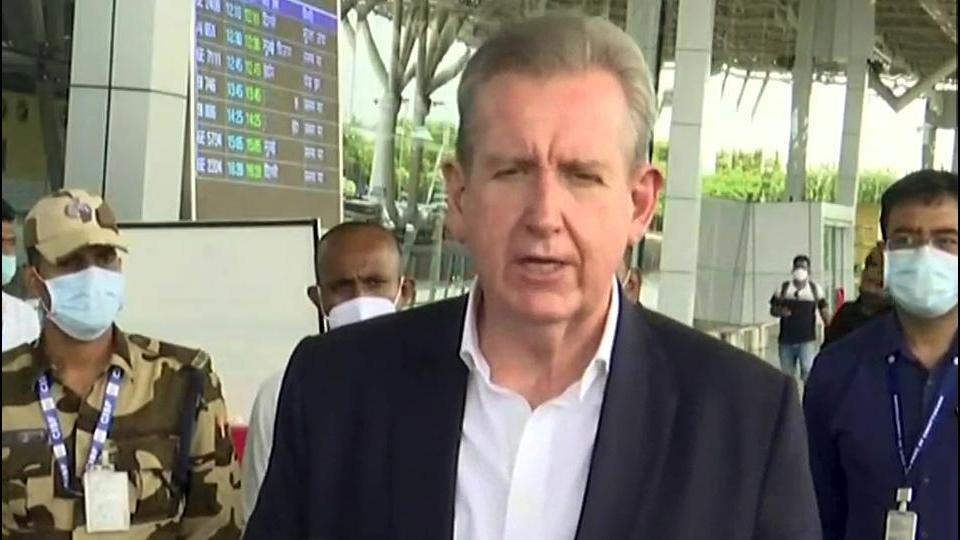
The situation in Afghanistan is expected to figure in the first 2+2 dialogue between the defence and foreign ministers of India and Australia on Saturday, along with other important security issues such as China’s role in the region and the situation in the East and South China Seas.
O’Farrell declined to go into the specifics of the agenda for the 2+2 dialogue but said Australia is looking to the meeting to help deepen the relationship between two “dependable and trusted partners” that are already working closely on strategic issues both bilaterally and in forums such as the Quadrilateral Security Dialogue or Quad.
Australia, he said, is also working with its partners to ensure a “joined up approach in any engagement with the Taliban”, though the current focus is on ensuring that the Taliban permits the safe passage of Australian and other citizens who wish to leave Afghanistan.
Referring to the formation of a 33-member interim setup by the Taliban on Tuesday, O’Farrell said: “The Australian government is deeply disappointed by the lack of inclusion in the government’s make-up, particularly the fact that there are no women, no representatives of the [Shia] Hazara community or other ethnic groups, no members of the previous government and two members of the Haqqani [Network], which is a listed terrorist organisation.”
“The Australian government will engage and focus on advancing Australia’s interests and we will judge the Taliban. We are focused on ensuring that the Taliban ensures safe passage to those people who want to leave, ceases violence, pursues an inclusive government, prevents violent extremism within Afghanistan, prevents terrorism directed outwards from Afghanistan and upholds human rights, particularly for women and girls,” he said.
“We will judge the government of Afghanistan by its actions and this will shape any engagement with the Taliban,” he added.
Australia is also concerned about people stranded in Afghanistan following the takeover by the Taliban on August 15. Evacuation flights from Kabul stopped following the withdrawal of all US and foreign troops on August 30 and citizens from several countries, including India, are currently stranded in Afghanistan.
O’Farrell said Australia has made an initial offer of 3,000 humanitarian visas and is working with the UN commissioner for refugees on such issues. Australia has also evacuated 3,600 people from Afghanistan, though permanent residents, Australian citizens and others with connections to Australia are “keen to leave”, he said.
“We have joined with other nations in calling on the Taliban to uphold its undertakings that international citizens and visa holders will be allowed to depart in a safe and orderly manner,” he said.
Australian foreign minister Marise Payne and defence minister Peter Dutton will be visiting India during September 10-12 for the 2+2 dialogue with their Indian counterparts S Jaishankar and Rajnath Singh.
The 2+2 dialogue is the outcome of a decision made at the India-Australia leaders’ virtual summit in June 2020 to elevate bilateral relations to a comprehensive strategic partnership. The external affairs ministry said the agenda for the dialogue will cover bilateral, regional and global issues of mutual interest.
The Australian ministers will arrive in India after holding a similar dialogue with Indonesia, and they will also travel to South Korea and the US for 2+2 discussions. Australia’s foreign ministry said the “substantive and significant foreign and defence trip strongly reinforces Australia’s active engagement in our region”.
“During our meetings and engagements across the four countries, we will discuss our continuing partnerships to overcome the pandemic, including through the equitable, safe and effective distribution of Covid-19 vaccines, and our shared path to global economic recovery,” Payne said.
“These inaugural 2+2 discussions are a cornerstone of the Australia-India comprehensive strategic partnership, which is founded on a shared commitment to a secure, stable and prosperous Indo-Pacific region,” she added.