
 E-Paper



Bangladesh on path of economic growth, but hit by Islamic radicalisation
Bangladesh's progress in economic growth is running counter to rising Islamic radicalisation in the country, which will turn out to be a long term threat to the People’s Republic and has the potential to destabilize north-east part of India.

 Prefer HTon Google


While India's neighbours Sri Lanka, Pakistan and Nepal continue to reel under external debt fueled by depreciating local currencies against the US dollar, a country which was once dubbed one of the poorest, has emerged as a ray of hope due to rapid strides in economic growth and progressive outlook.
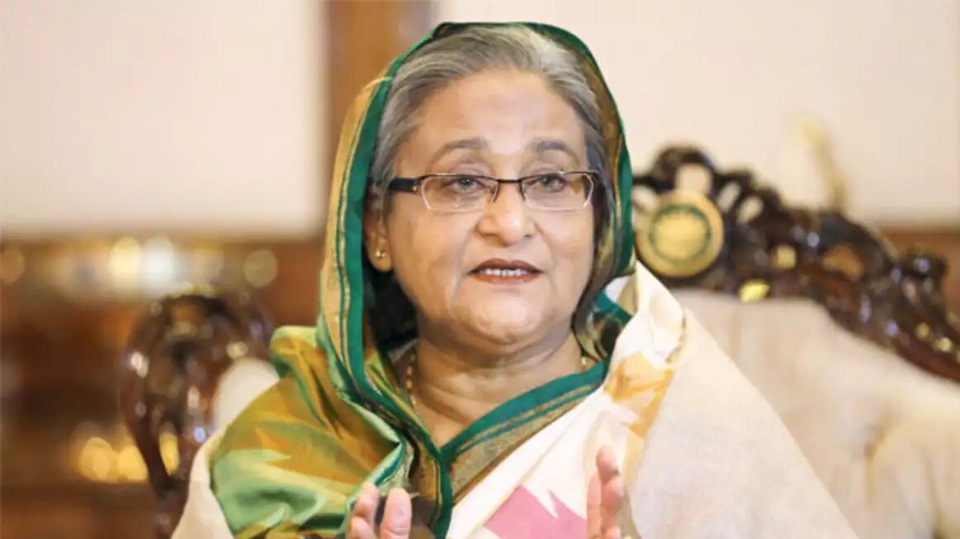
Born in 1971, Bangladesh has emerged as among the fastest growing economies in the past decades, the World Bank said. According to the report, poverty declined from 43.5 per cent in 1991 to 14.3 per cent in 2016. The International Monetary Fund has forecast the country's real GDP projection at 6.4 per cent for 2022.
The economic progress is in stark contrast with Pakistan, from whom the Bangla-speaking country was carved out in 1971. Pakistan's economy is in precarious situation with high external debt, double digit inflation and spiralling down Pakistani rupee which currently stands at 205 against the US dollar. Thanks to the mis governance during the previous Imran Khan regime, the Shehbaz Sharif government has been forced to hike fuel prices with petrol over ₹230 per litre and cut down luxury imports including tea from Kenya.
The island nation of Sri Lanka is facing the worst economic crisis, coupled with shortage of fuel for transport and depleted foreign reserves. The Gotabaya Rajapaksa government on Friday had declared holiday for public offices and schools to curtail vehicular movement leaving the roads around Colombo deserted.
Thousands of vehicles are lined up outside fuel stations, while citizens wait for cooking gas supplies. The Sri Lankan currency now stands SLR 355 against US dollar. The situation is no different in Kathmandu as weakening Nepalese rupee has increased the external debt by seven per cent with food inflation due to rising cost of imports.
If you compare Bangladeshi currency Taka as compared to the US dollar, it fares better with rate of 91. But the progress in economic growth is running counter to rising Islamic radicalization in the country, which will turn out to be a long term threat to the People’s Republic and has the potential to destabilize north-east part of India.
The reports of Islamic radicalisation at the Rohingya refugee camps have been a cause of concern. Besides this, there have been attacks on Hindu temples in the Bangla-speaking country in the recent past.
According to intelligence inputs, the terrorism-related violence continues to be under check by the Sheikh Hasina government but Chittagong Hill tracts and the Rohingya refugee camps have emerged as hubs of Islamic radicalization with Pakistan based terror groups playing their part in weaponizing the religion.
Rohingya radicalisation
In 2017, thousands of Rohingya Muslims from Rakhine state of Myanmar crossed over to Bangladesh after their community was targeted. In recent times, there have been reports of Rohingyas turning to radicalisation and terrorism, as pointed out by Bangladesh foreign minister.
> Nabi Hossain, a notorious Rohingya terrorist wanted by the Bangladesh Security Forces, is learned to be planning a movement of Rohingya refugees to demand Bangladeshi citizenship.
Once the 'movement' for citizenship intensifies, the agenda would be to call for an independent state for Rohingyas. Hossain is said to be building a an armed wing and also said to be stockpiling weapons.
> The killing of Rohingya leader Master Mohibullah in 2021 had led to the break in chain command of the Arakan Rohingya Salvation Army.
> Nabi Hossain had taken advantage of defecting Rohingya terrorists and took them on his side. He is currently stationed at an island on the Naf river bordering Chittagong and Myanmar's Rakhine state.
> Hossain shot to fame as 'Master Nabi' after committing a series of robberies, abductions and extortion acts at the Rohingya refugee camps in 2018. He currently controls several armed members. Earlier, in February 2022, Border Guard Bangladesh had announced a bounty of one million takas on his head, describing him as the ‘god-father’ of arms and Yaba synthetic drug smuggling in Bangladesh.
> On May 24, Bangladesh PM Sheikh Hasina observed that the prolonged uncertainty around repatriation was drawing Rohingyas into criminal activities: “They (Rohingyas) are becoming frustrated due to protracted uncertainty over their repatriation which has a potential risk as it entices many of them to get involved in criminal activities.”
> A new organisation called Rohingya Solidarity Organisation has been carrying out military training for new recruits from Rohingya community at camps located in the dense forests of Naikhongchhari Upazila (sub-district) of Bandarban District. The arms being used in the training include – sub-machine guns, AK-47 rifles, MA1 rifles and M16 rifles, which have reportedly been procured from the Arakan Army.
Jamaat-e-Islami Bangladesh
The Jamaat-e-Islami was suspected of attack on Hindu pandals in Noakhali, Chandpur, Cox’s Bazaar last year. There have been reports of Jamaat members clashing with the government authorities.
> On May 17, two police officers were injured during a clash between Jamaat-e-Islami Bangladesh-Islami Chhatra Shibir members and the police on Jail Road in Sylhet city. The clash occurred when police intercepted a procession of Jamaat-e-Islami Bangladesh-Islami Chhatra Shibir cadres.
> A day ealier, the Chittagong Metropolitan Police arrested 49 Jamaat-e-Islami Bangladesh supporters cum financiers during a raid on a hotel in Chittagong’s Teri Bazar area.
> On May 13, Police arrested six Jamaat-e-Islami Bangladesh-Islami Chhatra Shibir members in Rajshahi District while they were holding meeting to plan subversive activities. Police recovered jihadi books, banners for processions, member collection forms and books and donations from their possession.
> Of late, Jamaat-e-Islami Bangladesh has been trying to consolidate Islamic voices against the ruling government with an eye towards general election next year as it has very close links with the Opposition BNP.
> A Central Executive Council meeting of the group held on May 30 under the chairmanship of its Amir Dr. Shafiqur Rahman, called upon the people of Bangladesh to organize a united mass movement for elections under a non-partisan government as well as the release of all detained Alems (religious scholars) immediately. All these red flags are up in Bangladesh despite Prime Minister Sheikh Hasina running a tight ship with a firm hand on terrorism.


