
 E-Paper



The Spy Scandal That Lays Bare Nvidia’s Governance Vacuum
A false denial, a chairman-less board and no named successor highlight how Nvidia’s board does things CEO Jensen Huang’s way.


 Prefer HTon Google


Revelations that Nvidia CEO Jensen Huang had an affair with an executive suspected of spying for China are laying bare corporate governance practices nearly as extraordinary.
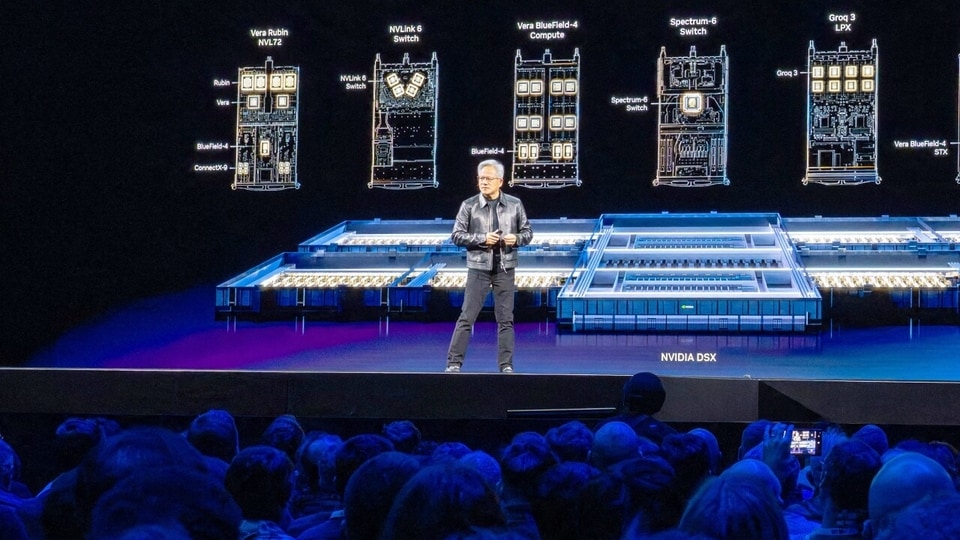
The $4.3 trillion chip giant lacks a chairman and a succession plan. It denied Huang’s relationship only for him later to acknowledge it. And in announcing an investigation into the affair, its board publicly declared it had no reason to believe the company’s secrets or national security were compromised even before the inquiry started.
“To say there’s no issue before you’ve done an investigation, that’s not appropriate,” said Harry Kraemer Jr., the former CEO of Baxter International who now teaches management at Northwestern University’s business school. “That’s how you lose credibility.”
Deep Dive

Nvidia’s idiosyncrasies received little investor attention as the chip maker’s stock soared over the past five years. Now, they are fanning questions about the board’s oversight—and whether it can steer Nvidia through a crisis with the potential to ripple across the AI economy.
On Sunday, Nvidia’s board said it would investigate reports Huang was a foreign espionage target, even as it suggested it didn’t expect to find serious problems. “The board has confidence in Jensen and his leadership team,” it said in a statement.
Central to the scandal is a company dominated by a charismatic CEO and overseen by an unusual board that has changed little with Nvidia’s meteoric rise.
Huang founded Nvidia 33 years ago, well before artificial intelligence fed red-hot demand for its chips and made it one of the most valuable U.S. companies.
Other high-profile tech founders wield control through big stock stakes or supervoting shares. Huang held just 3.6% of Nvidia’s shares as of late March.
That’s still a fortune topping $150 billion at recent prices, and Huang’s profile is huge, at the company and beyond. Huang has drawn crowds and plaudits in his signature black leather jacket and is a close ally of President Trump.
On the company’s most recent quarterly earnings call, Huang fielded questions from analysts largely solo, leaving scripted introductory remarks to others. That’s typical for Nvidia but uncommon elsewhere. With no obvious No. 2, Huang has said he oversees more than 60 direct reports and runs Nvidia with a fairly flat organizational structure.
His pay mirrors the role he plays in the AI economy, ranking him well above typical CEOs in The Wall Street Journal’s annual survey. He has realized about $2.4 billion in pay over the past two decades, mostly in stock and exercised options, according to compensation-data firm Equilar. Most of that has been in stock and exercised options.
Nvidia’s board, by contrast, is more staid. As of last spring, three of Nvidia’s 10 independent directors had held their seats for 25 years or more; two others had served more than a decade. Across the biggest U.S. companies, average board tenure is under eight years, with just 10% serving for more than a decade, a recent analysis by executive search firm Heidrick & Struggles found.
Nvidia has no chairman. Only about 1% of publicly traded companies in the Russell 3000 share that trait, according to Equilar. Instead, Huang and the board’s lead director, former Cooley CEO Stephen Neal, together draw up the agenda for board meetings, determine what information directors receive and preside over the meetings, Nvidia’s securities filings indicate. Neal schedules board meetings and arranges quarterly executive sessions that Huang doesn’t attend.
“When I see that, I say, ‘OK, well, it’s pretty clear that Jensen Huang is the chair,’” said Doug Chia, former corporate secretary of Johnson & Johnson and president of consulting firm Soundboard Governance.
Ideally, a chairman should serve as a strong figure to guide the board in overseeing management, including the CEO, said David Astorino, senior partner at leadership consulting firm RHR International.
Instead, with Nvidia’s lead director, “it felt like those roles were very overlapping, very collaborative, very respectful and deferential to the founder,” Astorino said. “A lot of founder-led companies of a certain size or scale have a similar dynamic.”
A lead director can often be enough, some corporate governance experts say. In years past, boards might rarely or never have met without the CEO present. Lead directors also serve as a counterbalance to CEOs who simultaneously chair the board.
Nvidia’s board has changed slowly, even with the company’s increasing growth and geopolitical influence. Just two directors have joined in the past five years, company disclosures show: Melissa Lora, the former president of Taco Bell International, who joined in 2023, and former Goldman Sachs Vice Chairman Suzanne Nora Johnson, who joined this summer. Other directors include an engineering professor who advised President Joe Biden, the National Football League’s former marketing chief, a former pharmaceutical-company executive and four professional investors.
“The level of scrutiny and professionalization required to run a company that has become the size of Nvidia from where they were six years ago—it’s hard to imagine that the board has kept up with that growth,” said Donald Schepker, a University of South Carolina management professor and research director at its Center for Executive Succession. “I can’t imagine it hasn’t put stress on the board.”
Overall, Nvidia ranked at the risky end of corporate-governance scoring by proxy advisory firm Institutional Shareholder Services last spring. ISS recommended that investors support the company’s director candidates but assigned its riskiest rating to Nvidia’s board structure. ISS cited the board’s multiple long-tenured directors and its lack of a chairman or a mechanism to refresh the board, among other factors.
At the Journal’s Board of Directors Council in Palm Beach on Monday, Nvidia’s crisis consumed conversations among attendees, many of whom sit on public-company boards. Some questioned whether the board had been too quick to protect Huang or initially accept his assurances about the relationship, and said the saga highlighted the importance of succession planning regardless.
“The question every other company needs to be thinking about is, ‘Are we always thinking about management depth, succession and risk management?’” said Tom Monahan, CEO of Heidrick & Struggles.
Write to Theo Francis at theo.francis@wsj.com and Chip Cutter at chip.cutter@wsj.com


