
 E-Paper



Britain renews nuclear submarine option amid Labour division
Britain has renewed its Trident project that will build another generation of nuclear-powered ballistic missile submarines after Prime Minister Theresa May unequivocally declared her intention to authorise a nuclear strike if needed.

 Prefer HTon Google


Britain has renewed its Trident project that will build another generation of nuclear-powered ballistic missile submarines after Prime Minister Theresa May unequivocally declared her intention to authorise a nuclear strike if needed.
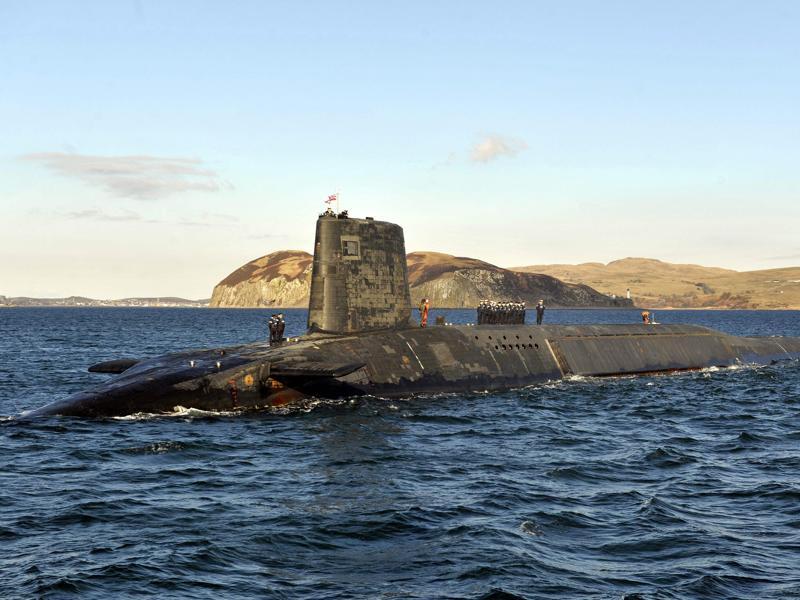
The nuclear fleet is based at Clyde in Scotland, whose MPs voted against renewing the £40-billion project. Asking for the fleet to removed from Scotland, the MPs said its continuing presence there would be another reason to seek a second independence referendum.
In a significant interaction in the House of Commons on Monday night , George Kerevan of the Scottish National Party asked May, “I congratulate the Prime Minister on her new role, but let us cut to the chase: Is she personally prepared to authorise a nuclear strike that could kill 100,000 innocent men, women and children?”
May responded: “Yes. The whole point of a deterrent is that our enemies need to know that we would be prepared to use it, unlike the suggestion that we could have a nuclear deterrent but not actually be willing to use it, which seemed to come from the Labour front bench.”
Labour Party leader Jeremy Corbyn, known for his long commitment to nuclear disarmament, strongly opposed the government motion but faced much opposition in the House from most of his MPs, who voted for the motion and used the occasion to attack his leadership.
The government won the motion by a majority of 355 votes, when 140 of Labour’s 230 MPs voted in its favour, 47 opposed it and others abstained.
Defence secretary Michael Fallon, after winning the vote, said: “MPs on all sides have voted by an overwhelming margin, to renew our nuclear deterrent - the ultimate guarantee of our national security.
“We have voted to protect our nation from the most serious threats we may face in the 2030s, 2040s and 2050s. The British Parliament has sent a powerful message to our allies that Britain is stepping up its international commitments, not stepping back from them.”
Fallon added, “We will now get on with building the next generation of nuclear submarines to help keep the nation, and our allies, safe for decades to come.”


