THIS IS, DECLARED Sir Jon Cunliffe, a modern “Great Stink moment”. In July 1858 the stench of untreated waste, wafting into Parliament from the banks of the Thames, at last became too much for MPs. They soon approved Joseph Bazalgette’s plan for new sewers for London. In 2025, said Sir Jon on July 21st, presenting a 464-page report on the structure and oversight of the water industry in England and Wales, another clean-up is due, again with “direction from the very top”.
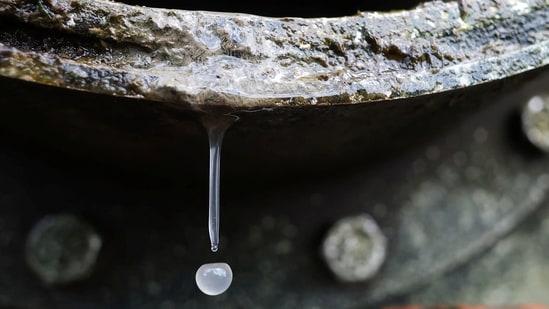
Water drips from the Paul's Pier Combined Sewer Overflow (CSO) pipes on the banks of the River Thames, as Britain's government is expected to set out measures to fix its broken water sector with Thames Water on the brink of failure, in London. (Reuters)
Today’s stink is still sometimes literal. Britons are fed up with seeing filthy discharges from overloaded sewers and treatment works, often forced by heavy rain. On July 18th the Environment Agency (EA), a regulator, reported that in 2024 there were 75 “serious” pollution incidents—likely to kill fish or harm bathers—up from 47 the year before, although the number is meant to be heading towards zero. But the smell is also financial. Debt-laden Thames Water, the country’s biggest water company, is trying to stave off “special administration” (a form of insolvency). It recently reported an annual pre-tax loss of £1.6bn ($2.2bn).
But perhaps the strongest pong is regulatory. For too long Ofwat, the industry’s economic regulator since privatisation in 1989, was shy of letting prices rise to finance investment. Now the industry is set for a splurge, paid for largely by a sudden jump in bills. Neither consumers nor water companies are happy. More than 90% of respondents to a survey by Sir Jon’s commission rated the regulatory framework as poor or very poor.
So the most eye-catching of Sir Jon’s 88 recommendations is to scrap Ofwat—a proposal accepted at once by Steve Reed, the environment secretary. In England a new body will replace Ofwat and also take on the EA’s water duties, as well as incorporating the Drinking Water Inspectorate, yet another regulator. Sir Jon proposes a separate but similar set-up in Wales.
That should remove regulatory overlaps (such as duplicate reports for different watchdogs) and fill gaps (no one, says Sir Jon, has an overall view of infrastructure). Sir Jon also recommends a change in the style of economic regulation, from judging companies against an industry-wide benchmark to more individual oversight.
A former deputy governor of the Bank of England, Sir Jon has proposals to reinforce water companies’ financial resilience—damaged by the over-eagerness of some to pay dividends rather than retain earnings, and by over-reliance on debt finance. One idea is to have the new regulator set minimum capital requirements, akin to those of banks. He suggests a formal “turnaround” regime for struggling companies. Whether Thames’s troubles will be over before it comes into effect remains to be seen.
The flaws are too deep to be fixed merely by a regulatory reset. Sir Jon’s first recommendation concerns that direction from the top. Government alone, he says, can provide the co-ordination among competing objectives—demands for new infrastructure, protecting the environment, keeping bills within bounds—that has until now been lacking. He suggests that the government should draw up a “National Water Strategy”, with a rolling 25-year view and interim targets, and set the new regulator’s priorities.
Below that he proposes more coherent regional planning, with eight bodies in England, based on river catchments, and one in Wales. The current arrangements, he says, have developed piecemeal and are often inconsistent. Local-government representatives, as well as engineers and environmental experts, should sit on the regional bodies.
For some, including many on the left and some environmental groups, as well as lots of disgruntled customers, all this misses the point: the original sin was privatisation. The industry, on this view, can be absolved only by being taken back into public ownership. However, renationalisation was excluded from Sir Jon’s remit.
Nevertheless, his report considers different models—the water industries of Scotland and Northern Ireland are nationalised, Welsh Water is a not-for-profit firm, England has a mix of listed and unlisted price suppliers—and finds little to choose between them. It is also questionable whether the government, with its finances already strained, would easily find the money to buy out the industry’s current owners. And a renationalised water industry may end up as one voice among many begging the Treasury for capital funds.
Sir Jon’s proposals are thorough and look sensible at first blush. Public confidence in the industry and in Ofwat are at rock-bottom. The regulatory framework is riddled with inconsistencies; it seems wise to bring the economists, engineers and environmental scientists under one roof. But judging their efficacy will take years—even getting rid of Ofwat means a change in the law. Meanwhile, as bills rise, sewers spill over and summer hosepipe bans begin, the grumbles won’t be stopping.
For more expert analysis of the biggest stories in Britain, sign up to Blighty, our weekly subscriber-only newsletter.
Get the latest headlines from US news and global updates from Pakistan, Nepal, UK, Bangladesh, Russia and US Iran war Live, get all the latest headlines in one place on Hindustan Times.
Home/World News/Britain’s Water Watchdog Is To Be Put Down

 E-Paper