
 E-Paper



China should offer couples $156,000 to incentivise childbirth: Expert
The Chinese government should offer couples 1 million yuan (more than ₹11 million/$156,000) for each newborn to incentivise childbirth and increase country’s declining birthrate, a high-profile entrepreneur and economist has suggested


The Chinese government should offer couples 1 million yuan (more than ₹11 million/$156,000) for each newborn to incentivise childbirth and increase country’s declining birthrate, a high-profile entrepreneur and economist has suggested.
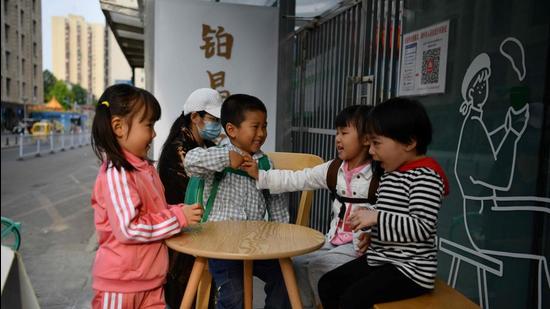
China’s population is growing at its slowest pace in decades, latest census data released on Tuesday showed, with the country adding only 72 million people in the past decade.
It has raised widespread worries about China’s ageing population and declining workforce.
The slump in the growth rate - despite Beijing withdrawing the one-child policy in 2016 strictly in force since the late 1970s - will add pressure on Beijing to incentivise childbearing as the most populous country deals with a rapidly ageing population and the resultant economic burden.
One way to incentivise is to pay couples in cash or subsidies, Liang Jianzhang, professor of applied economics at the Peking University in Beijing and founder of multinational online travel company, Trip.com, has suggested.
Liang said on China’s Twitter-like social media platform Weibo that it would likely cost China 10% of its GDP to push up birthrates from the current 1.3 total fertility rate to the replacement-level fertility, the level of fertility at which a population exactly replaces itself from one generation to the next.
Breaking down the 10% of the GDP-cost, Liang said it would amount to about a 1 million yuan per child, which could be paid in cash, housing subsidies or tax relief.
“I’ve spoken to a lot of young people ... if it’s just a few tens of thousands of yuan it basically wouldn’t encourage people to have another child,” Liang was quoted as saying by Reuters.
The costs incurred now by the government would be offset by future contributions made to the economy by the population, said Liang.
“If a family gives birth to another child, that child’s future contributions to social security, to tax revenues, will exceed 1 million yuan,” he said.
Liang has repeatedly suggested that the Chinese government carry out urgent reforms in its population policy. “For instance, it is suggested that the Ministry of Finance may consider the overall distribution of maternity subsidies. From the birth of a child to the age of six, the state finance can issue a certain amount of childcare subsidies every month. The specific amount can refer to the local minimum wage standard,” Liang had argued in a state media editorial last year.
In terms of incentivising the housing policy for couples, he said, the government should consider the high price of housing as an influencing factor in couples’ willingness to have children.
“For example, exempting land prices could slash the housing prices by half. To make it more feasible, the local governments could directly exempt multi-children families from the land price or refund them if they have more children after purchasing houses, with a flexible exemption ratio in line with the fertility rate,” he argued in the editorial.


