
 E-Paper



China: With signature CPC resolution, Xi Jinping tightens grip on power
The adoption of the resolution puts Xi Jinping, 68, in the same category as CPC icon and founder of modern China, Mao Zedong, and the key architect behind the country’s economic ascent, Deng Xiaoping.

 Prefer HTon Google


The Communist Party of China (CPC) wrapped up a key meeting on Thursday, adopting a rare resolution on the party’s history, strengthening President Xi Jinping’s stature, legacy and future as he looks to secure a precedent-breaking third-term as the country’s leader in late 2022.
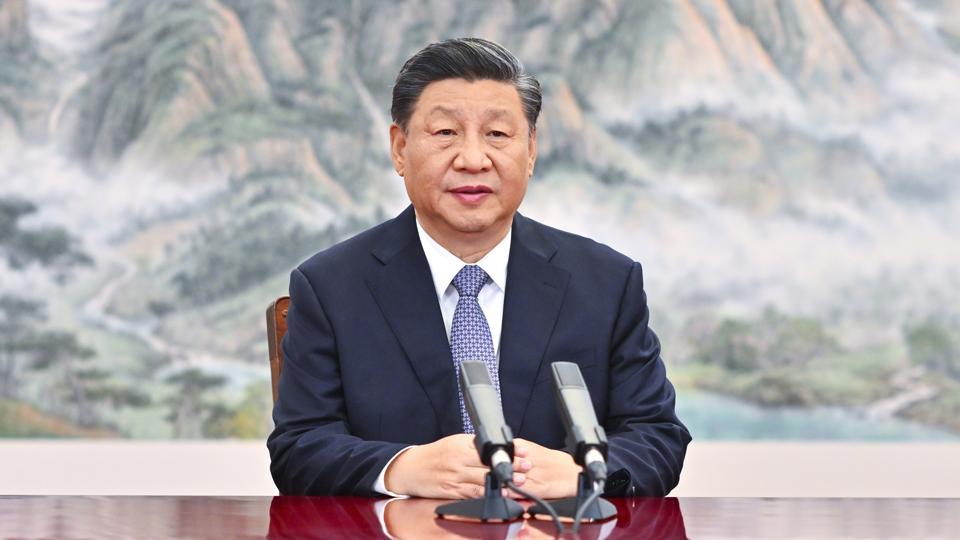
The adoption of the resolution puts Xi, 68, in the same category as CPC icon and founder of modern China, Mao Zedong, and the key architect behind the country’s economic ascent, Deng Xiaoping.
“A high-profile meeting of the Communist Party of China (CPC) has adopted a landmark resolution on the major achievements and historical experience of the CPC’s 100 years of endeavours,” according to a CPC communique released and quoted by the Xinhua news agency, on Thursday evening.
“CPC plenum passes landmark resolution”, Xinhua headlined the story.
The adoption of the resolution concluded the sixth plenum of the CPC’s central committee, a group of 348 party members, which chooses its new leaders every five years, which had been meeting since Monday behind closed doors in Beijing.
Similar resolutions have been adopted only twice before - in 1945 under Mao and in 1981 under Deng.
The resolutions helped consolidate the power bases of both leaders and enshrined their roles in Chinese and CPC histories.
China approved the removal of the two-term limit on the presidency, effectively allowing Xi to remain in power indefinitely at the annual session of its parliament, the National People’s Congress in March, 2018.
A 12-page communique on the plenum issued on Thursday evening said it was necessary to review the party history for “…resolutely upholding Comrade Xi Jinping’s core position on the central committee and in the party as a whole and upholding the central committee’ authority and its centralised, unified leadership to ensure that all party members act in unison”.
The communique eulogised Xi Jinping’s role in Chinese politics, mentioning his “meticulous assessment and deep reflection on a number of major theoretical and practical questions regarding the cause of the party and the country in the new era…”
“He is thus the principal founder of Xi Jinping Thought on Socialism with Chinese Characteristics for a New Era. This is the Marxism of contemporary China and of the 21st century. It embodies the best of Chinese culture and ethos in our times and represents a new breakthrough in adapting Marxism to the Chinese context.”
The adoption of the resolution on Thursday coincided with Xi’s speech at the Asia-Pacific Economic Cooperation (APEC) forum where he spoke against forming cliques.
In a recorded video to the forum, Xi urged Asian nations to resist forming “small circles on geopolitical grounds”, a reference to efforts by US President Joe Biden to counter China.
“The Asia-Pacific region cannot and should not relapse into the antagonism and division of the Cold War era,” Xi said.
Experts say that Xi is rewriting history to strengthen his grip on power. “He is using the resolution on history, which will be published at the end of the 6th plenum, to shape the narrative of the party’s history. Likely he will highlight the role of his father, an important figure of the Northwestern revolutionary base area, as well as his own role in realising an economically prosperous and geopolitically assertive China,” Victor Shih, expert on Chinese politics at University of California, San Diego, said.
“For someone who grew up in the bosom of the party, telling the story according to his vision is important,” Shih said.
The plenum heard and discussed a work report Xi delivered on behalf of the political bureau of the CPC central committee. He also explained the draft of the resolution to the session.
It also reviewed and passed a resolution on convening the 20th National Congress of the CPC in the second half of 2022 in Beijing.


