
 E-Paper



Chinese envoy and Jaish commander separately call on Taliban leadership
While the Chinese envoy is said to have discussed the reconstruction of Afghanistan, Jaish top commander Mufti Rauf Azhar came to pay obeisance to the leaders of fellow Deobandi terrorist group for conquering Kabul.

 Prefer HTon Google


Chinese ambassador to Afghanistan Wang Yu and Pakistan-based Jaish-e-Mohammed chief operational commander Mufti Abdul Rauf Azhar are separately said to have met the Taliban leadership in Kandahar on Thursday to congratulate the Sunni Pashtun Islamists for taking over Afghanistan. Both Mullah Baradar, said to be the front-runner as the Taliban candidate for President of Afghanistan, and Mullah Yaqoob, the son of Mullah Omar and deputy leader of Taliban, are in Kandahar.
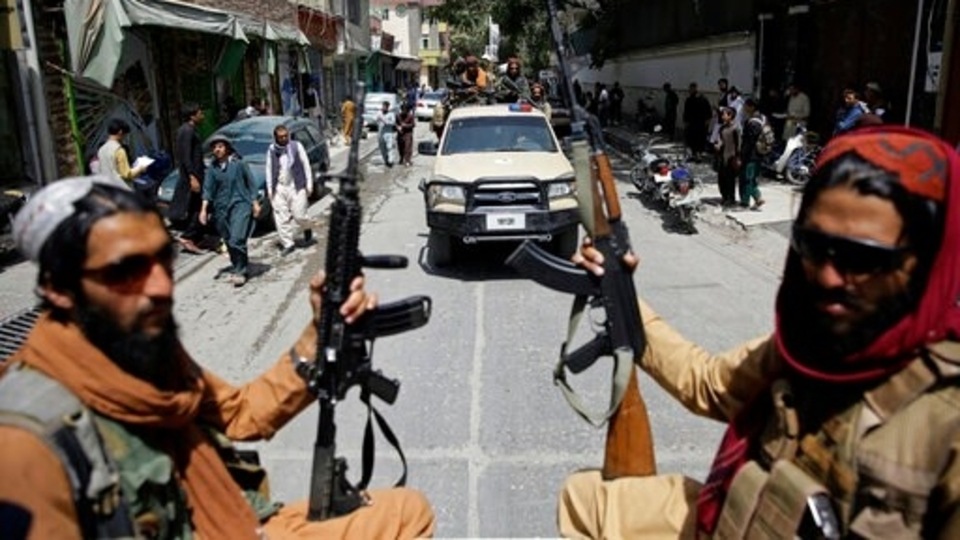
While ambassador Wang met his Pakistani counterpart on Wednesday to closely cooperate on the Afghan issue, he is understood to have met Mullah Baradar in Kandahar to offer Beijing’s help in the reconstruction of the Islamist Taliban-ruled country. China is not only pleased with the humiliation of the US at the hands of the Taliban but is also looking to sell the Belt Road Initiative (BRI) and exploit Afghan reserves of lithium and copper in the name of reconstruction. The larger Chinese game-plan is to reach the Central Asian Republics via Afghanistan for evacuation of gas and mineral resources.
Also read | 3 Jaish terrorists killed in encounter at J&K's Tral
Taliban’s ideological comrade in jihad, Jaish’s Mufti Rauf met Mullah Yaqoob, who also doubles up as an ideologue in the absence of Mullah Haibatullah Akundzada, in Kandahar to offer allegiance on behalf of the Bahawalpur based group. Mufti Rauf's elder brother and Jaish Emir Maulana Masood Azhar was a Deobandi ideologue at a Harkat-ul-Ansar terror training camp in Khost before he was arrested on the outskirts of Srinagar in 1994. Azhar formed the Jaish group after his release in the Indian Airlines IC-814 hijacking to Kandahar in exchange for hostages. The entire hijacking was planned with the help of the then ruling Taliban leadership in December 1999.
Also watch | Joe Biden warns Taliban amid criticism over Afghanistan crisis, evacuations
While the current Taliban leadership has gone on record saying that it will not allow Afghan soil to be used against any third country, the Sunni Pashtun UN-designated terrorist group has very close operational links with Al Qaeda and Jaish-e-Mohammed. Both these global terrorist groups are looking for sanctuaries within Taliban-ruled Afghanistan to train its cadre and wage jihad against their adversaries. The Taliban has openly advocated jihad as their fundamental Islamic duty.
Also read | 'Any attack on our forces and...': Biden's warning to Taliban
While Maulana Masood Azhar lives under the highest protection in Bahawalpur madrasa, Mufti Rauf Azhar’s meeting with Kandahar leadership of the Taliban assumes significance as Jaish’s main target is India. Masood Azhar elder brother Ibrahim Azhar, the man who orchestrated the IC-814 hijack, looks after the Afghan operations of the terror group.
According to Indian counter-terrorism experts, Jaish will become more active with the rise of the Taliban in Kabul with entire South Asia experiencing a rise in Islamic radicalization. While China will maintain pressure on India on the Line of Actual Control (LAC) and cement its ties with India’s adversaries in the neighbourhood, the rise of the Taliban will have an impact on India’s internal security.


