
 E-Paper



Chinese loans for white elephant projects pushed SL and Pak into present crisis
All the blame for the crisis in these two countries cannot be put on the shoulders of Beijing as the majority of it rests on the myopic leadership of these nations.

 Prefer HTon Google


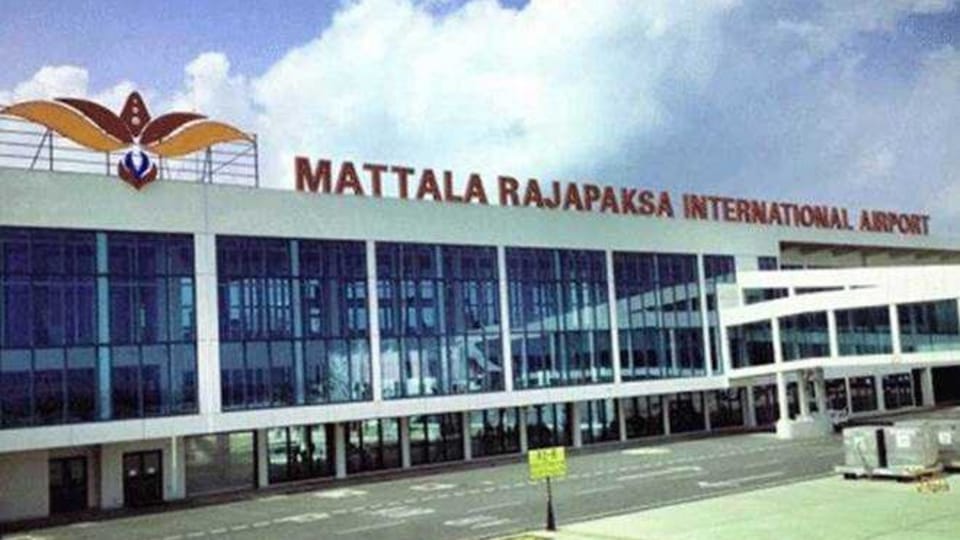
Eighteen kilometres from Chinese owned Hambantota Port in Sri Lanka lies Mattala Rajapaksa International airport, which has unfortunately earned the sobriquet of being the least used airport in the world. Built during the presidency of Mahinda Rajapaksa, both port and airport, built from high-interest loans from Chinese EXIM bank, are monuments to fiscal profligacy practised by rulers of the Island nation currently reeling under deep economic and political crisis.
Like Sri Lanka, Pakistan is also the biggest beneficiary of economic assistance from China and that too has descended into political and economic chaos. Instead of Chinese loans making the two economies more resilient, the client states of Beijing have literally folded up in wake of the global economic crisis brought on by a pandemic, which ironically has origins in Wuhan, China.
Sri Lanka is presently reeling under protests due to rampaging inflation; Pakistan is in a free drop with Imran Khan Niazi now a Prime Minister just in the name after having totally exposed the fragility of democracy in the Islamic Republic for his own survival.
The Chinese Communist Party (CCP) owned media dismisses predatory economic policies of Beijing as western propaganda and insists that loans given to countries like Pakistan and Sri Lanka are only a small portion of their overall debt portfolios. These Chinese claims are substantiated by the openly available information on government-to-government loans from China. But this is only half of the story as information on the actual liabilities or outflows of the borrowing countries on account of guaranteed returns on investments, commercial loans etc. is not readily available.
Like in the case of Pakistan, Beijing has maintained that its loans comprise 10 per cent of Sri Lanka’s overall external debt. This works out to be USD five billion out of total debt of nearly USD 51 billion. But this figure does not include currency swaps, foreign currency term facility agreements, and loans given by Chinese state-owned enterprises. Project wise loans given by the Chinese EXIM bank are estimated to be USD 4.8 billion, out of which only USD one billion carries a concessional interest rate of two per cent while the remainder carries a whopping rate of six per cent.
In Pakistan, the Chinese EXIM Bank has loaned USD 11 billion (concessional) at an interest rate of 1.6 per cent for infrastructure projects and another USD 15.5 billion (commercial) carrying an interest rate of 5-6 per cent for power projects under the China Pakistan Economic Corridor, part of the BRI and designed to give Beijing access to the Arabian Sea and beyond. All debts are denominated in USD dollars, which hedges the Chinese exposure to exchange rate fluctuations but increases the cost of hard currency for the borrowers. In Pakistan, the debt burden has consistently increased due to the regular depreciation of the Pakistani Rupee at an average of six per cent per year. In Sri Lanka, the Lankan Rupee collapsed in a matter of days, increasing the cost of hard currency dramatically.
All the blame for the crisis in these two countries cannot be put on the shoulders of Beijing as the majority of it rests on the myopic leadership of these nations. Tempted by the easy availability of loans from China to finance ambitious infrastructure projects that give an impression of rapid economic development to the gullible public, these leaderships threw fiscal prudence and economic viability out of the window to retain political power. With Beijing neutral to whether the borrowing regime was corrupt or inefficient or both, these politically expedient loans have now come to haunt these two countries.
The Hambantota Port in Sri Lanka and Gwadar Port in restive Baluchistan in Pakistan are classical cases of white elephant projects. Both the ports are located strategically but are commercially unsustainable as there is simply not enough traffic. China has already acquired Hambantota and it is not a matter of wild imagination that it acquires Gwadar too in the coming months. Fact is that there is no real income from these ports and cargo traffic is being diverted from Colombo and Karachi ports to keep them operational. In the meantime, Matala airport is sometimes used for storing paddy.
The extent of profiteering by the Chinese companies that execute projects is also not often known. In Pakistan, it was accidentally illustrated by the leaked Power Producers Report in April 2020, which examined among others, two thermal power projects in Sahiwal and Port Qasim. Both were executed by Chinese companies. For these two projects worth USD 3.8 billion, the report found an overpayment of Pak ₹483.64 billion or approximately USD 3 billion.
With the Ukraine-Russia war not showing signs of any resolution and parts of China being hit by the coronavirus, global finance will continue to lag, putting countries like Sri Lanka and Pakistan in the high-risk category for investment as they are also facing serious political turmoil. Economic engagement of the dragon will prove very costly to both Islamabad and Colombo with the gullible masses taken for a royal ride.


