
 E-Paper



Did Sheikh Hasina’s leaning towards China cause her downfall?
Bangladesh's proximity towards China and deepening bilateral military cooperation had raised red flags in New Delhi and Washington.

 Prefer HTon Google


New Delhi: While Bangladesh Nationalist Party leader Khaleda Zia has justified Islamist murderous fury against minority Hindus and Indian establishments as anger against India for giving refuge to Sheikh Hasina, fact is that it was ousted PM’s leanings towards China and antipathy towards the west that caused her political downfall.
Even though west has been able to install Muhammad Yunus as chief advisor of Bangladesh interim government, the country is facing economic crisis and a challenge from rabid Islamist forces of Jamaat-e-Islami and Hefazat-e-Islam. With Bangladesh police on a strike, Army Chief General Waker-us-Zaman will have to take on the extremist forces who have already radicalised the youth and are using political Islam to gain power.
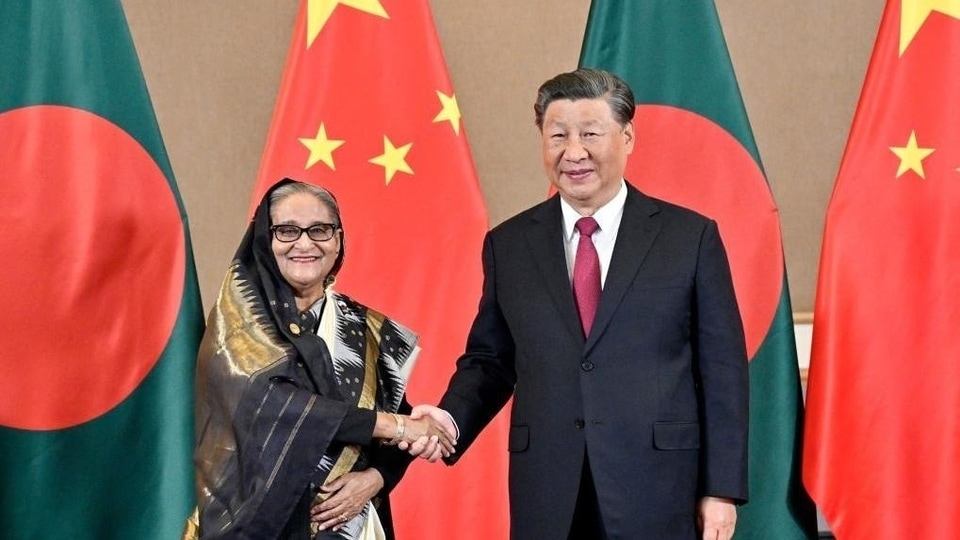
While the Narendra Modi government tried its best to reconcile Sheikh Hasina with US and UK, its proxy in Indian sub-continent, the Indian national security establishment knew that Sheikh Hasina and US had mutual dislike for each other. The American adverse reaction to Sheikh Hasina was more because of her allowing China to build a submarine base in Pekua, Cox’s Bazaar and buying two Ming class submarines from Beijing rather than her adherence to multi-party democracy. Built by Chinese company, the naval base is aptly called BNS Sheikh Hasina.
Given that Bangladesh juts into the sensitive Siliguri corridor, New Delhi was also not happy with its credit line being used by Dhaka for buying military equipment for countries like China and Turkey and nothing from India. Before she was ousted out of power, visiting Chief of Naval Staff Admiral Dinesh Tripathi offered to build frigates for Bangladesh.
Sheikh Hasina's ties with China
While Bangladesh, under Sheikh Hasina, was opposed to Pakistan, its proximity towards China and deepening bilateral military cooperation had raised red flags in New Delhi and Washington. Fact is that Bangladesh Army is powered by Chinese military equipment from artillery guns to main battle tanks to missiles to submarines and fighters. The Chinese access to Bangladesh armed forces poses a serious challenge to QUAD’s Indo-Pacific strategy with China already having bases in Cambodia, Myanmar, Sri Lanka, Pakistan and Iran.
To add to this pro-China tilt of Sheikh Hasina was evidence that Bangladesh civilian military bureaucracy had been comprised by Beijing just like in Sri Lanka, Nepal, Pakistan and Myanmar. Fact is that it is only after India informed Sheikh Hasina did Bangladesh refuse permission to Chinese built frigate for Pakistan Navy, PNS Taimur, to dock at Chattogram Port from August 7-10 while on way to Karachi via Colombo. Much to Sheikh Hasina’s surprise, her bureaucracy had already cleared the docking of PNS Taimur without informing her.
Even though adversaries of India are celebrating the exit of Sheikh Hasina and labelling it as a diplomatic defeat of Modi, Dhaka will have to seek Indian support as the country is staring at a loan default and looming economic crisis. Just like Sri Lanka and Pakistan, economic crisis will fuel political unrest and in turn pan-Islamic forces in Bangladesh will gain an upper hand. With Chinese capability limited and transactional, the ball is firmly in Yunus and Waker-us-Zaman court as BNP and Khaleda Zia are no answer to Bangladesh.


