
 E-Paper





The State Department designated eight organized-crime syndicates based in Latin America as “foreign terrorist organizations,” or FTOs, in February. In July it added a ninth. Last week the New York Times reported that President Trump has signed a secret “directive” to the Pentagon to “begin using military force against certain Latin American drug cartels.”
Don’t Bomb Mexico, Mr. President
There are better ways of fighting the drug cartels—and Claudia Sheinbaum will help.
Updated on: Aug 18, 2025, 15:49:28 IST

WSJ

 Prefer HTon Google
Share via
Copy link
The White House declined to tell me if the Times story is true. But on Thursday Reuters reported that the U.S. deployment of air and naval resources to the Caribbean to combat cartels had begun. Whether their mission is interdiction or something more invasive remains unclear.
Six of the Trump-designated FTOs are based in Mexico. A seventh operates between Central America and the U.S. The other two are Venezuelan. One of those is the Cartel de los Soles, headed by Venezuelan dictator Nicolás Maduro. It’s the one that was added to the FTO list in July.
U.S. interdiction of ships and planes carrying drugs is nothing new in the region. But surgical strikes aimed at drug labs and kingpins would be. Critics of the idea warn of the danger of collateral damage and of foreign entanglements. The more important reason to think twice about the directive is that in most cases the targets would be in Mexico, and it’s unlikely to produce the desired results.
The U.S. has sent mixed signals to Venezuela about its criminal government. On Aug. 7 the Justice Department raised the reward for information leading to the capture of Mr. Maduro to $50 million from $25 million. But a month earlier Treasury gave Chevron another license to pump oil for his regime. One day Mr. Maduro is a wanted thug, the next his government gets a U.S. leg up to satisfy corporate lobbyists in Washington. Next, the price on his head goes up.
Public opinion in Venezuela may be hoping that the U.S. military will destabilize the despotic Mr. Maduro. But a lower-risk place to start is with a consistent sanctions policy.
In Mexico the case for using the U.S. military is even less compelling. It won’t eliminate fentanyl trafficking in North America. The drug’s high potency means that small batches are all it takes to fuel illicit businesses in big ways. Recent declines in American overdose deaths attributable to the powerful narcotic seem to be tied to stricter practices governing the prescription of addictive painkillers rather than to the war on supply.
This isn’t an argument against going after Mexico’s transnational criminal organizations, which also engage in bribery, extortion, kidnapping, murder, money laundering, counterfeiting and auto theft. It’s only to point out that while dropping explosives in places like the state of Sinaloa may give American drug warriors some instant gratification, it isn’t the answer to what ails Mexico. After nearly six years (2018-23) of President Andrés Manuel López Obrador’s soft-on-organized-crime policies, the mob is woven into Mexican politics at all levels. Cleanup requires support from a public that will bristle at the idea of a gringo “invasion.”
Nurturing ties with Mexico by focusing on shared interests is a better way to foster the growth of modern, democratic institutions. Critics of North American integration, under way since 1994, argue that it has been a failure. Yet the trade relationship that grew out of the 1994 North American Free Trade Agreement—renamed the U.S.-Mexico-Canada Agreement in 2020—is the reason President Claudia Sheinbaum is now collaborating with U.S. law enforcement.
Ms. Sheinbaum, who took office in October 2024, owes her political career to AMLO. But she also wants to succeed in her own right. It increasingly looks as if that requires abandoning him. She has chosen to protect U.S. market access for Mexican manufacturing. That means she has little choice but to work with the Americans on crime. With swaths of the country under control of the cartels, she also knows she needs help.
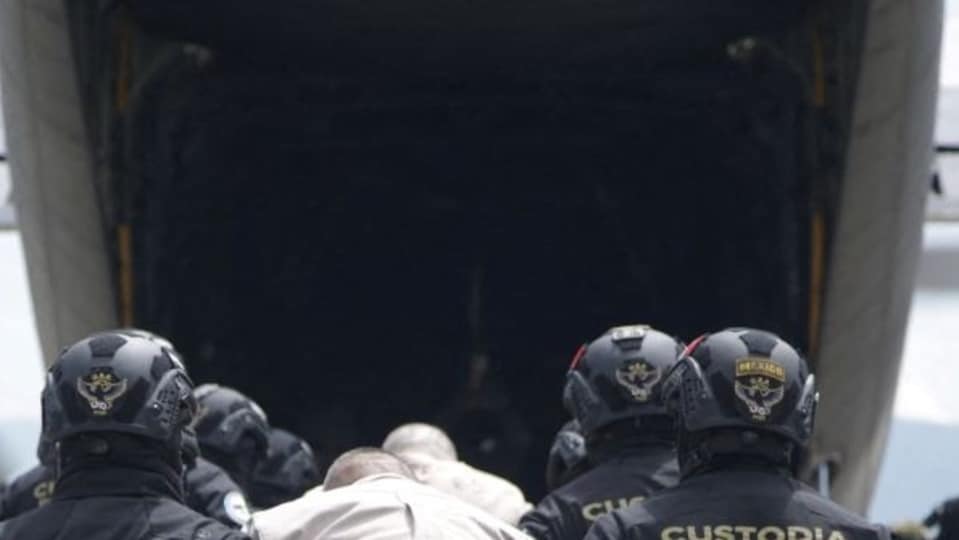
She’s been careful to defend Mexican sovereignty. But her choice of Omar Garcia Harfuch for public security minister signals seriousness. She has allowed U.S. surveillance aircraft over the country. In February Mexico transferred 29 prisoners to U.S. custody. Last week it delivered another 26 alleged criminals to U.S. agents.
The transfer of high-value prisoners to the U.S. gives prosecutors a chance to extract valuable information about who is running the crime rings and who are their political partners. With a former high-ranking security official from the state of Tabasco on the run from Interpol, Mexicans may be getting closer to learning about the rot emanating from the state where AMLO launched his career.
Corruption is deeply entrenched in Mexico, where many good people have died fighting the U.S. war on drugs. Nevertheless, Mr. García Harfuch is trying to build a credible federal police. It’s an effort at odds with AMLO’s takeover of the judiciary last year. But it remains a worthy goal. U.S. military intervention would undermine it and many U.S. allies while strengthening the worst, most corrupt elements of the ruling Morena party.
Write to O’Grady@wsj.com.
Get the latest World News, breaking headlines and global updates from the US, UK, Pakistan, Bangladesh, Russia and other countries. Follow major international events on Hindustan Times.


