
 E-Paper



Duty and loyalty on display in the First World War
According to the note on the bayonet, Singh got all the respect in the hospital that a senior officer in the British Indian Army was entitled to including private room and dedicated staff.

 Prefer HTon Google


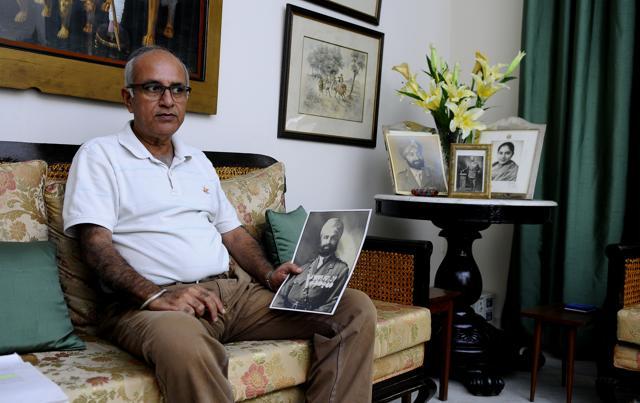
There are many stories of the participation of my great grandfather, Subadar Thakur Singh, in the First World War. I find the story about his bayonet quite fascinating,” says 57-year-old GJ Singh, who runs a medical transcription firm in Chandigarh.
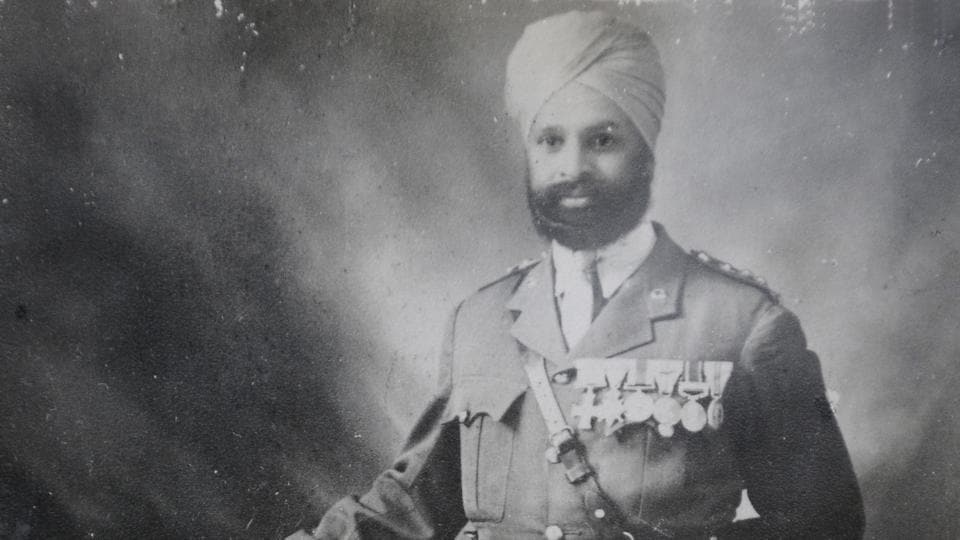
He is referring to the rifle bayonet which Thakur Singh gifted to Colonel Bruce Seton, the commanding officer of the Kitchener Indian Hospital in Brighton, England.
Singh was being treated at the hospital in October 1914 after sustaining injuries in the battle of Neuve Chapelle, France, in World War I.
Part of the 47th Sikhs regiment, he was one of the first Indian soldiers to arrive in Brighton. After hospitalisation, Singh rejoined his regiment in January 1915.
During World War I and immediately after, he witnessed action in France, Mesopotamia and Palestine.
“You can guess his contribution from the fact that he held the rank of Jemadar in March 1901, and by the end of World War I, his title was Subadar Major Thakur Singh Bahadur, M.C. Order of British India, 2nd Class,” says GJ Singh.
Bahadur was an honorary title used by soldiers who got the Order of British India. M.C. or the Military Cross, which was instituted by King George in 1914 to recognise the contribution of junior officers during wartime.
Five years later, Singh retired from active service only to be called back into service at the break of World War 2.


