
 E-Paper





Follow the latest breaking news, major developments and agenda-setting stories from India and around the world with the newsdesk at Hindustan Times. Operating round the clock, the desk brings together experienced editors, reporters and correspondents to deliver fast, accurate and contextual reporting across subjects that influence public policy, governance, business, society and international affairs. The HT News Desk covers politics, elections, government policies, the economy, business and markets, science and technology, the environment, law and order, infrastructure, education, climate issues and geopolitics, while closely tracking developments across states, institutions and global capitals. The team also leads coverage of major breaking news events, policy announcements, court proceedings, natural disasters, public emergencies and significant international developments. Reports published by the newsdesk are based on information gathered from reporters on the ground, official statements, government agencies, court records, regulatory filings, recognised institutions and other authoritative sources. Stories undergo editorial scrutiny and verification processes to ensure accuracy, fairness and relevance, and are updated as events evolve and additional information becomes available. Whether covering a key political decision in New Delhi, an economic policy shift affecting millions, a landmark court ruling or a major global event, the HT News Desk aims to provide readers with reliable, fact-based journalism that delivers not only the latest developments but also the context and analysis needed to understand their wider implications.
 Trending News
Experts find answer to why sound is produced when you crack your knuckles
A professor at the Ecole Polytechnique, Abdul Barakat, said the sound that is generated when one cracks his or her knuckles is due to the partial collapse of a cavitation bubble that’s in the fluid in the joint.


It has puzzled scientists for over 100 years but now they appear to have cracked it: what, exactly, is it that causes that wince-inducing sound when you pop your knuckles?
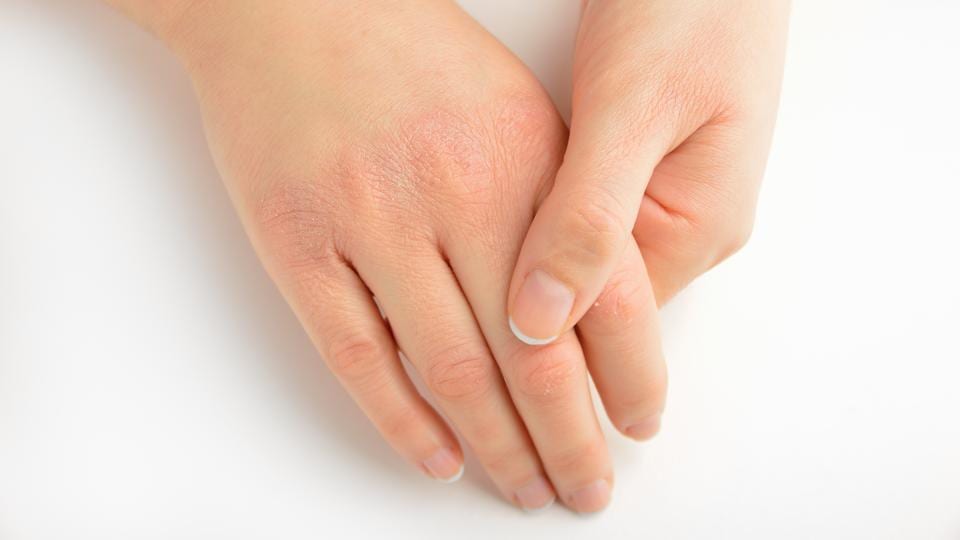
Love it or loathe it, knuckle-cracking is very common. Earlier studies have established that not all joints can be cracked, and that -- for that those that can -- the act can’t be repeated for another 20 minutes.
But the source of the sound remained a mystery.
And “popping”, it turns out, is exactly what it is, researchers said on Thursday after finding that the distinctive cracking sound was caused by the collapse of microscopic bubbles of joint fluid in the hand.
Using a mathematical model alongside a geometrical representation of the joint, experts from Paris’ Ecole Polytechnique and Stanford University in the United States simulated the events leading up to the crack.
“The sound that is generated when one cracks his or her knuckles is due to the partial collapse of a cavitation bubble that’s in the fluid in the joint,” explained Abdul Barakat, a professor at the Ecole Polytechnique.
“It could be multiple bubbles, but we showed that the collapse of a single bubble is sufficient to give you the signature sound you get,” he told AFP by phone.
Although experts had initially linked the sound to the collapse of knuckle bubbles back in 1971, their findings were thrown into question after further studies showed there were still bubbles left in the fluid after the knuckles had been cracked.
But the mathematical model appears to resolve this apparent contradiction by showing the sound can be produced by partial collapse, the researchers said.
Earlier studies using ultrasound had reached a similar conclusion linking the sound to changes in pressure in the joint fluid.
A 2015 paper suggesting it was actually the formation of a bubble rather than its collapse which caused the distinctive crack.
“We wanted to look at it mathematically because all the previous work was based on observation or imaging, so we tried to build a mathematical model that described the physical phenomena that governed this,” Barakat said.
“We showed that the collapse gave you the right signature sound.”
Although it may not settle the debate once and for all, the research is sure to trigger a spontaneous bout of knuckle-popping.
“After publishing this paper, my daughter tried it out and now she cracks her knuckles,” said Barakat, himself a knuckle-cracker.
So far, knuckle-cracking has not been shown to be beneficial or harmful. Contrary to popular belief, medics say it does not cause arthritis.


