
 E-Paper



How the West Can Halt Putin’s Battlefield Momentum
Russia leads Ukraine in resources and manpower, but sanctions, weapons and funds can change that.


 Prefer HTon Google


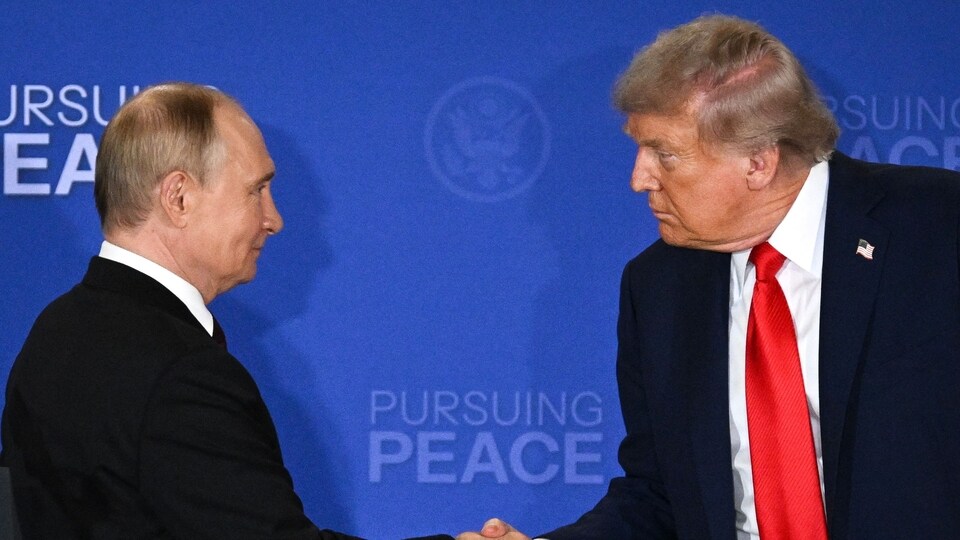
The Russians are closing in on Pokrovsk. The eastern Ukrainian city, once a logistics hub, has held back Russian forces in southern Donetsk for about a year. Its fall would be the first operationally significant victory of Russia’s summer offensive. And Vladimir Putin wants to use this moment to convince Donald Trump that his momentum is unstoppable—with Pokrovsk an example of Russia’s greater resources.
Ukraine has long used technology to make up for its disadvantage in manpower. Now Russia is using a relatively new type of unmanned vehicle that is straining Ukraine’s outmanned troops: fiber-optic drones. They are invulnerable to jamming and spoofing because they are controlled by tiny cables that stretch like kite strings for as long as 10 miles. Russia uses these drones to impede Ukrainian movement around Pokrovsk by attacking troops rotating from the front, combat medics evacuating the wounded, and couriers of supplies.
Ukraine has the same technology, but not as much. Around Pokrovsk, Russian fiber-optic drones outnumber Ukrainian ones about 7 to 1, says Ivan Kutiepov, deputy commander for unmanned aerial systems for Ukraine’s 59th Separate Assault Brigade.
Ukrainians haven’t found an adequate countermeasure against this type of drone. Shooting down a fiber-optic drone with a rifle requires good aim and steady nerves. Land drones can conduct some battlefield functions so men don’t have to, but their supply varies across the front. Metal cages installed on transport vehicles can sometimes reduce the likelihood of a direct strike or mute the explosive effect, but Russians can overcome them with large payloads or multiple strikes.
In Pokrovsk, the Russians are advancing with a brutal approach: Force troops forward, often on foot, to their almost certain death, boast about the progress of the few who survive, and then see if their luck holds the next day. Earlier this year Russians were reportedly suffering 14,000 to 15,000 casualties a month near Pokrovsk. But “the Russians can afford to lose manpower. We cannot afford to lose men,” says Lt. Col. Viktor Tregubov, spokesman of the Dnipro Operational Strategic Group of Forces, a joint command of several dozen brigades that oversees the eastern front of the war.
Moscow’s resource advantage is also changing the dynamic in Ukraine’s skies. Russia learned from Iran how to make long-range drones, and in early July it churned out between 100 and 170 daily. Last month Russia launched 6,297 drones and 198 missiles at Ukraine—up from 447 drones and 85 missiles a year ago, according to the Institute for the Study of War. The Russians have “basically found a way to achieve some of the effects of strategic bombing without having air superiority by using these drone-missile packages,” says Fred Kagan of the American Enterprise Institute.
Israel and its partners have fended off large Iranian strikes on occasion, but Russia’s huge attacks now happen a few times weekly. “No one has dealt with the sustained intensity of combined strikes like this,” Mr. Kagan says.
The West’s options to mitigate Russia’s resource advantage also have battlefield implications. For procurement, Kyiv has been promoting the Danish Model, a plan pioneered by Copenhagen to supply Ukraine with weapons. Western partners including Denmark, Iceland, Sweden, Canada and Norway make financial donations and the EU sends interest from frozen Russian assets to pay for Ukraine to make its own weapons. Russia also has about $300 billion in reserves in the West, which Europe could confiscate, turning the money over to Ukraine to ramp up production.
Ukraine has figured out how to make some weapons less expensively, and it benefits from breakthroughs like Shahed-intercepting drones. But Russia’s aerial attacks can still overwhelm air defenses, leaving high-value targets vulnerable. Ukraine has made its command and logistics centers mobile, but weapons manufacturing is less flexible. For the Danish Model to work, the West would need to provide air-defense systems that Ukraine can’t produce to protect weapons-manufacturing facilities and the energy infrastructure that supports them. Western nations could team up with Ukrainian arms developers to establish production facilities elsewhere in Europe. In June Copenhagen announced an agreement for one such $78 million project in Denmark.
To slow Mr. Putin’s war machine, the U.S. and Europe could lift restrictions on Ukraine’s use of Western weapons to strike within Russia. That would let Kyiv target where Russia produces and launches missiles and drones. Secondary sanctions on Russian oil also would cut into Russia’s military financing.
America has many ways to chip away at Russia’s lead. Mr. Putin’s momentum isn’t unstoppable, especially if Ukraine can rely on a key resource: Western will.
Ms. Melchior is a member of the Journal’s editorial board.


