
 E-Paper



Nepal PM Oli changes tack after pressure to quit, asks who will replace me
PM KP Sharma Oli has been under pressure to quit from his rivals in Nepal Communist Party who command majority support in the party’s central committee and the standing committee.

 Prefer HTon Google


Prime Minister Khadga Prasad Sharma Oli, who has been hemmed in by his rivals in the ruling Nepal Communist Party (NCP) for weeks, has suggested that his replacement should be from the CPN (Unified Marxist–Leninist) faction of the party. The suggestion, made at his meeting with Pushpa Kamal Dahal on Thursday, is seen as a new effort to drive a wedge between leaders of the rival faction. Dahal, who has been widely seen to be his replacement, is from the CPN (Maoist Centre). The two parties had merged in 2018 to form the Nepal Communist Party.
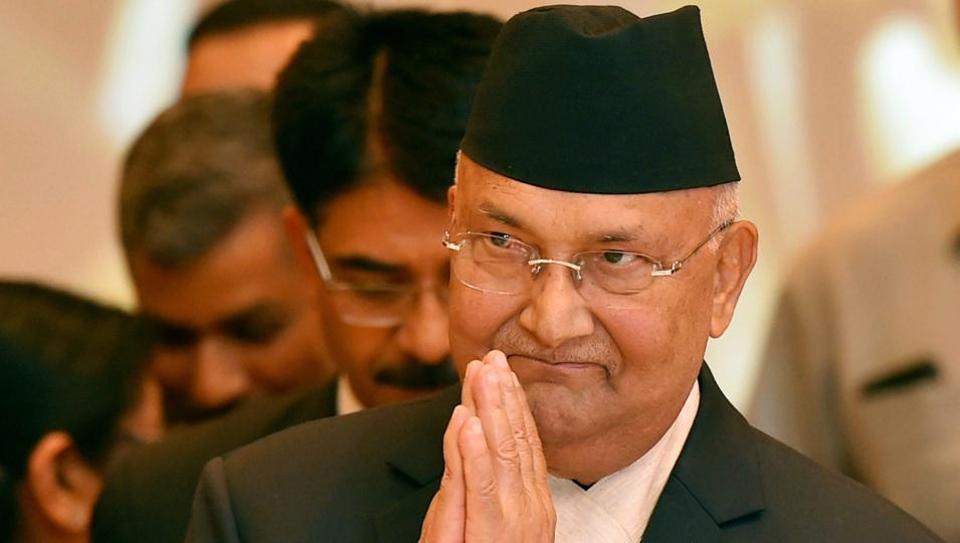
PM Oli, who came to power in a 50-50 power sharing deal with Pushpa Kamal Dahal, renegotiated the agreement in November 2019 that envisaged letting Dahal run the NCP while he continues to hold the reins of the government. But pressure has lately been building on PM Oli from the triumvirate in the communist party - former prime ministers Dahal, Jhala Nath Khanal and Madhav Nepal - to step down.
“It is a ploy to split his opposition and get Dahal and Madhav Nepal fighting among themselves. But I don’t think it will succeed. They (Madhav Nepal and Dahal) are determined that the prime minister should first step down,” an NCP leader told Hindustan Times.
PM Oli had survived the last rebellion in April-May this year when he picked up a feud with New Delhi over a 80-km road built near Nepal’s border and came up with a new political map. Later when his rivals, who have overwhelming support in the party’s standing committee tried to push him out, he hit back with accusations that they were working at India’s behest to destabilise him.
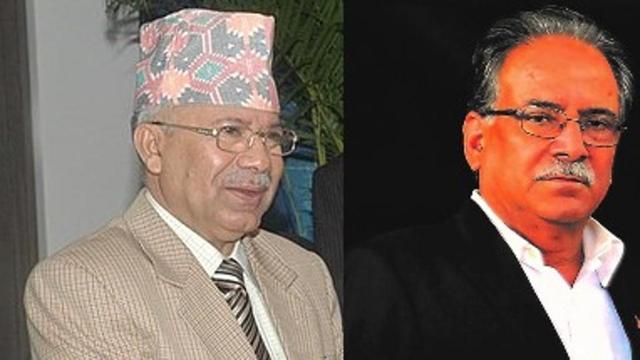
Dahal did reject the charge, even hardened his stand against PM Oli, but ended up slowing down their campaign against the prime minister. There were occasions when PM Oli skipped the meeting of the standing committee where he is in a minority, ostensibly because he wasn’t feeling well, even when the meeting was being held at his official residence.
The 44-member standing committee, which last met on July 2, was scheduled to meet at 3 pm this afternoon. But the meeting, the panel’s first in a fortnight, was postponed again at the last minute. It has been rescheduled to meet on Sunday, July 19.
Earlier this month, PM Oli’s associates floated the idea that it was meaningless to discuss their differences at the standing committee and PM Oli should try to arrive at an arrangement with Dahal at one-on-one meetings. There had been no meeting ground; PM Oli wouldn’t step down.
At his last round of meeting with Dahal on Thursday, PM Oli made the surprise suggestion about his replacement. Some see it as an attempt to buy time for himself, something that he has particularly excelled in over the last few months.
People familiar with the discussions within the Nepal Communist Party said one of the possibilities being explored by party leaders was that the PM Oli standoff be referred to the 445-member central committee, which would have the last word.
“This could give him more time to work something out but would narrow his options, a party source said.


