
 E-Paper



Iran to charge $1 per oil barrel toll from tankers passing Strait of Hormuz: Report
The latest development comes even as Iran once again closed the Strait of Hormuz in response to the Israeli attacks against Hezbollah in Lebanon.

 Prefer HTon Google


Iran will reportedly demand tolls in cryptocurrency from shipping companies to let their oil tankers pass through the strategic Strait of Hormuz, as the Islamic Republic tightens its grip on the narrow waterway despite a two-week ceasefire with the United States.
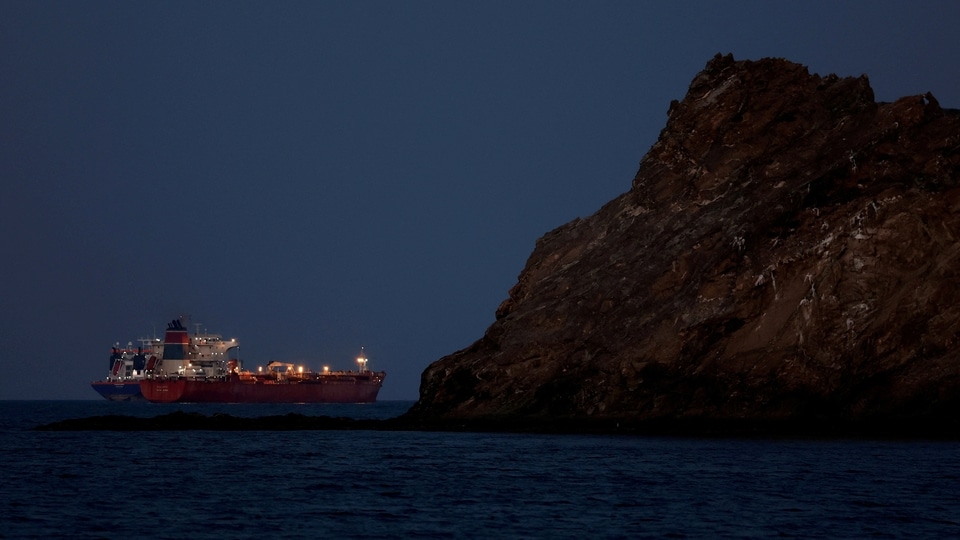
According to Hamid Hosseini, spokesperson for Iran's Oil, Gas and Petrochemical Products Exporters' Union, Iran wants to collect toll from any passing ship, and to assess each of the vessels. Follow US-Iran war news live updates
"Iran needs to monitor what goes in and out of the strait to ensure these two weeks aren't used for transferring weapons," Hosseini quoted as saying by the Financial Times. The demanded toll is reportedly $1 per barrel of oil.
He said that while every ship can pass the Strait, the procedure to do so would take time, noting that Iran "is not in a rush".
Iran closes Hormuz again
The latest development comes even as Iran once again closed the Strait of Hormuz in response to the Israeli attacks against the Hezbollah militant group in Lebanon, The Associated Press reported.
On Wednesday, Iran agreed to temporarily reopen the strait, through which one-fifth of the world's oil passes. The agreement came as part of the two-week truce with the US.
ALSO READ | Iran, Oman to collect shipping fees in Strait of Hormuz: Report
In a statement, cited by local media, Iran's Revolutionary Guard Corps said, "All ships intending to transit the Strait of Hormuz are hereby notified that in order to comply with the principles of maritime safety and to be protected from possible collisions with sea mines...they should take alternative routes for traffic in the Strait of Hormuz."
Decisions on the conditions for vessels to pass the Strait are made by Iran's Supreme National Security Council.
Toll of $1 per barrel of oil
Earlier, before Iran blocked the waterway once again, Hosseini said that any tanker passing the Strait must email the authorities about its cargo, following which Tehran will inform them of the fee they need to pay in digital currencies.
Hosseini further stated that the toll is $1 per barrel of oil, noting that empty vessels can pass free of charge, FT reported.
"Once the email arrives and Iran completes its assessment, vessels are given a few seconds to pay in bitcoin, ensuring they can't be traced or confiscated due to sanctions," the spokesperson added.
On Wednesday, tankers in the Gulf were reportedly warned of strikes if they failed to gain Iran's approval beforehand.
"If any vessels try to transit without permission, (they) will be destroyed," the broadcast reportedly said, FT cited.
No vessels are risking the passage at the moment, with Western ship owners reportedly waiting for a clear understanding of the status of the Strait.
Maersk, the world's second-biggest shipping line, said it was "working with urgency" to clarify Iran's terms on the waterway.
"The ceasefire may transit opportunities, but it does not yet provide full maritime certainty," the company said. It added that it would continue taking a "cautious approach" with cargoes, noting that it was not making any changes to specific services yet.
The report further cited industry executives to mention that nearly 300 to 400 ships are waiting to exit the Gulf as soon as they can safely pass the Hormuz Strait.
There is "no way" that the backlog of ships waiting to get out could be cleared in two weeks, Martin Kelly, head of advisory at maritime intelligence group EOS Risk, was cited as saying/
He said that around 10 to 15 ships might be able to pass through the Strait every day, citing the "time-consuming" process. Before the start of the war with the US, about 135 ships used to reportedly pass the crucial waterway every day.


