E-Paper



How Israel sent a Blue Sparrow into ‘space’ to kill Iran's supreme leader Khamenei
The Blue Sparrow missile follows a quasi-ballistic trajectory, meaning it climbs high above the Earth's atmosphere before descending steeply toward its target.

 Prefer HTon Google


Iran Supreme Leader Ayatollah Ali Khamenei's death came from above. Literally.
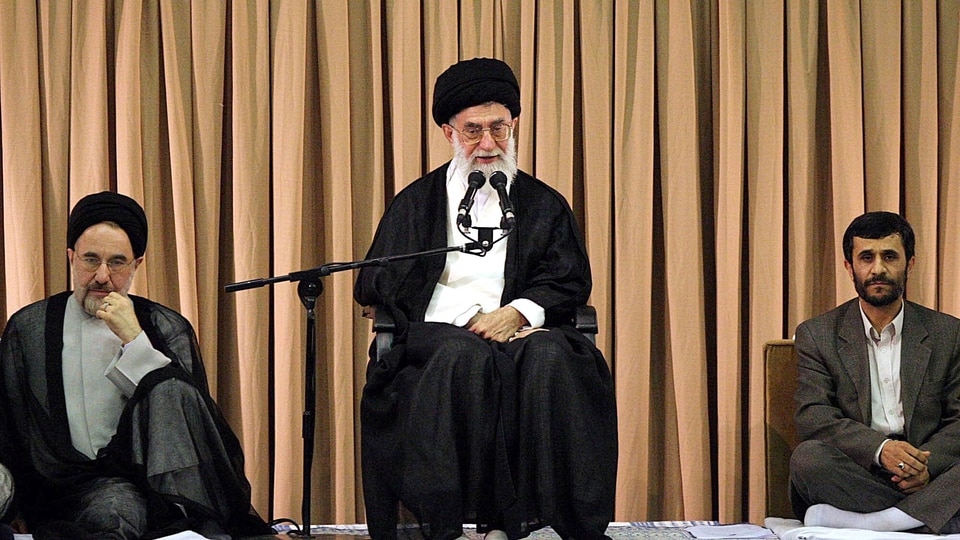
The strike that killed the 86-year-old cleric was carried out using a powerful air-launched missile known as the Blue Sparrow, a weapon capable of travelling to the edge of space before plunging back toward Earth at extremely high speed.
The US-Israeli strike on Saturday was a dramatic beginning of a war that has now spread across the Middle East.
According to reports, the missile was fired during a coordinated Israeli operation targeting senior Iranian leadership inside Tehran, striking Khamenei’s heavily guarded compound on Pasteur Street where several top officials had gathered for a meeting.
Iranian state media confirmed the supreme leader’s death the following morning.
Missile that briefly travels through space
The Blue Sparrow missile follows a quasi-ballistic trajectory, meaning it climbs high above the Earth's atmosphere before descending steeply toward its target.
Originally developed as part of Israel’s Sparrow missile family - which also includes the Black Sparrow and Silver Sparrow systems - the weapon was designed to simulate Soviet-era Scud missiles during missile defence tests.
Over time, the missile was adapted for operational strike missions.
Measuring roughly 6.5 metres in length and weighing about 1.9 tonnes, the missile can travel approximately 1,240 miles (around 2,000 kilometres) and is typically launched from fighter aircraft such as the McDonnell Douglas F-15 Eagle.
After launch, a booster rocket propels the missile toward the edge of space before it separates and re-enters the atmosphere at high speed, descending onto its target.
The steep trajectory significantly reduces the reaction time for air defence systems, making interception extremely difficult and allowing the weapon to strike heavily protected targets with little warning.
Israeli officials said fragments believed to be from the missile were later found in Iraq, along what analysts believe was its flight path toward Tehran.

Operation targeting Iran’s leadership
The strike formed part of a broader Israeli campaign known as Operation Epic Fury, which targeted key Iranian military and political leadership positions.
Israeli fighter aircraft took off shortly after 7.30am Iran time and reached launch positions roughly two hours later.
At about 9.40am, around 30 precision-guided munitions, including several Blue Sparrow missiles, were fired toward Khamenei’s compound and nearby facilities.
Videos circulating on social media showed thick smoke rising from multiple locations across Tehran, including the supreme leader’s residence.
Satellite imagery later suggested that several buildings inside the complex had been severely damaged.
Intelligence operation years in the making
The strike was the culmination of a long-running intelligence effort by Israel’s spy agency Mossad and cyber-intelligence unit Unit 8200.
Israeli intelligence agencies reportedly spent years tracking the movements of Khamenei’s security detail and mapping activity around the compound.
The surveillance operation included hacking traffic cameras and monitoring communication networks across Tehran, allowing analysts to develop what intelligence officials describe as a detailed “pattern of life” of the Iranian leadership.
The final decision to strike came after intelligence indicated that several top Iranian officials would attend an in-person meeting with Khamenei on Saturday morning.
Timing the strike
Khamenei had reportedly been spending most nights in a deep underground bunker beneath his residence, which Iranian officials believed would shield him from air strikes.
Also read: ‘All traffic cameras hacked for years’ - Inside the plan to kill Iran's Khamenei
Israeli planners therefore waited for a rare moment when the supreme leader and his senior commanders were gathered above ground.
Shortly before the attack, Israeli cyber units reportedly disrupted mobile phone networks around the compound to prevent warnings from reaching security personnel.
When the missiles struck, Iranian officials were reportedly gathered for a morning meeting.
Along with Khamenei, several senior figures from the Islamic Revolutionary Guard Corps and other military leadership were killed in the attack.
Some reports also suggested members of the supreme leader’s family who were present during the meeting were among those killed.