
 E-Paper



Loyalty to Niazi may legally cost the ex-Pak Assembly Speaker
Qaiser cited his 30-year-old relationship with ousted PM Niazi and refused to follow the directions of the Pakistan Supreme Court's five-judge bench.

 Prefer HTon Google


By refusing to conduct voting on the Opposition’s now successful no-confidence motion to oust the Imran Niazi government, National Assembly speaker Asad Qaiser has exposed himself to contempt of Pakistan Supreme Court order and is thus liable for punishment.
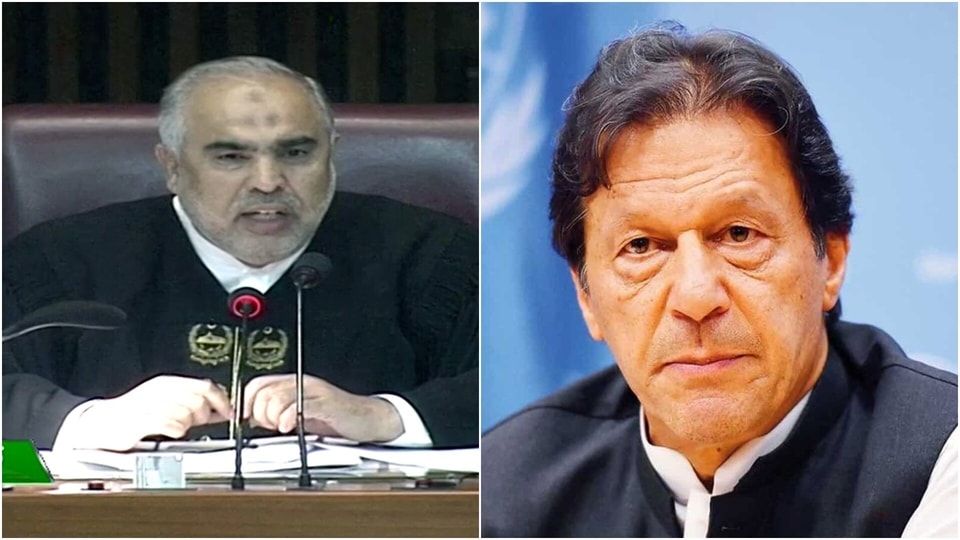
While the post of Speaker in either Assembly or Parliament is expected to be non-partisan and above the political parties, Qaiser cited his 30-year-old relationship with ousted PM Niazi and refused to follow the directions of the Pakistan Supreme Court's five-judge bench. Rather than conduct the no-confidence vote as mandated by the Court on Saturday, Speaker Qaiser chose the partisan route and resigned from the post.
His deputy Qasim Suri on April 3 dismissed the no-confidence motion on grounds of an alleged foreign conspiracy to dismiss the Niazi government and prorogued the Assembly session. It was only after the Opposition approached the Supreme Court of Pakistan that the Chief Justice on April 7 ordered the National Assembly to be restored and the vote to take place on April 9.
While the voting on the motion was conducted by a PML (N) speaker on the chairman panel of the Assembly, Niazi was not present in the house but at his private home on the outskirts of Islamabad. It is understood that the Army Chief Gen Qamar Jawed Bajwa and the DG (ISI) Lt Gen Nadeem Anjum met Niazi at his Bani Galla residence before the vote finally took place amidst theatrics inside and outside the Assembly premises.
Even as the ousted former cricketer has called for protests today against what he calls a foreign conspiracy to dismiss his government, the public mood as envisaged from the social media appears to be that of relief from a political drama that continued for nearly a month.
According to Pakistan watchers, PML (N) leader Shehbaz Sharif will be sworn in as Prime Minister of Pakistan on Monday, paving a way for a general election at a suitable time. While a sole PTI member in the Assembly before the vote said that Niazi will return to power with a two-thirds majority, the seat of Pak PM will be hot for anyone to handle in future given the state of the economy of the Islamic Republic. With external debt in three figures, rising food inflation and a weak Pakistani rupee, the next PM of Pakistan has a very tough job at hand.


