
 E-Paper



Pak politicises FATF, hires top lobbying firm for a US bailout from grey list
Islamabad requires support of at least 12 out of 39 member states to remove its name from the grey list and this will largely depend on the approach the US will take at the Paris plenary.

 Prefer HTon Google


In view of the upcoming October 21-23 plenary and sub-groups meeting of the Financial Action Task Force (FATF), Pakistan is understood to have hired a top lobbyist firm on the Capitol Hill to push a narrative favouring Islamabad with Trump administration and get bailed out of the club of nations on the “grey list.”
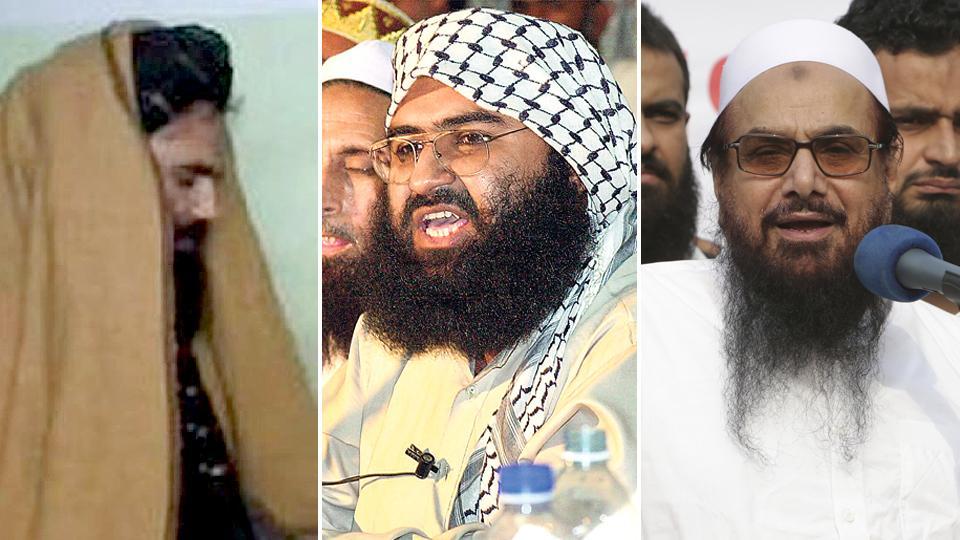
With all-weather friend and iron brother China, Ottoman empire revivalist Turkey and increasingly radicalised Malaysia behind Pakistan, there is no possibility of Islamabad getting pushed into FATF’s black list as only three out of 39 member states are required to block the proposal. Islamabad, however, requires support of at least 12 out of 39 member states to remove its name from the grey list and this will largely depend on the approach the US will take at the Paris plenary.
Also Read: China has itself to blame for strong QUAD | Analysis
According to diplomats based in the US and Paris, the Pakistan foreign ministry has hired Houston (in Texas) based lobbying firm Linden Strategies to push its case with the Trump administration. The lobbying firm website describes it as a “government relations and business development firm providing strategic analysis and advisory to domestic and international clients, including sovereign nations.” The firm’s specialisation is in government relations, strategic communication, business advisory and political consulting with clients spanning the globe.
Also Read: Pakistan opposition parties accuse army of meddling with polls
Apparently, the narrative that Pakistan wants the Houston firm to communicate to Trump administration is as follows:
■ Main leadership of the Taliban, Haqqani network, al Qaeda and Daesh global terrorist groups is based in Afghanistan with sufficient funds available to them. This means that Islamabad has disavowed that Taliban shura and the Haqqani network operate from Quetta, across Bolan Pass, and Peshawar, across Khyber Pass, and there is no hand of Pakistan’s deep state in al Qaeda and Daesh or so-called Islamic state in Afghanistan. The fact is that Haqqani network chief Sirajiuddin Haqqani is the sword arm of the Taliban as its deputy leader with Maulvi Hibatullah Akhunzada being a cleric.
■ While Pakistan claims that Muridke based Lashkar-e-Taiba (LeT) remains defunct, terror financing cases have been registered against most of the identified leaders of Jamaat-ud-Dawa and Falah-e-Insaniat foundation. The fact is that LeT chief Hafiz Saeed, main accused in 26/11 attacks, has handed over the reins of the proscribed group to son Talha, who is instigating violence and in touch with sleeper cells across the Line of Control (LoC) in Jammu and Kashmir.
■ The Imran Khan government claims that Bahawalpur based Jaish-e-Mohammed (JeM) terrorist group follows a unique Afghan war based model of operation. While its key leaders are not in Pakistan, the group is operating through its sympathisers. The fact is that JeM’s emir Masood Azhar has a serious medical condition and is bed-ridden in Bahawalpur. His brother Mufti Rauf Asghar now operates the group with training camps both in Pakistan as well as across the Durand Line in Afghanistan. The JeM’s main operator in Kashmir is Kasim Jan, 2016 Pathankot attack accused, who gets instruction from Asghar. The JeM is a family enterprise with terrorism as its main product.
■ Pakistan claims that it has successfully convicted four designated persons and two other senior leaders, and that terror financing cases have been instituted against 11 designated persons (61 cases) and eight other leaders (37 cases). The fact, however, is that according to FATF’s 2019 mutual evaluation report there were 66 organisations and approximately 7,600 individuals proscribed under UN Security Council resolution 1373, which was passed to prevent and suppress financing of terror acts post 9/11 attacks.
Despite hiring a top lobbying firm and offering its leverage with Taliban to US for reduction of violence in Afghanistan, Pakistan will not be able to escape the grey list this time as its 2019 mutual evaluation report leaves a lot to be desired and it is still to comply with all the 27 points of FATF action plan of the past.


