E-Paper



‘Perfect bullseye’: How Artemis II withstood 5,000 degrees during return to Earth
Before the return, there were concerns about whether the capsule’s heat shield could handle the intense conditions during re-entry from a lunar path.

 Prefer HTon Google


The Artemis II capsule, carrying four astronauts, travelled through Earth’s atmosphere and safely landed in the Pacific Ocean on Friday. The return came after nearly 10 days in space in what was the first human mission near the Moon in more than 50 years.
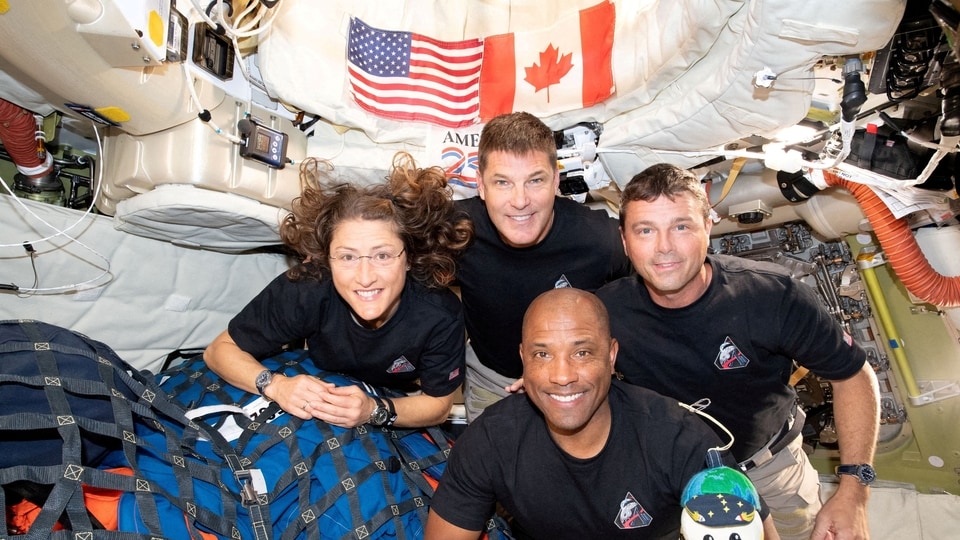
“A perfect bullseye splashdown for Integrity,” said Rob Navias, public affairs officer of mission operations at NASA’s Johnson Space Center, as NASA astronauts Reid Wiseman, Victor Glover, and Christina Koch, along with CSA (Canadian Space Agency) astronaut Jeremy Hansen, touched down.
The crew completed a journey of 694,481 miles (1.1 million kilometres) from launch. This was the final major test of the 10-day Artemis II mission, which carried astronauts around the Moon, set new distance records for human spaceflight and captured striking images.
Before the return, there were concerns about whether the capsule’s heat shield could handle the intense conditions during re-entry from a lunar path. NASA’s gumdrop-shaped Orion capsule, however, proved that its heat shield could manage the extreme heat.
How Artemis II withstood thousands of degrees
The capsule entered Earth’s atmosphere at 32 times the speed of sound. As it descended, friction heated the surface to nearly 5,000 degrees Fahrenheit (2,760 degrees Celsius).
The heat shield sits at the base of the spacecraft and protects both the vehicle and its crew from extreme heat during re-entry. If it fails, the metal beneath could melt, break apart and be destroyed, The New York Times said in a report.
NASA has accepted that the heat shield still has some issues. Even so, the agency said astronauts would have survived if they had been aboard during Artemis I.
The agency decided to proceed with Artemis II using the same heat shield design, but changed the path Orion follows during re-entry to reduce the time spent in the most intense heat. Future Artemis missions will use a new heat shield.
With the mission complete, NASA will study what it learned from Artemis II as it works towards landing humans on the Moon as early as 2028.
The many firsts of Artemis II mission
The mission included the first woman (Koch), the first person of colour (Glover) and the first non-American (Hansen) to travel around the Moon.
Earlier missions during NASA’s Apollo programme in the 1960s and 70s only included white American men.
Artemis II was the first crewed flight in NASA’s programme to build a lasting human presence on the Moon, including plans for a base.
It also set a new record, as the four astronauts became the first humans to travel the farthest from Earth, reaching 252,756 miles (406,771 kilometres).
They passed the previous record set by the Apollo 13 mission in 1970, exceeding it by more than 4,000 miles (more than 6,400 kilometres).
With inputs from agencies