
 E-Paper



President Xi rocks the Arab world, alarms QUAD and the West
That Saudi Arabia’s archrival, the Qatari Emir, left the ongoing World Cup in Doha to meet Chinese President Xi Jinping in Riyadh showcased the clout of host country in Sunni world and Beijing's rise as an alternate pole to the US.

 Prefer HTon Google


The Middle-East leadership showed the mirror to the Joe Biden administration last week as Chinese President Xi Jinping was feted in Saudi Arabia with even arch-rival Qatari Emir Tamin bin Hamad Al Thani leaving the ongoing World Cup soccer festival in Doha to meet the Middle Kingdom emperor in Riyadh.
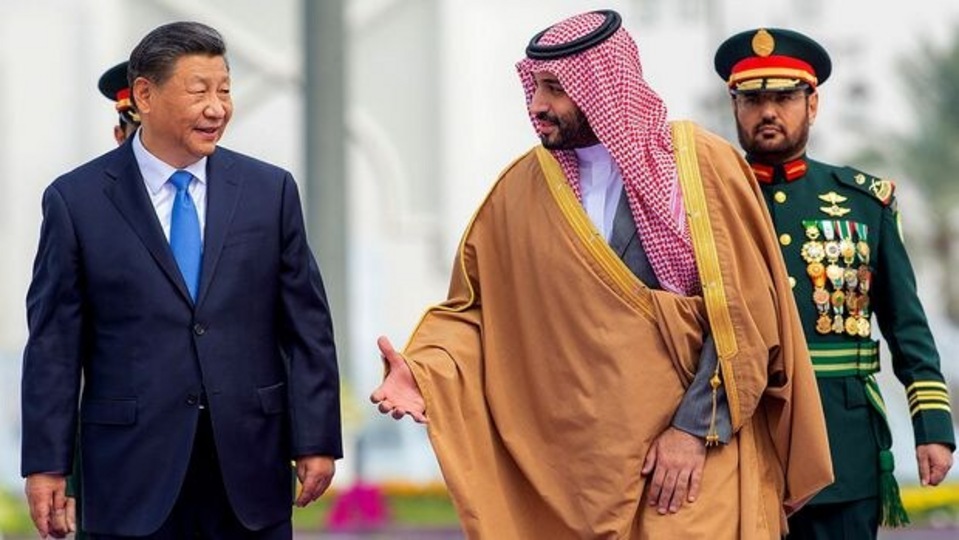
The four-day visit of President Xi Jinping to oil-rich Saudi Arabia with virtually every Middle-East ruler in attendance as part of the GCC and Arab summit at that time was a message to the US and its allies that China increasingly is the alternate pole in an unstable world. Clearly Saudi Crown Prince Mohammed bin Salman show-cased President Xi’s four-day visit to the oil-rich kingdom as a comeback to his testy relationship with US President Joe Biden over the killing of journalist Jamal Khashoggi in 2018. The Islamic countries on their part ask no questions to China over the treatment of Sunni Muslims in the restive Xinjiang province.
The line-up to meet President Xi included Bahrain’s King Hamad, Qatar Emir Sheikh Tamin, Fujairah, UAE ruler Sheikh Hamad bin Mohammed, Kuwaiti Crown Prince Sheikh Meshal Al Sabah and Deputy Prime Minister of Oman Sayyid Fahd Al Said for the China-GCC summit. Other middle-east leaders who joined for the China-Arab summit were: Egyptian President Abdel Fatah El Sisi, Sudan Sovereign Council head Gen Abdel Fattah Al Burhan, Palestinian President Mahmoud Abbas and Iraqi Prime Minister Mohamed Shia Al Sudani. The message from Saudi Arabia was that the world’s biggest oil exporter was the leader of the Sunni Muslim world and had the support of the world’s largest oil importer China and the two were more than willing to do business as a first step towards future military cooperation. The elaborate show with all pomp and gala was also a signal from Riyadh that Washington no longer was the sole arbitrator of the oil-rich Middle-East and China had arrived.
While President Xi’s Saudi Arabia visit and the red carpet treatment have sent shock signals in Europe and US, the joining of hands by Crown Prince Mohammed bin Salman and his once arch rival Sheikh Tamin has been a highlight of the show with MBS going to attend World Cup opening and the latter attending the China-GCC summit. Saudi Arabia, UAE, Egypt and Bahrain had cut ties with Qatar in 2017 on grounds of links with the Muslim Brotherhood and supporting terrorism. The ties were restored at the behest of the US in January 2021. That President Xi met all the important leaders of the Sunni world in one go will also enhance his perceived to be beleaguered stature in his own country.
While Saudi Arabia-China oil trade in Yuan is still a work in progress, one of the agreements involves a top Saudi renewable energy company, Acwa Power, and the Industrial and Commercial Bank of China Ltd, China’s largest commercial bank, which is a direct participant in CIPS, the Chinese version of SWIFT, hinting at deep financial cooperation between the two authoritarian states. SWIFT is the global system based in Belgium that allows banks to transfer funds in a totally secure manner.
The deepening of cooperation between the Middle East and China not only has a lesson for US but should also be a matter of concern to India given the ongoing military friction between the two neighbours. Increasing the Chinese footprint in the Indian Ocean will further complicate matters for India as Beijing expands its Belt Road Initiative to the Middle East without taking any moral high ground unlike US over human rights.
With perceived US global clout taking a hit after the Taliban ousted them from Kabul on August 15, 2021, the Middle-East leaders have become more assertive and resent outside interference in their affairs. For instance, UAE, one of the main players of Sunni world, had to stop construction work at Khalifa port last year after the US found that China was secretly building a military facility in the garb of commercial activity. However, to say that the Middle East has taken the China road is also over interpretation as the leadership in these countries tends to play one side against the other for their own benefits and national interest.
President Xi’s Saudi Arabia visit is a wake-up call to QUAD to translate discussions into reality on ground and for India to tighten partnerships from the South China Sea to Gulf of Aden or else the security of Indian Ocean will be in jeopardy.


