
 E-Paper



Rise of Jamaat-e-Islami and Bangladesh political conundrum
Reports indicate that neither the Bangladesh Army nor Mohammed Yunus have been able to control anti-Awami League worker and anti-Hindu violence in the country.

 Prefer HTon Google


New Delhi: A month after the ouster of Sheikh Hasina, Bangladesh Interim Government headed by pro-west Mohammed Yunus and Army Chief General Waker-us-Zaman have not been able to restore law and order in the country with perceptible rapid rise of Islamist Jamaat-e-Islami (JeI) even at the expense of Khaleda Zia’s Bangladesh Nationalist Party (BNP).
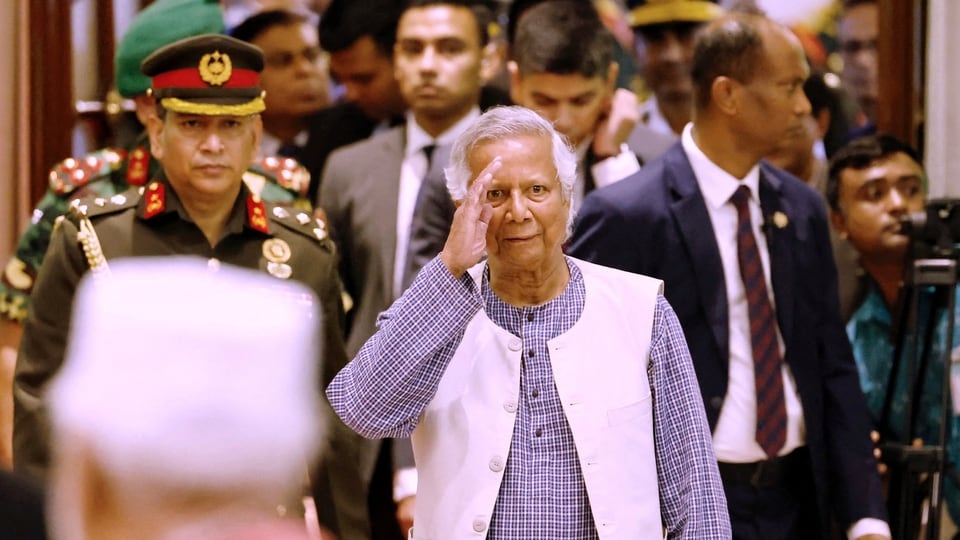
The rise of JeI, which has deep ideological links with Muslim Brotherhood, and the tactical joining of hands with ultra-Islamists Hefazat-e-Islam and pro-Islamic state Ansar-ul- Bangla Team poses a serious threat to the democratic credentials of Bangladesh as intelligence inputs indicate that student leaders are also been controlled or perhaps influenced by the Islamists.
Reports indicate that neither the Bangladesh Army nor Yunus have been able to control anti-Awami League worker and anti-Hindu violence in the country with the troops unwilling to engage the perpetrators and reduced to mere bystanders.
The rise of JeI has been noted by Indian national security planners as this has security ramifications within India as Jamaat has influence in Jammu and Kashmir and also in the Indian hinterland. In the 1990s, Jamaat was behind the rise of SIMI all over India particularly UP, Maharashtra, undivided Andhra Pradesh and the group was later weaponized by Pakistan into Indian Mujahideen. Jamaat has played a key role in orchestrating pro-Pak sentiment in the Valley by radicalizing youth to take up arms.
While the Interim Government in Bangladesh is in no hurry to announce elections, a weak government, rising Islamic radicalization, and spiraling down state of economy will spell disaster for Dhaka. The flip side is that presently terrified workers of Awami League may start to regroup and join hands in the coming months and challenge the BNP and its much stronger affiliate JeI. Inputs indicate that actually JeI has gained ground in Bangladesh post August 5 at the expense of BNP.
Even though Interim leader Yunus is targeting Sheikh Hasina and is hinting at extradition of ousted leader from India, the main threat to polity of Bangladesh is actually coming from Islamists with the exiled leader still to come to terms with her sudden exit.
While India is concerned about the violence and specific targeting of Hindus and Awami League workers, it is waiting and watching the situation as an indecisive Interim Government will lead to rise of dissatisfaction among the very youth who threw Sheikh Hasina out. This coupled with the looming economic crisis, closure of textile mills and garment manufacturing units will lead to unemployment and more political turmoil. Already, the external and internal debt of Bangladesh has crossed USD 100 billion.
Bangladesh is politically sitting on a powder keg and may explode once again within a year.


