
Sign in

Satellite images of US strikes in Iran undermine Trump's 'obliterated' claim

While damage to the nuclear sites is visible, there are portions that seem undamaged, and uncertainty on how much the underground sites were impacted.

Updated on: Jun 23, 2025, 11:42:20 IST
Share
Share via
  • facebook
  • twitter
  • linkedin
  • whatsapp
Copy link
  • copy link

US President Donald Trump on Sunday said that American military strikes completely and totally obliterated three Iranian nuclear enrichment plants. However, satellite images have yet to confirm this claim.
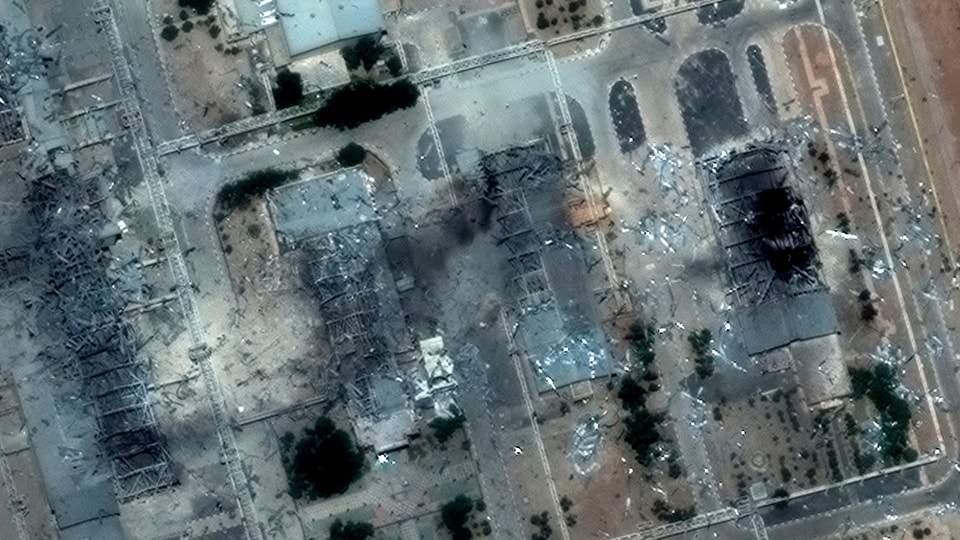
This satellite image provided by Maxar Technologies shows a close view of the Isfahan nuclear technology in Iran after US strikes. (Source: AP) (Maxar Technologies via AP)

While significant damage to the nuclear sites is visible, there are portions that seem undamaged, and uncertainty on how much the underground nuclear establishments were impacted.

The Fordow Fuel Enrichment Plant is located south of Tehran, dug to side of a mountain. Satellite images of the plant, taken after the US strike, show craters, collapsed tunnel entrances and holes on top of the mountain ridge, Bloomberg reported.
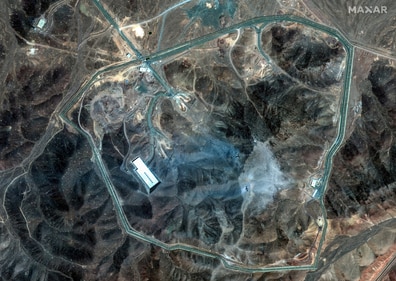
A satellite view shows an overview of Fordow underground complex, after the US struck the underground nuclear facility. (Source: Reuters) (via REUTERS)

However, a building likely used to control ventilation for the underground uranium enrichment work, seems undamaged.

Damage to the Natanz nuclear plant is also yet to be fully assessed, even though a new crater about 5.5 meters in diameter is visible in satellite images.

It is not yet clear if the underground site, buried 40 meters under ground, with an 8-meter thick concrete and steel shell, at the plant was hit.
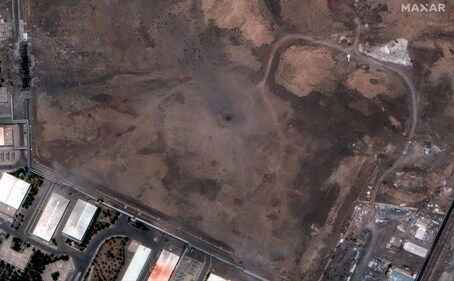
Satellite image shows a close up of a crater over the underground facility of Natanz Enrichment Facility, after it was hit by U.S. airstrikes. (Source: Reuters) (via REUTERS)

The most “extensively damaged," however, was the Esfahan Nuclear Technology and Research Center, according to satellite images. The nuclear plant is located around 450 kms from Tehran.

According to US Air Force General Dan Caine, an assessment of final battle damage will take some time. The International Atomic Energy Agency is also still trying to assess the complete damage.

'Unusual activity'

Iran likely moved a stockpile of near weapons-grade uranium from the Fordow nuclear plant, satellite images of the site from days before the US strike have indicated.

A long line of vehicles was seen waiting outside an entrance of the facility in the images in an "unusual activity".
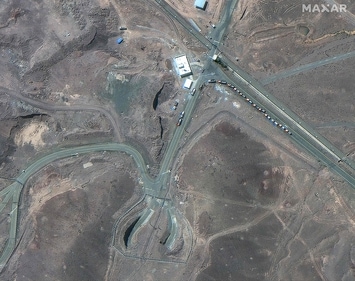
This handout satellite picture taken on June 19 shows trucks positioned near the entrance of Iran's Fordow Fuel Enrichment Plant. (Source: AFP) (AFP)

Besides, two Iranian officials also told New York Times that Iran may have moved out 400 kgs uranium from the facility in anticipation of the US strikes.

Trump had been warning Iran ever since the Israel-Iran conflict began, and had also said he was deliberating on whether to send in troops.

Uranium enriched to 60 per cent weapons-grade levels, just short of the 90 per cent required needed for a nuclear bomb, was likely moved out of the Fordow plant before the strikes.

  • HT News Desk
    ABOUT THE AUTHOR
    HT News Desk

    Follow the latest breaking news, major developments and agenda-setting stories from India and around the world with the newsdesk at Hindustan Times. Operating round the clock, the desk brings together experienced editors, reporters and correspondents to deliver fast, accurate and contextual reporting across subjects that influence public policy, governance, business, society and international affairs. The HT News Desk covers politics, elections, government policies, the economy, business and markets, science and technology, the environment, law and order, infrastructure, education, climate issues and geopolitics, while closely tracking developments across states, institutions and global capitals. The team also leads coverage of major breaking news events, policy announcements, court proceedings, natural disasters, public emergencies and significant international developments. Reports published by the newsdesk are based on information gathered from reporters on the ground, official statements, government agencies, court records, regulatory filings, recognised institutions and other authoritative sources. Stories undergo editorial scrutiny and verification processes to ensure accuracy, fairness and relevance, and are updated as events evolve and additional information becomes available. Whether covering a key political decision in New Delhi, an economic policy shift affecting millions, a landmark court ruling or a major global event, the HT News Desk aims to provide readers with reliable, fact-based journalism that delivers not only the latest developments but also the context and analysis needed to understand their wider implications.Read More

Get the latest headlines from US news and global updates from Pakistan, Nepal, UK, Bangladesh, Russia and US Iran war Live, get all the latest headlines in one place on Hindustan Times.