
 E-Paper



Shehbaz Sharif says Pakistan can become world's 6th-largest economy by 2050, revises Goldman Sachs forecast
The prime minister also called for closer cooperation between the federal and provincial governments to provide investors with the necessary support.

 Prefer HTon Google


Pakistan Prime Minister Shehbaz Sharif has said he expects the country to become the world’s sixth-largest economy before 2050, revising the timeline projected in an earlier Goldman Sachs assessment.
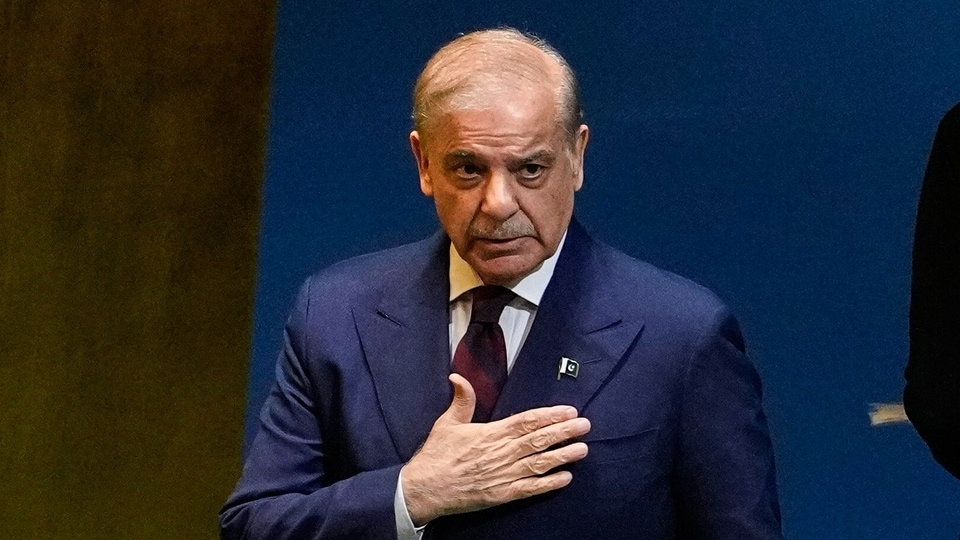
Addressing the Pakistan Minerals Investment Forum 2026 in Islamabad on Friday, Sharif recalled that Goldman Sachs had forecast Pakistan could become the world’s sixth-largest economy by 2075. He said he wanted to bring that target forward, Dawn reported.
“I would like to make a small amendment here — instead of 2075, it will be earlier than 2050,” he was quoted as saying by Dawn.
The prime minister also urged international investors to look beyond extracting and exporting raw minerals, calling for greater investment in processing, refining and manufacturing within Pakistan.
Shehbaz pitches Pakistan as investment destination
Sharif said Pakistan was working to make its mining sector more attractive to investors by simplifying procedures, reducing bureaucratic delays and ensuring transparency in the allocation of licences and contracts.
He said digitised records and the National Minerals Data Centre would allow investors to assess the country’s mineral resources before committing funds to projects.
The prime minister also called for closer cooperation between the federal and provincial governments to provide investors with the necessary support. He said ensuring the safety of workers, assets and supply routes remained the government’s responsibility.
“Your safety is our safety and your protection is our protection.”
Sharif invited investors to bring any projects facing bureaucratic hurdles directly to him, saying he would personally intervene to speed up the process.
“If any file gets stuck due to bureaucratic delays or cumbersome procedures, bring it straight to me. I will personally ensure that it moves at lightning speed.”
He also stressed the importance of local communities, infrastructure and skilled workers in making mining investments successful. He urged investors to establish training centres and vocational institutes to help young people develop skills and find employment in the sector.
“Every investment in mining must translate into local jobs, local businesses, local contractors; into schools, clinics, clean drinking water, and above all for a better life for the communities where these investments are being undertaken,” he said.
The prime minister further called for mining operations to follow international standards and use modern technology while safeguarding water resources, land and workers' health and safety.
Reko Diq production expected to begin in 2028
Sharif said copper and gold production at Reko Diq, located on the Tethyan copper belt, was expected to begin in 2028 after a delay of around two decades.
He reiterated his commitment to ending the practice of exporting minerals in their raw form, arguing that Pakistan should develop industries capable of processing resources within the country.
“That day is not far away when this will come to a grinding halt.”
He said projects at Reko Diq and along the Tethyan belt should include refineries, smelters and factories producing cables and conductors.
Calling on investors to establish operations in Pakistan, he said: “mine in Pakistan, process in Pakistan, manufacture in Pakistan, and then export to the rest of the world”.
Sharif described this approach as a mutually beneficial partnership and said the government would support investors at every stage of their projects.


