
 E-Paper



Southall in UK remembers 1979 race riots, Chaggar’s death
Battling far-right groups such as the National Front and the police, hundreds of people of Indian and other origin were charged with criminal offences during a series of events that began with the killing of Chaggar by a racist gang in 1976.


Hundreds of people gathered outside the historic Southall Town Hall on Saturday to mark the death of teenager Gurdip Singh Chaggar and the race-fuelled riots in the late 1970s that sparked off a series of protests and equality laws in the UK.
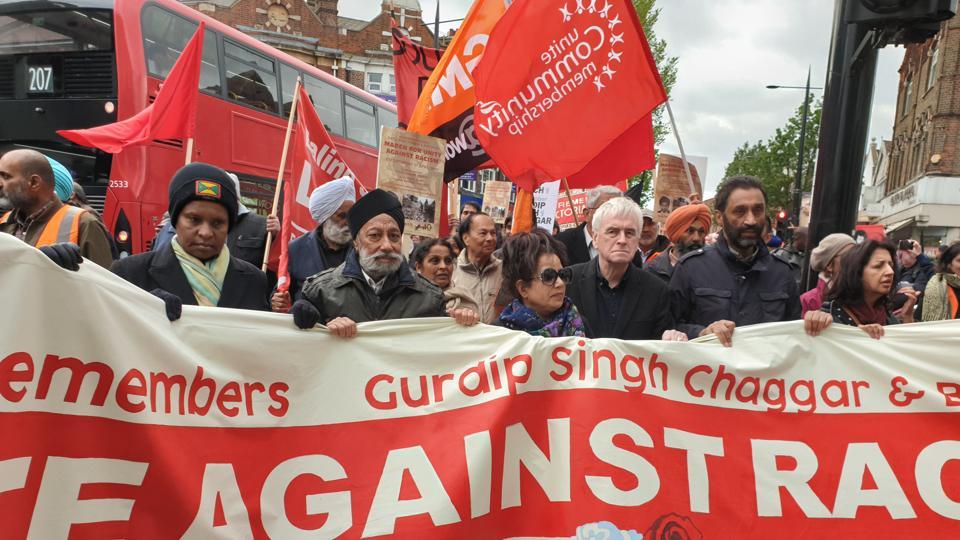
Battling far-right groups such as the National Front and the police, hundreds of people of Indian and other origin were charged with criminal offences during a series of events that began with the killing of Chaggar by a racist gang in 1976.
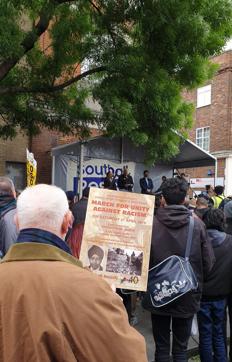
Suresh Grover, who participated in the anti-racism events and youth movements at the time, led the rally outside the Town Hall, where a large ‘March for Unity Against Racism’ joined by several organisations and unions through Southall culminated.
One of the first speakers was a teenaged descendant of Chaggar, whose other family members joined the speaker on the stage to much applause. Several individuals who participated or witnessed the tense events of the late 1970s and early 1980s were present.
Kulwant Singh, who said he was part of the Asian youth that “fought the police” at the time, said the situation had improved considerably over the years, and today multicultural Southall had become the “template for the rest of the world”.
John McDonnell, one of the senior-most Labour leaders and shadow chancellor, joined the march and the rally, while Pragna Patel, director of the prominent charity Southall Black Sisters, said the events of 1979 were a “watershed moment’ in the UK’s history.
“The legacy of Southall 1979 is not to be silent but to give the power to the marginalized,” Patel said, cautioning that racist-fascist forces that Southall battled were still present “inside and outside our communities”, and needed to be tackled with the same resistance.
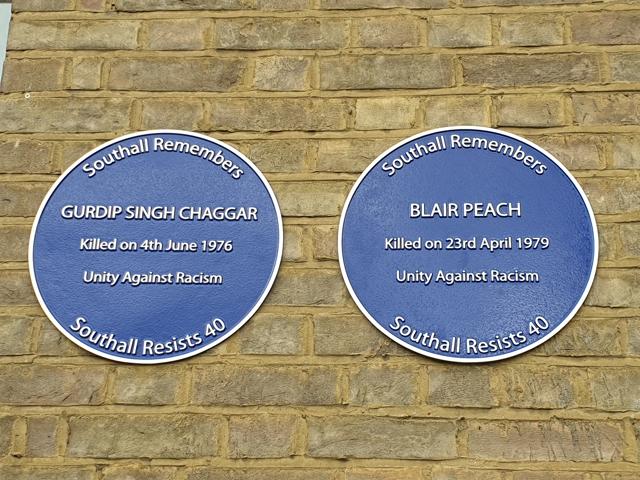
The march and rally paid tributes to Chaggar and Blair Peach, an anti-racism schoolteacher, who was killed during clashes with the police. Chaggar and Peach have since become the symbols of resistance movements against fascism and racism over the years.
A locally-led coordinating group called Southall Resists 40 has been established to promote the 40th anniversary of the struggles, plan events and support such initiatives by affiliated groups. It includes the Indian Workers Association, among others.
Grover said: “Despite these tragedies, our continued resistance achieved a remarkable and life changing victory. People in Southall finally began to live and thrive in a town free from racist and fascist violence”.
“Today the giant twins of racism and poverty are fuelling a far right resurgence…Our aim is not only to remember the past by learning lessons from the resistance that was created, but also to prepare for the future”.


