
 E-Paper



How Sri Lanka PM Rajapaksa was evacuated as protesters stormed his home
Sri Lanka economic crisis: Situation is made worse by rapidly depleting foreign exchange reserves, which means the Lankan govt cannot buy food, fuel, medicines and other essential goods.

 Prefer HTon Google


Sri Lanka prime minister Mahinda Rajapaksa had to be rescued by heavily armed troops from his official residence in Colombo this morning after thousands of protesters stormed the main gates. Protesters then tried to force their way into 'Temple Trees' - the two-storey colonial-era building that serves as the Lankan PM's home and where his family and he were sheltering.
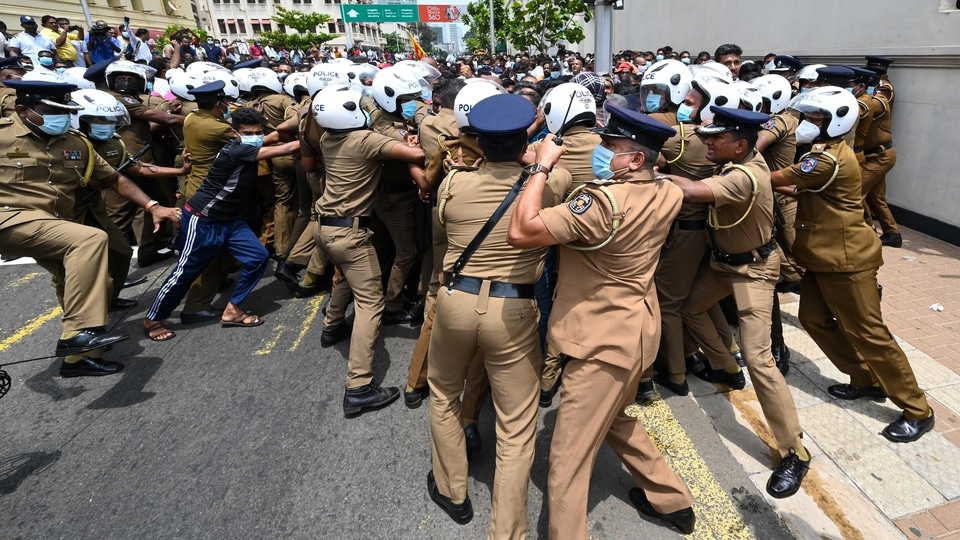
How did Sri Lankan forces evacuate ex PM Rajapaksa?
Police fired tear gas and warning shots in the air to hold back mobs as security forces moved Rajapaksa and his family out of 'Temple Trees'.
Protesters had set fire to a truck used by the military to try and block the main gate and security forces' access to the compound.
"After a pre-dawn operation, the former PM and his family were evacuated to safety by the army," a security official told news agency AFP. "At least 10 petrol bombs were thrown into the compound."
Some of the tear gas canisters fired by Lankan forces also hit the US embassy compound across the road, but there were no reports of casualties.
Where is Mahinda Rajapaksa now?
He has been moved to an undisclosed location, officials told AFP.
Bloomberg later said protesters had gathered outside a naval base in the southern town of Trincomalee after local reports said Rajapaksa and his family had relocated there.
Sri Lanka sees most violent day in weeks; PM quits, MP dies: 10 points
What happened?
Sri Lanka this week saw its most violent protests yet as the island nation battles its worst economic crisis in living memory. At least eight have died so far, news agency PTI reported, and over 200 have been injured in clashes with forces.
One of the dead is a MP from the ruling party - Amarakeerthi Athukorala - who reportedly shot himself after killing two people, including a 27-year-old man.
The ancestral home of the Rajapaksas, in the southern Hambantota district, was set on fire, as were dozens of buildings belonging to his loyalists and others.
Mahinda quits as Lanka PM; MP dead in clash, leaders’ houses on fire
"This is something we should have done earlier," a man in front of a minister's burning home told local media. "We are sorry we couldn't burn it sooner."
Faced with increasingly violent demonstrations, Rajapaksa on Monday quit his post after clashes between those loyal to him and the protestors.
Content warning: This video contains visuals that may upset some viewers
On Friday embattled president Gotabaya Rajapaksa, the former PM's younger brother, imposed another 'state of emergency' and gave sweeping powers to the military as protests demanding the brothers' resignations escalated sharply.
Gotabaya Rajapaksa remains in power at this time.
Why are there protests in Sri Lanka?
Sri Lanka is fighting a massive economic crisis made worse by rapidly depleting foreign exchange reserves, which means it cannot even afford to buy food, fuel, medicines and other essential goods.
It has been bailed out so far by India, which has offered over $2.5 billion in basic goods, and another $1 billion in fuel aid, including petrol and diesel. The Lankan government has also secured $600 million in aid from the World Bank.
However, with forex reserves below $50 million, the situation is dire; finance minister Ali Sabry said Sri Lanka is on the brink of bankruptcy.
Sri Lanka to default on external debt of $51 billion pending IMF bailout
The crisis has triggered a shortage of essential goods - food, fuel, and medicines - and skyrocketing prices for what little remains on shelves.
It has also triggered violent clashes between police and furious citizens demanding Gotabaya Rajapaksa and his government be held responsible.
With input from AFP, PTI


