
 E-Paper



Sri Lanka president, PM agree to quit after violent protests
Speaker Mahinda Yapa Abeywardena said in a video statement Rajapaksa had informed him that he will step down from his post.

 Prefer HTon Google


Sri Lanka’s President Gotabaya Rajapaksa will step down next Wednesday, the country’s parliamentary speaker said on Saturday, after a day of violent protests in which demonstraters stormed the president’s official residence and set fire to the premier’s home in Colombo.
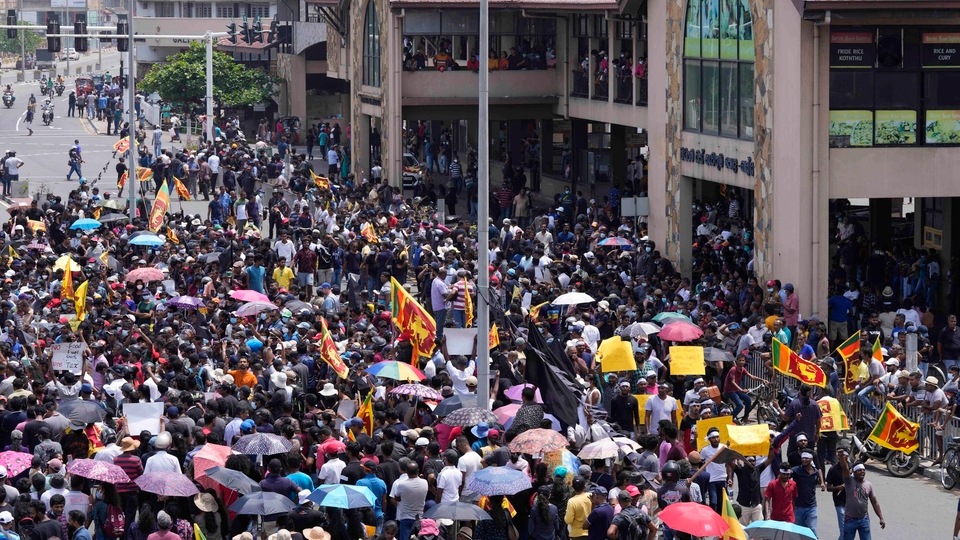
Speaker Mahinda Yapa Abeywardena said in a video statement Rajapaksa had informed him that he will step down from his post.
“The decision to step down on 13 July was taken to ensure a peaceful handover of power,” Abeywardena said. “I therefore request the public to respect the law and maintain peace,” he said. The announcement came after a dramatic escalation in months of anti-government protests over the dire economic crisis in Sri Lanka.
The news of president’s decision triggered an eruption of celebratory fireworks in parts of Colombo city.
With one brother president, another prime minister and three more family members cabinet ministers, it appeared that the Rajapaksa clan had consolidated its grip on power in Sri Lanka after decades in and out of government.
But as a national debt crisis spirals out of control, with pandemic woes and rising food and fuel costs due to the war in Ukraine compounding problems from years of dubious economic decisions, their dynasty is crumbling. The three Rajapaksas resigned their cabinet posts in April, former prime minister Mahinda Rajapaksa stepped down in May and President Gotabaya Rajapaksa had not been seen outside his heavily guarded compound in months.
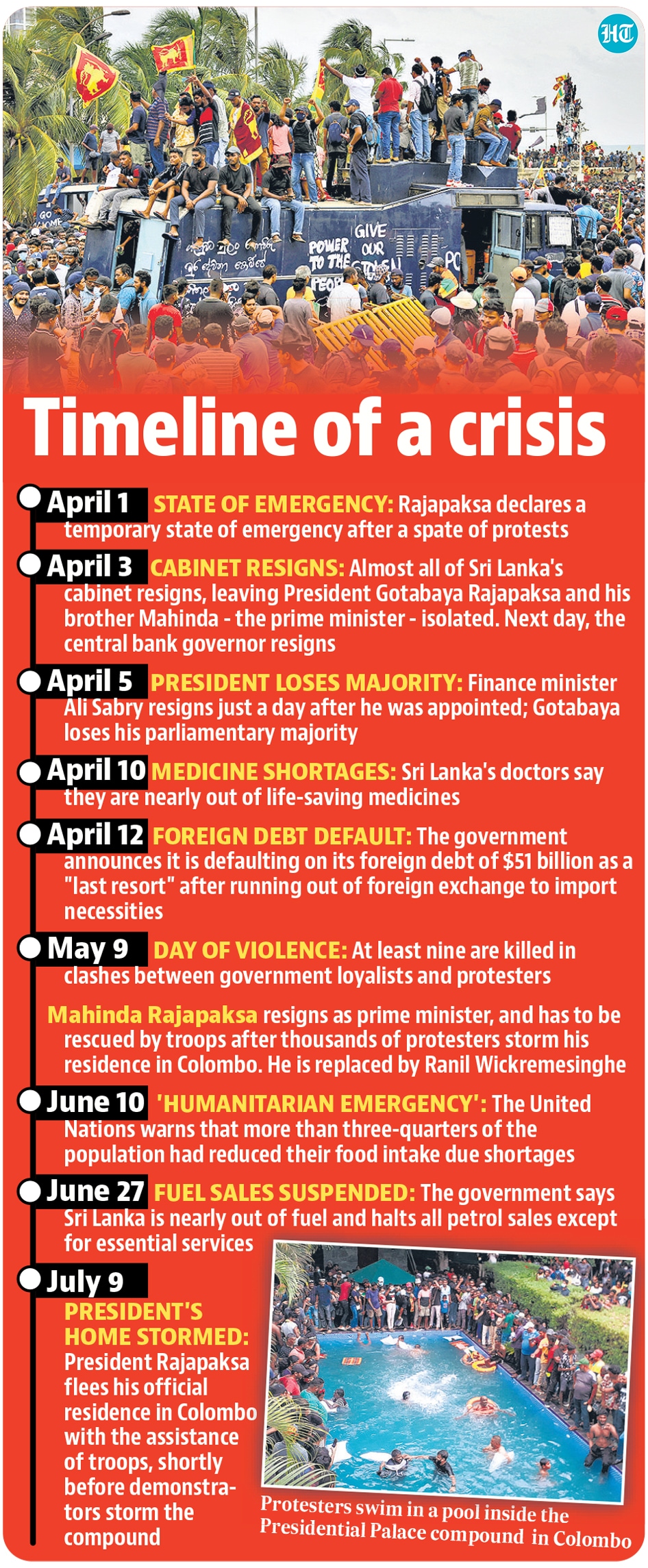
Prime Minister Ranil Wickremesinghe, who was appointed as a replacement, was accused of trying to save the president. He also said he is willing to resign to make way for an all-party government, his office said in a statement on Saturday evening.
Throughout the day soldiers and police were unable to hold back a crowd of chanting protesters demanding Rajapaksa’s resignation and blaming him for the country’s worst economic crisis in seven decades. Neither Rajapaksa nor Wickremesinghe were in their residences when the buildings were attacked.
Inside the president’s house earlier in the day, a Facebook livestream showed hundreds of protesters, some draped in the national flag, packing into rooms and corridors.
Video footage showed some of them splashing in the swimming pool, while others sat on a four-poster bed and sofas.
Some could be seen emptying out a chest of drawers in images that were widely circulated on social media. Hundreds milled about in the grounds of the colonial-era whitewashed residence, with few security personnel in sight. Shortly beforehand, troops guarding the residence fired in the air to hold the crowd back until Rajapaksa was safely removed.
“The president was escorted to safety,” a top defence source told AFP on condition of anonymity. “He is still the president, he is being protected by the navy.”
He said the president had boarded a naval craft at the Colombo port, which later moved to the southern waters of the island. The colonial-era mansion he left is one of Sri Lanka’s key symbols of state power, and officials said Rajapaksa’s departure raised questions as to whether he intended to remain in office.
Soon after the crowd stormed the presidential palace, Rajapaksa’s nearby seafront office also fell into the hands of protesters. Security forces attempted to disperse the huge crowds that had mobbed Colombo’s administrative district. Wickremesinghe, the first person in line to succeed Rajapaksa, called a meeting with political leaders and said he was willing to step down to pave the way for a unity government.
But he made it clear he will not step down before a new government is formed, angering crowds that moved near his home to demand his immediate departure. Protesters then stormed the premier’s private residence and set it alight after night fell. Wickremesinghe had moved to a secure location, a government source told Reuters early in the day.
At least 39 people, including two officers, were injured and hospitalised during the rallies.


