
 E-Paper



The American Fighting to Pry His Company Back From the Kremlin’s Grasp
Leonid Smirnov built Russia’s biggest canned foods company. With the stroke of a pen, Putin’s government took it over


American businessman Leonid Smirnov first got the feeling that something was off when local Russian newspapers began airing rumors that the government was looking at taking over his company, the biggest producer of canned goods in the country.
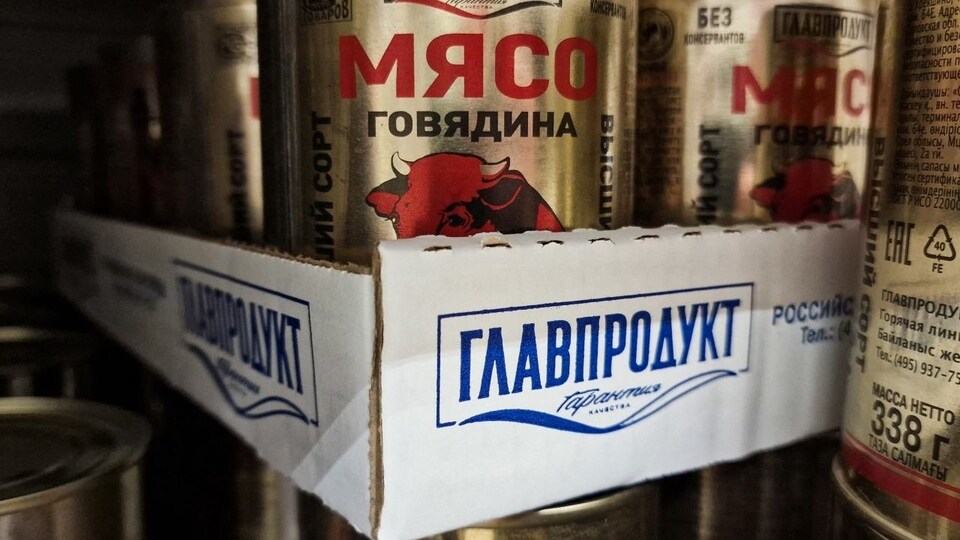
It was only when he received a phone call from an employee at 3:30 a.m. at his Los Angeles residence last October that he found out for sure that Russian President Vladimir Putin had ordered the nationalization of Glavprodukt. His was the first U.S.-owned company to fall victim to what is now a mounting wave of Kremlin business seizures.
For nearly a year, Smirnov says, he has been embroiled in an absurd legalistic circus. His experience provides a glimpse into the nationalizations and appropriations of both domestic and foreign business after Putin unleashed the full-blown invasion of Ukraine three years ago in what has been the biggest redistribution of Russian wealth since the breakup of the Soviet Union.
In many cases, the Kremlin transferred control to state-run enterprises or businessmen loyal to Putin, deepening his support base, analysts say. Companies from German utility Uniper to Danish brewer Carlsberg have been targeted. French food manufacturer Danone’s Russian assets were placed under temporary state management in 2023 and later sold to a Kremlin ally at a significant discount. Russia’s government has often justified the seizures on national-security and legal grounds or as a response to new sanctions from the West.
The nearly 300 U.S. companies still operating in Russia remained untouched—until now.
The Düsseldorf-based energy company Uniper saw its Russia assets seized two years ago.
Since his early-morning call, Smirnov has fought moves against him in court. He has also tried to push the fate of the company onto the negotiating table between Russian and U.S. officials seeking to make good on President Trump’s efforts to seek some thaw in relations. But so far to no avail: A Russian court approved the nationalization last month. Smirnov’s legal appeal has yet to be decided.
“It’s not just about doing what I can to save my company which was illegally and heinously expropriated, but making sure there isn’t a second or a third U.S. company,” said Smirnov.
Russia’s manic post-Soviet privatizations once drove Western businessmen into the country with the promise of fantastic returns. Local companies also ran up against organized crime and a spate of gangland killings, which later subsided when Putin rose to power in 2000.
Now many of the foreign investors who survived are seeing their businesses expropriated as ties with the West worsen.
The total value of property confiscated from foreign and local investors has reached 3.9 trillion rubles, or about $49 billion, according to the Moscow-based law firm Nektorov, Saveliev & Partners, with the pace of nationalizations accelerating this year. Many of these assets have then been transferred to business owners big and small, all united in their loyalty to Putin’s regime.
Smirnov was born in the Soviet Union before moving to the U.S. in 1980. He founded Glavprodukt in 1999, lured by a vast Russian market opening up to Western consumerism. Smirnov focused on tinned meats, fish and ready-to-eat meals, and as the company grew, its offerings became a staple in the stores to which the country’s working classes flocked.
With its loyal customer base, his company survived the ups and downs of Putin’s rule. But in the weeks that followed the nationalization decree, Smirnov watched from the U.S. as new management came into the offices, changing locks and passwords and even hiring a new private security firm to keep watch over the company’s headquarters and factories. Loyal employees were fired and a new cadre of managers were brought in.
To justify the nationalization, the new management promised to repurpose the company to feed the Russian army and boost exports to China and North Korea.
A general manager was appointed at the behest of a large food producer called Druzhba Narodov, or Friendship of Peoples. That raised Smirnov’s suspicion that behind the raid is that company’s ultimate owner, Alexander Tkachev, a former minister of agriculture and governor of Russia’s southern Krasnodar region. Druzhba Narodov didn’t respond to a request for comment. Tkachev has been sanctioned by both the U.S. and the European Union. As Russian soldiers have occupied swaths of southern Ukraine, he has also been behind some of the biggest Russian appropriations of Ukrainian farmland.
As the new manager, Alexander Dolgov, and other management leaders settled into their roles, Dolgov told the prosecutor in a court case against Smirnov that the nationalization of the company would ensure continued deliveries of food to Russia’s Defense Ministry as well as the country’s equivalent to the National Guard.
In reality, the new management has cut and consolidated production lines, discontinued popular brands and caused sales to fall by half, Smirnov said. Smirnov’s U.S.-based companies Universal Beverage and Universal Beverage 2000 were the owners of Glavprodukt.
“They want to use government cover to confiscate a $200 million business from an American company,” said Smirnov.
Smirnov, an American citizen who has a signed copy of “The Art of the Deal” he got from Trump at a reception 30 years ago, has hope that the U.S. president can force Putin’s hand to return ownership of the company. In interviews with Breitbart, Secretary of State Marco Rubio said previously that Glavprodukt was going to be a topic of discussion at talks, and Trump said in March he thought Putin would be “generous” on the issue of the company.
So far, the Kremlin hasn’t offered to resolve the matter. Russia’s presidential administration didn’t respond to a request for comment.
Since the start of Moscow’s full-scale invasion of Ukraine, nearly 500 U.S. firms have completely exited Russia or curtailed operations there, cutting ties with a market of 140 million people, according to a tally by the Kyiv School of Economics. Smirnov’s story offers a cautionary tale for the U.S. companies that remained, citing contractual obligations, ongoing projects or a need to protect local employees.
“We are far from the end of the process of redistribution of property, of establishing rules of business in today’s Russia,” said Alexandra Prokopenko, a fellow at the Carnegie Russia Eurasia Center and a former Russian central-bank official. “This preserves the system and makes business hostage to Putinism, and the new class of owners is well aware of whom it owes its wealth to.”
It may also offer a warning for U.S. companies tempted by Putin as he holds out the prospect of better relations with Trump and urges them to return.
Write to Thomas Grove at thomas.grove@wsj.com and Georgi Kantchev at georgi.kantchev@wsj.com


