
 E-Paper



The Robots That Are Taking Over Your Food Delivery
Technology is removing the humans in an effort to make restaurant delivery faster and better.


Robots are carting fried chicken through Chicago streets. Drones are parachuting Panera strawberry lemonade down to homes in Charlotte, N.C. AI-powered scales at fast-food restaurants are making sure delivery orders that go out aren’t missing burgers.
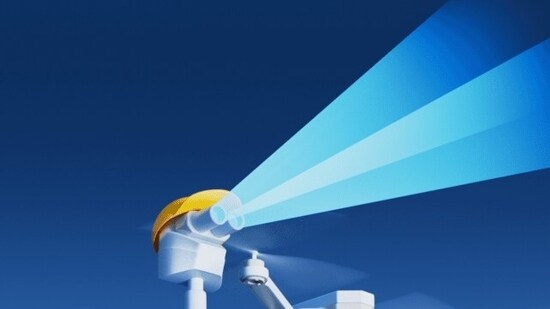
Billions of dollars in investment and years of research are going into efforts to fix a modern convenience: food delivery.
Restaurants in the U.S. receive around 4 billion food-delivery orders a year through apps alone, according to data insights company Consumer Edge. But hungry customers often end up disappointed. Couriers juggle multiple deliveries, resulting in cold burritos. Drinks are spilled, fries are shorted. Delivery charges grow ever higher, as do suggested tips and menu prices.
Enter robotics companies, which have received around $3.5 billion in investment since 2019 in an effort to make food delivery better, faster and cheaper, according to research provider PitchBook.
Among the advances: Technologies similar to those in driverless cars such as Waymo vehicles are allowing food-delivery bots to “see” and better navigate their terrain. So-called physical AI is enabling drones to navigate the world through machine learning in ways they weren’t able to a few years ago.
“We’re constantly hearing that these restaurants are deeply unhappy with the status quo,” said Keller Rinaudo Cliffton, chief executive of Zipline, a drone delivery company that counts food as one of its fastest-growing segments.
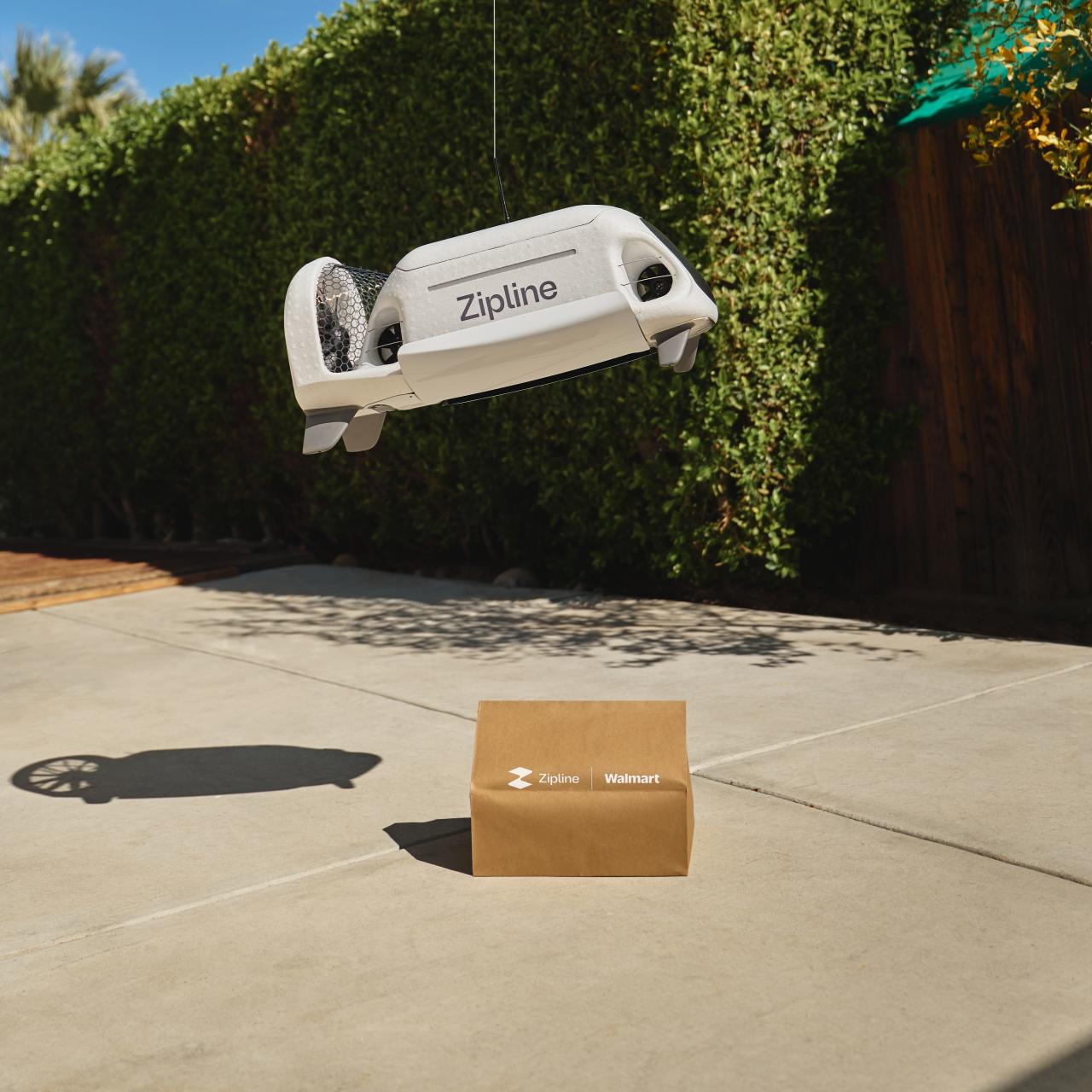
A drone from automated delivery company Zipline drops off a package.
The permitting process for robots and drones to navigate city streets and airspace is complex and lengthy, but proponents believe the technologies can improve the challenged economics of food delivery. Unlike humans, the robots don’t ask for tips, nor are their wages rising.
Here’s a look at some of the tech transforming food delivery now and in the future.
Robots that see
Coco Robotics co-founder Zach Rash first started tinkering with robots while at UCLA in 2016. Nine years and $110 million in funding later, Coco’s robot squad has shuttled more than 500,000 deliveries from restaurants in Chicago, Los Angeles, Helsinki and Miami.
Startups such as Serve Robotics and Coco are gearing up to run thousands of food-delivery robots between them, serving customers on apps including DoorDash and Uber Eats. Lidar—sensor technology that uses lasers to give a 3-D view of their surroundings—is turning robotic food delivery from a student experiment into a reality.
Robots such as Coco first hit the streets with human guides powering them, but they now operate autonomously in most situations as machine learning helps them master repeat routes. Lasers on the robots assess how far away people and objects are, and help determine the best routes for the service area.
Cameras on the sides, back and front of a Coco robot help it avoid running into people, while one inside its locked box ensures the food travels right side up without spilling, Rash said. The robots can travel up to 15 miles an hour, but typically go slower on sidewalks.
For the past several months at Harold’s Chicken Shack in Chicago, restaurant workers have loaded up Coco robots with food instead of waiting for delivery drivers. It has resulted in meals being delivered faster and fresher, managers say.
“It goes straight from the restaurant, and there’s less hands on it,” says Michael Dunigan, general manager of a Harold’s location near Chicago’s United Center arena.
Customers track the robots on their delivery app and receive a notification upon arrival. Diners tap their app to unlock a hatch to grab their order, and then the robot goes on its way. The apps assess a delivery fee, as they would with a human courier.
A Coco Robotics sidewalk robot on display at an event in New York.
Robot suppliers have had to painstakingly lobby individual cities for permission to prowl their streets, making expansion of the service slow going. Upon encountering the robots, some pedestrians are perplexed, while others have rescued the unlucky machine that ends up in a snow pile.
Coco says its robots are equipped to handle hills, however. And, for security, the automated couriers have lock systems to keep deliveries safe in compartments, inaccessible to passersby. They also have live camera feeds and alarms that go off if someone tampers with the robot. While the robots can operate autonomously, human operators and remote monitors oversee the robots in real time so they are ready to intervene when needed.
Seth Cohen, co-founder and president of West Hollywood, Calif.-based poke chain Sweetfin, is a believer in food-delivery robots. Sweetfin has sent tens of thousands of its orders through Coco bots and the service is much faster, a priority when selling raw fish, he said.
“It’s the most efficient way to get from A to B,” said Cohen, who uses robots for orders of 2 miles and less at his 15-location chain.
Smart scales
When the pandemic hit, fast-food restaurants were inundated with delivery orders. Much of the business has stuck—as have complaints about missing burgers or scant fries. Restaurants often pay the price in refunds and bad reviews.
“There’s the happiness element. Would you go back to that restaurant and order again?” says James Harris of Acrelec, a global technology-services provider.
About a decade ago, Acrelec started tinkering with scales to try to help operators know when an order is complete—based on the weight of its contents—before it leaves the restaurant. Advances in AI helped Acrelec crack the code around three years ago and create its Double Check scale.
The company’s technologists built algorithms to determine how much a delivery order should weigh by taking account of all of its components, even the napkins and utensils. If the order falls outside a range, the scale will ask the employee to check its contents and figure out what is amiss.
Some of the world’s biggest fast-food chains have started using the scale in tests, and early pilots show about 8% of orders needed correcting before delivery, Acrelec said. Machine learning is helping the scale get more accurate as it weighs more sandwiches and drinks, Harris said.

Drone drops
Drones run by automated delivery company Zipline help transport blood for transfusions and vaccines in Africa. They are also preparing to take Jet’s Pizza boxes to people’s homes in Texas.
Drone companies such as Zipline and Wing are putting their autonomous aircraft to use in food delivery, promising service in a fraction of the time needed by a car or bike. Workers are learning to load drones parked outside restaurants in docks or at charging “nests” that house fleets at shopping plazas.
The drone uses GPS along with sensors to target a precise point at a customer’s property. Traveling at around 150 to 300 feet in the air, the drone then lowers a tether toward its target containing the food order, using its sensors to navigate to the ground. It alerts the customer, deposits the food package and goes on its way.
Zipline expects customers to pay around $7 to $10 for its drone delivery services, on top of the meal price. All charges are included in that price—and the drone doesn’t ask for a tip, Zipline says. They also don’t mind flying in rain and snow. “They operate in gnarly weather,” Cliffton says.
Wing says it protects food orders during a drone delivery by using sturdy water-resistant packaging.
Getting the federal approvals to send private aircraft to deliver food and all types of goods has taken years for drone companies. The drones also have limited service ranges based on their need to recharge. Another hurdle: Every residential property has its own layout that must be assessed to safely drop the order. Designing packaging to contain the food has also taken research and development.
Zipline aims to roll out restaurant delivery later this year, with deals signed for drone tests with Chipotle Mexican Grill, Jet’s Pizza and Panera Bread for select locations. Alphabet-backed Wing is now delivering DoorDash orders from Panera and Firehouse Subs at a Charlotte shopping center, along with a Wendy’s in a Dallas-area mall. The Wing delivery times average five minutes or less for a roughly four-mile radius.
Elizabeth Dockery, a 41-year-old mother of three in Charlotte, has gotten about a dozen drone deliveries through DoorDash since Wing first started offering the service in May. The Panera soup and drinks have never arrived sloshed, and her children are fascinated with the drones.
“It’s really exciting for our family. It’s absolutely wild,” Dockery says.
Write to Heather Haddon at heather.haddon@wsj.com


