
 E-Paper





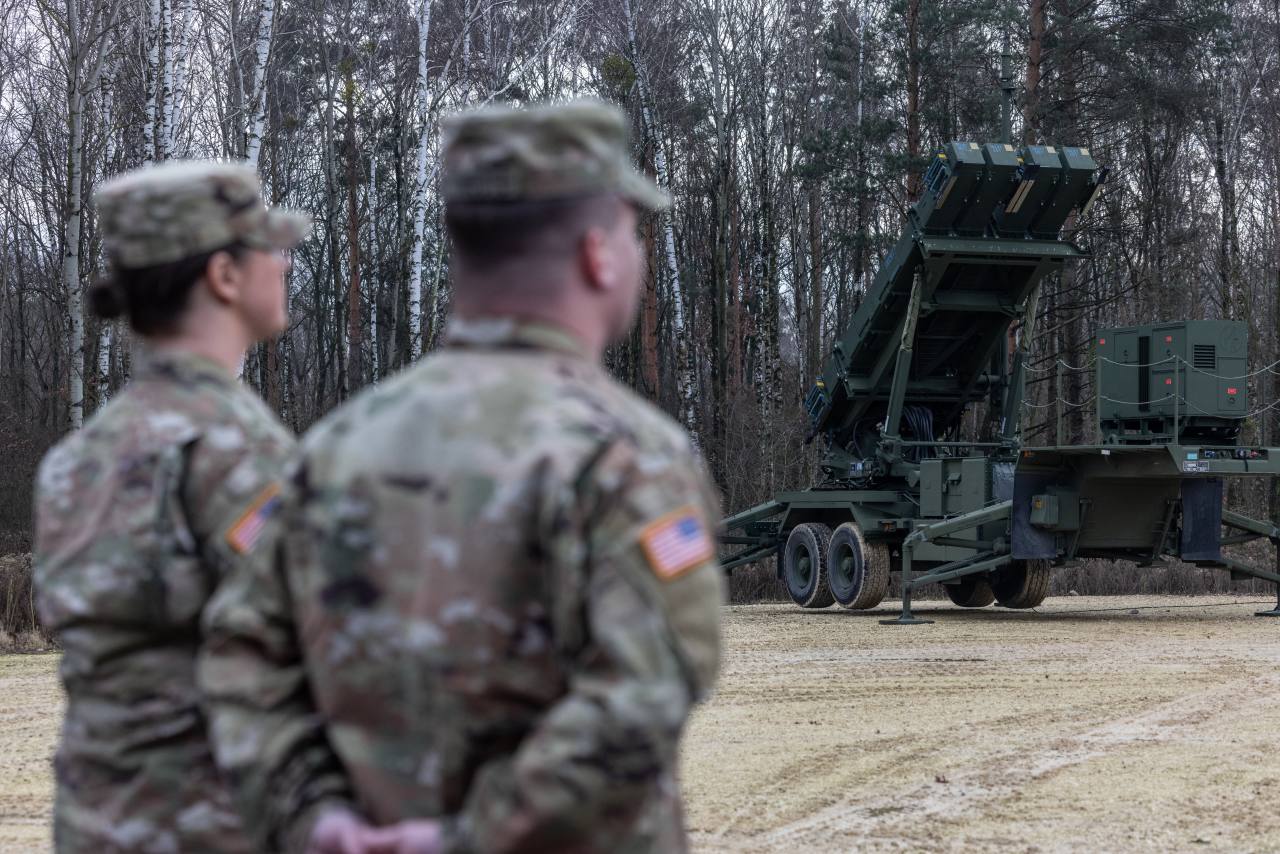
The Patriot air-defense system is lauded by militaries around the world for its ability to shoot down deadly drones and missiles.
This New Missile-Defense System Is Challenging the Patriot
An improved European weapon will test the region’s ability to wean itself off American arms.
Updated on: Jul 17, 2025, 14:18:39 IST

WSJ

Share via
Copy link
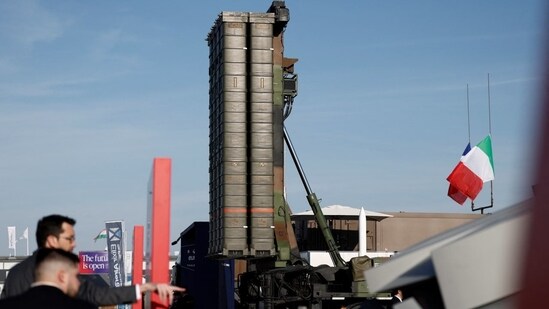
Now, a new version of a European weapon is set to challenge its dominance and test whether the region can wean itself off U.S. arms.
Europe’s so-called Samp/T has long been in the shadow of its American rival, which has secured far more orders and has proved itself on the battlefield. The system’s Franco-Italian maker says its next-generation model is better equipped to battle for orders.
The launch comes as Europe works to bolster its defense capabilities and debates whether it should be so dependent on U.S. weapons. U.S. support for Ukraine has at times been uncertain under President Trump, who has called on Europe to look after its own security.
Front and center is air defense, which has proven essential for both Israel and Ukraine in defending against attacks by Iran and Russia, respectively.
The new Samp/T will take on the Patriot at a time when the U.S. system has been struggling more in Ukraine as Russia introduces more maneuverable ballistic missiles, according to a Ukrainian official.
Governments across Europe are assessing their air-defense capabilities. Denmark, which has been angered by Trump’s desire to annex Greenland, has said it plans to decide what system to buy later this year. Defense executives also expect Belgium, Portugal and the U.K. to soon upgrade air defenses.
At stake is billions of dollars in trade—and European pride.
During a recent air show in Paris, Eric Tabacchi pointed at the Samp/T’s new radar as it rotated once a second, peering more than 220 miles into the sky.
“The Patriot has nothing like that,” said Tabacchi, a military consultant at Eurosam, which makes the system. Eurosam is a joint venture of missile maker MBDA and France’s Thales.
The original Samp/T has so far been sold only to Italy and France—the nations that make it—as well as a modified version for Singapore. Since entering service in 2011, it has logged 18 full orders.
By contrast, the U.S.-made Patriot has secured more than 240 orders from 19 countries.
The Patriot’s dominance was cemented in Ukraine, where it has been feted for taking out Russia’s ballistic and hypersonic missiles. In recent months, though, more maneuverable Russian ballistic missiles have been able to avoid its radar, the Ukrainian official said.
RTX, the Patriot’s main contractor, said the system is continuously updated based on real-world engagements.
Meanwhile, Ukrainian forces have separately said the Samp/T struggled to destroy ballistic missiles from the start. An Italian defense official said they had received “positive feedback” on the system from Kyiv.
The next-generation version of the Samp/T has several features that its makers say will now trump the Patriot. Those include a new radar that can monitor a full 360-degrees of the surrounding skies and canisters that rise to a vertical rather than slanted position, allowing it to fire missiles in all directions.
MBDA has also completely redesigned the missile that the Samp/T fires. The new Aster B1NT has a range of more than 90 miles, up from about 62 miles.
Both systems consist of three main distinct parts: a radar, a control unit and a launcher that fires interceptor missiles.
The entire Samp/T system can be set up by as few as 15 people, he said.
The U.S. Army currently uses about 90 soldiers for a Patriot battery. It isn’t clear what the minimum number would be.
RTX said the Patriot has been proven many times in combat and that a new radar—the so-called Lower Tier Air and Missile Defense Sensor—will give the system 360-degree coverage.
The new radar is being tested and will be fielded in operational units in fiscal year 2029, according to a U.S. Army spokesman.
Key to winning future orders is being able to supply enough missiles.
Ukraine has now run out of missiles for its two Samp/T systems, the Ukrainian official said.
Last year, MBDA was taking so long to make its Aster missiles that the French government threatened to nationalize production. The company has since pledged to invest billions of dollars to bolster its manufacturing base, including increasing output of Asters by 50% by 2026, compared with 2022 levels.
U.S. officials have previously raised concerns about the availability of the interceptor missiles fired by the Patriot, given the huge demand for them. The Trump administration’s recent decision to withhold Patriot interceptors and other weapons was in part to bolster U.S. stocks. Trump has since said the U.S. would resume providing Ukraine with arms to defend itself—including sending more Patriots, paid for by European nations.
The Patriot’s interceptors are made by Lockheed Martin, which says it will soon be able to produce 600 a year—up from 550 previously. The process still takes longer than the company would like, said Tim Cahill, who runs Lockheed’s missile business.
If successful, Europe’s efforts to develop and sell homegrown alternatives to top-selling U.S. weapons could hurt what has become a lucrative market for American defense companies.
European countries’ recent pledge to increase military spending to 3.5% of gross domestic product from 2% could bring an additional $330 billion of annual spending, much of which will go for equipment, investment bank Bernstein calculates.
The U.S. dominates the global arms trade. It accounted for 43% of global weapons exports over the past five years, up from 35% in the previous five-year period, according to data from the Stockholm International Peace Research Institute, a think tank.
Europe makes its own ships and submarines and is a big player in armored vehicles, artillery and military helicopters. But the region is a major buyer of U.S. missiles, top-end drones and jet fighters like the F-35—widely considered the world’s most sophisticated.
U.S. defense-industry executives say they have so far seen no evidence of Europeans cooling on their products. The U.K., for example, recently announced an order of F-35s. Some European lawmakers, though, have suggested they could.
Nine years ago, Danish lawmaker Rasmus Jarlov encouraged his country to order a fleet of F-35s. Now, he says he would push for a European option for aircraft, air-defense and other key military equipment.
“We want an air-defense system from a stable and reliable ally and not one that threatens us and [other] allied countries,” Jarlov said.
Write to Alistair MacDonald at Alistair.Macdonald@wsj.com
Get the latest headlines from US news and global updates from Pakistan, Nepal, UK, Bangladesh, Russia and US Iran war Live, get all the latest headlines in one place on Hindustan Times.


