
 E-Paper


Follow the latest breaking news, major developments and agenda-setting stories from India and around the world with the newsdesk at Hindustan Times. Operating round the clock, the desk brings together experienced editors, reporters and correspondents to deliver fast, accurate and contextual reporting across subjects that influence public policy, governance, business, society and international affairs. The HT News Desk covers politics, elections, government policies, the economy, business and markets, science and technology, the environment, law and order, infrastructure, education, climate issues and geopolitics, while closely tracking developments across states, institutions and global capitals. The team also leads coverage of major breaking news events, policy announcements, court proceedings, natural disasters, public emergencies and significant international developments. Reports published by the newsdesk are based on information gathered from reporters on the ground, official statements, government agencies, court records, regulatory filings, recognised institutions and other authoritative sources. Stories undergo editorial scrutiny and verification processes to ensure accuracy, fairness and relevance, and are updated as events evolve and additional information becomes available. Whether covering a key political decision in New Delhi, an economic policy shift affecting millions, a landmark court ruling or a major global event, the HT News Desk aims to provide readers with reliable, fact-based journalism that delivers not only the latest developments but also the context and analysis needed to understand their wider implications.
 Trending News
Trade woes push IMF global growth outlook to decade-low of 3%
The world economy will grow 3% this year, down from 3.2% seen in July, with the 2020 estimate lowered to 3.4% from 3.5%, the fund said Tuesday in its latest World Economic Outlook.


The International Monetary Fund made a fifth-straight cut to its 2019 global growth forecast, citing a broad deceleration across the world’s largest economies as trade tensions undermine the expansion.
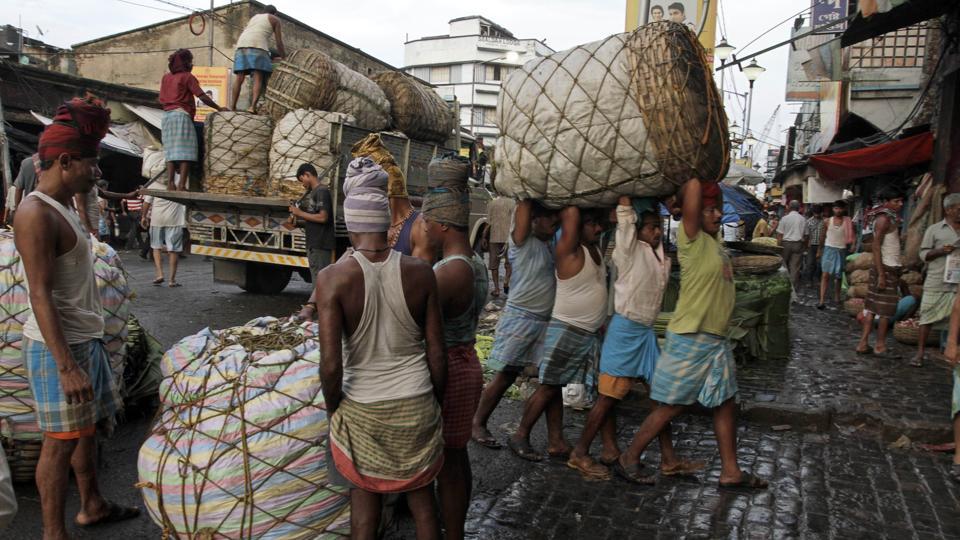
The world economy will grow 3% this year, down from 3.2% seen in July, with the 2020 estimate lowered to 3.4% from 3.5%, the fund said Tuesday in its latest World Economic Outlook. The forecast for this year would be the weakest since 2009, when the world economy shrank, as the fund chopped projections from the US and Europe to China and India.
“With a synchronized slowdown and uncertain recovery, the global outlook remains precarious,” IMF Chief Economist Gita Gopinath wrote in the report. “There is no room for policy mistakes and an urgent need for policy makers to cooperatively de-escalate trade and geopolitical tensions.”
The latest dimming of the outlook, just before annual meetings of the IMF and World Bank in Washington this week, reflects the economic costs of higher tariffs. Officials from around the world will convene as President Donald Trump’s trade policies remain one of the biggest global threats. Investors are awaiting more clarity on whether a breakthrough in the US-China talks last week will ease global uncertainties.
The global growth estimate for 2019 was as high as 3.9% in mid-2018. The IMF cited subdued economic momentum and weaker investment, slashing its estimate for the growth in trade volume to a “near standstill” pace of just 1.1% from 3.6% last year, though it also sees a pickup to 3.2% in 2020.
The IMF report said “risks seem to dominate the outlook,” but recent monetary easing in many countries “could lift demand more than projected, especially if trade tensions between the US and China ease and a no-deal Brexit is averted.”
Those threats and others have prompted warnings from both leaders of the global institutions as new leadership takes over. Bulgarian economist Kristalina Georgieva, previously World Bank chief executive officer, took over as IMF chief Oct. 1, succeeding Christine Lagarde. World Bank President David Malpass was selected in April.
Georgieva painted a downbeat picture in her first major address last week, saying a deeper slowdown could require coordinated fiscal stimulus. She has said her first priority is to help member nations lower the risk of crises and cope with potential downturns.
IMF economists dimmed their views across the largest economies. The fund cut its US 2019 growth estimates by 0.2 percentage point to 2.4%, but raised it by the same margin to 2.1% next year.
Euro-area growth was reduced this year and next, to 1.2% and 1.4%. Estimates for Germany, France, Italy and Spain were lowered for both years. This year’s UK growth forecast was reduced to 1.2%. China projections were reduced for both years, to 6.1% and 5.8% respectively.
The IMF says continued policy support in major economies and stabilization in some stressed emerging economies are expected to lift growth modestly over the rest of 2019 and into 2020.
“The world economy faces difficult headwinds,” the outlook said. “Despite the recent decline in long-term interest rates creating more fiscal room, the global environment is expected to be characterized by relatively limited macroeconomic policy space to combat downturns and weaker trade flows, in part reflecting the increase in trade barriers and anticipated protracted trade policy uncertainty.”


