E-Paper



Trump claims Pete Hegseth doesn’t want US-Iran war to be settled: 'He wants...'
US-Iran war: The conflict, which began with US strikes in late February, has since escalated into broader regional confrontation involving Iran and its allies.

 Prefer HTon Google


As the US‑Iran conflict enters its fourth week, President Donald Trump appeared to shift responsibility for the military strikes against Iran onto his defence secretary, Pete Hegseth.
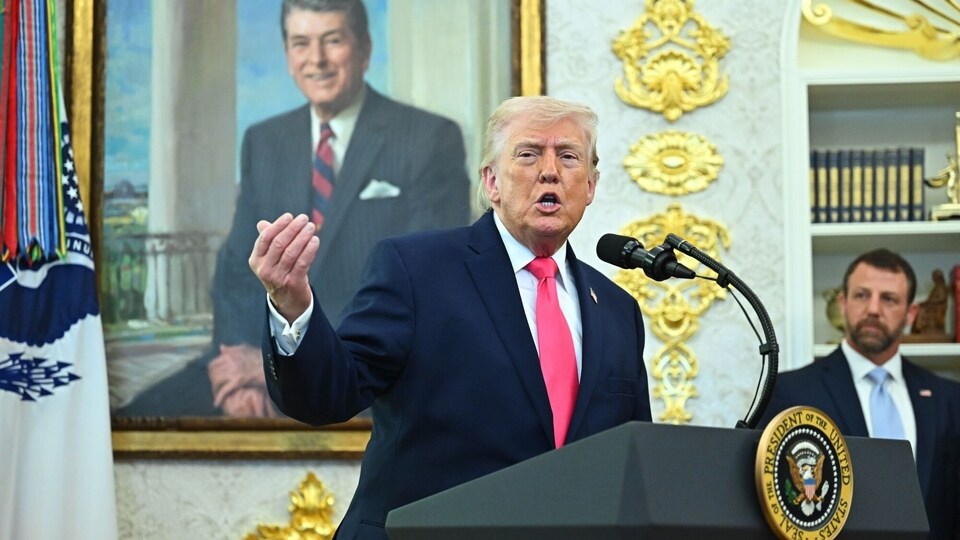
In a fresh remark on Tuesday, Trump claimed that Pete doesn’t want the US-Iran war to be settled. "I don’t want to say this but I have to… Pete didn’t want it to be settled. In other words, our Sec. of War doesn't want peace, he wants war," the president said.
During a recent roundtable of the Memphis Safe Task Force on Monday night, Trump mentioned that Hegseth was the first senior official in his administration to push for intervention. "Pete, I think you were the first one to speak up and you said, ‘Let’s do it because you can’t let them have a nuclear weapon."
This came hours after Trump paused, by five days, his threat to bomb Iran’s energy infra if it did not reopen the Strait of key oil trade route Hormuz. He even said talks were on between US envoys — apparently including his son-in-law Jared Kushner and businessman friend Steve Witkoff — with a “respected” Iranian leader, but he said it was not the Supreme Leader, Ayatollah Mojtama Khamenei.
Also read | 'Let's do it...': Trump reveals who urged him to launch strikes against Iran
However, Iran Iranian officials, meanwhile, insisted that Trump had backed down “following Iran’s firm warning” to hit infra in Gulf countries like Saudi Arabia and UAE that have US bases.
Trump earlier said that before authorising the operation, he had called multiple senior officials, including Hegseth and General Caine, to discuss how to respond to what he described as a growing threat from Iran.
The president’s comments have added to a series of shifting explanations from within his administration about how the decision to strike Iran ultimately came about.
Also read | After Trump backs down, a secy faces blame for Iran war, Pakistan mediating
The conflict, which began with US strikes in late February, has since escalated into a broader regional confrontation involving Iran and its allies. American officials have characterised the campaign as an effort to dismantle Iran’s missile programme, drone production capabilities, and naval power.
Hegseth emerges as public face of the war
Hegseth has taken a prominent role in defending the war effort, regularly briefing reporters at the Pentagon and outlining US military objectives.
He has also pushed back against criticism of the campaign, accusing parts of the media of portraying the conflict negatively.
When asked recently about how long the military operation could continue, Hegseth declined to provide a timeline.
“We wouldn’t want to set a definitive timeframe,” he said, adding that the mission remained “very much on track” and that Trump would ultimately decide how it ends.
Iran-Israel tensions rise
Amid possibilities of peace talks between Iran and the US, tensions don't seem to take a rest between Israel and Iran.
Iran and Israel ramped up strikes against each other, with Israeli defence minister Israel Katz saying that the campaign would continue "at full intensity".
The Israeli military also said that Iran fired dozens of missiles at Israel on the war's first and second days. However, added that this number "dropped quickly".