
 E-Paper



'Let's do it...': Trump reveals who urged him to launch strikes against Iran
The US-Iran war, now in its fourth week, has sparked debates within the Trump administration about whether the strikes were justified.

 Prefer HTon Google


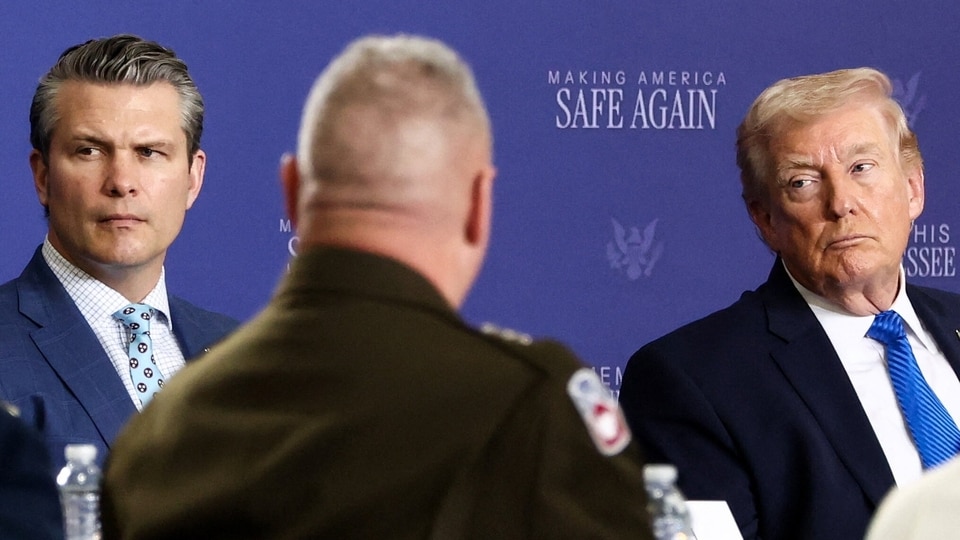
US President Donald Trump appeared to place responsibility for the decision to launch military strikes against Iran on his defence secretary, Pete Hegseth, during a public event in Tennessee, as the conflict entered its fourth week and scrutiny over the war intensified.
Track Live Updates on US-Iran war here
Speaking at a roundtable of the Memphis Safe Task Force on Monday, Trump suggested Hegseth had been the first senior official in his administration to advocate military action against Iran.
“Pete, I think you were the first one to speak up and you said, ‘Let’s do it because you can’t let them have a nuclear weapon,’” Trump said, with Hegseth seated beside him at the event.
The remark has drawn attention in Washington, where officials and analysts have been debating who within the administration pushed for the US military campaign against Iran.
Conflicting accounts over decision to go to war
Trump's comments add to a series of shifting explanations from within his administration about how the decision to strike Iran was made.
In his retelling of the moment the decision took shape, Trump said he had called several senior officials before authorising the operation.
“I called Pete. I called General Caine. I called a lot of our great people,” he said, describing discussions about whether to confront what he called a growing threat from Iran.
The war, which began with US strikes in late February, has now expanded into a broader regional conflict involving Iran and its allies. American officials have framed the campaign as an effort to dismantle Iran’s missile programme, drone production capabilities and naval power.
Hegseth emerges as public face of the war
Hegseth has taken a prominent role in defending the war effort, regularly briefing reporters at the Pentagon and outlining US military objectives.
He has also pushed back against criticism of the campaign, accusing parts of the media of portraying the conflict negatively.
When asked recently about how long the military operation could continue, Hegseth declined to provide a timeline.
“We wouldn’t want to set a definitive timeframe,” he said, adding that the mission remained “very much on track” and that Trump would ultimately decide how it ends.
Divisions inside the administration
Behind the scenes, reports suggest the administration was divided over whether to launch the strikes.
Trump acknowledged that Vice President JD Vance, who has long criticised foreign military interventions, was less enthusiastic about the campaign, though he has not publicly opposed it.
Other influential figures, including Israeli prime minister Benjamin Netanyahu and media mogul Rupert Murdoch, were reportedly among those urging the US to take military action, while some advisers advocated caution.
The tensions have already had consequences. Joe Kent, the former head of the National Counterterrorism Center, resigned last week, becoming the first senior official to step down over the conflict.
War enters fourth week amid rising toll
The war has already caused significant casualties and displacement across the region. More than 1,500 people have reportedly been killed in Iran, over 1,000 in Lebanon, 15 in Israel and 13 US service members.
Trump has also said his administration is exploring the possibility of negotiations with Iran to end the conflict and reopen the Strait of Hormuz, though Iranian officials insist no such talks are taking place.
Even as discussions about a potential deal continue, Trump extended his deadline for Iran to meet US demands by five days, saying the pause would allow time for diplomacy.


