
 E-Paper



Ukraine: US walks a fine line between strategic aggression and restraint
Punish Russia, support Ukraine, engage Europe, dominate info war, use international institutions — but don’t escalate, maintain channels of communication, keep the diplomatic door ajar

 Prefer HTon Google


Washington: Washington is walking a fine line in its approach to the Ukraine crisis — it is stepping up its humanitarian and security assistance to Ukraine, inflicting unprecedented economic pain on Russia and dominating the information war, while pulling back from any step that could be deemed as escalatory and drag the United States (US) or any of its allies in a direct conflict.
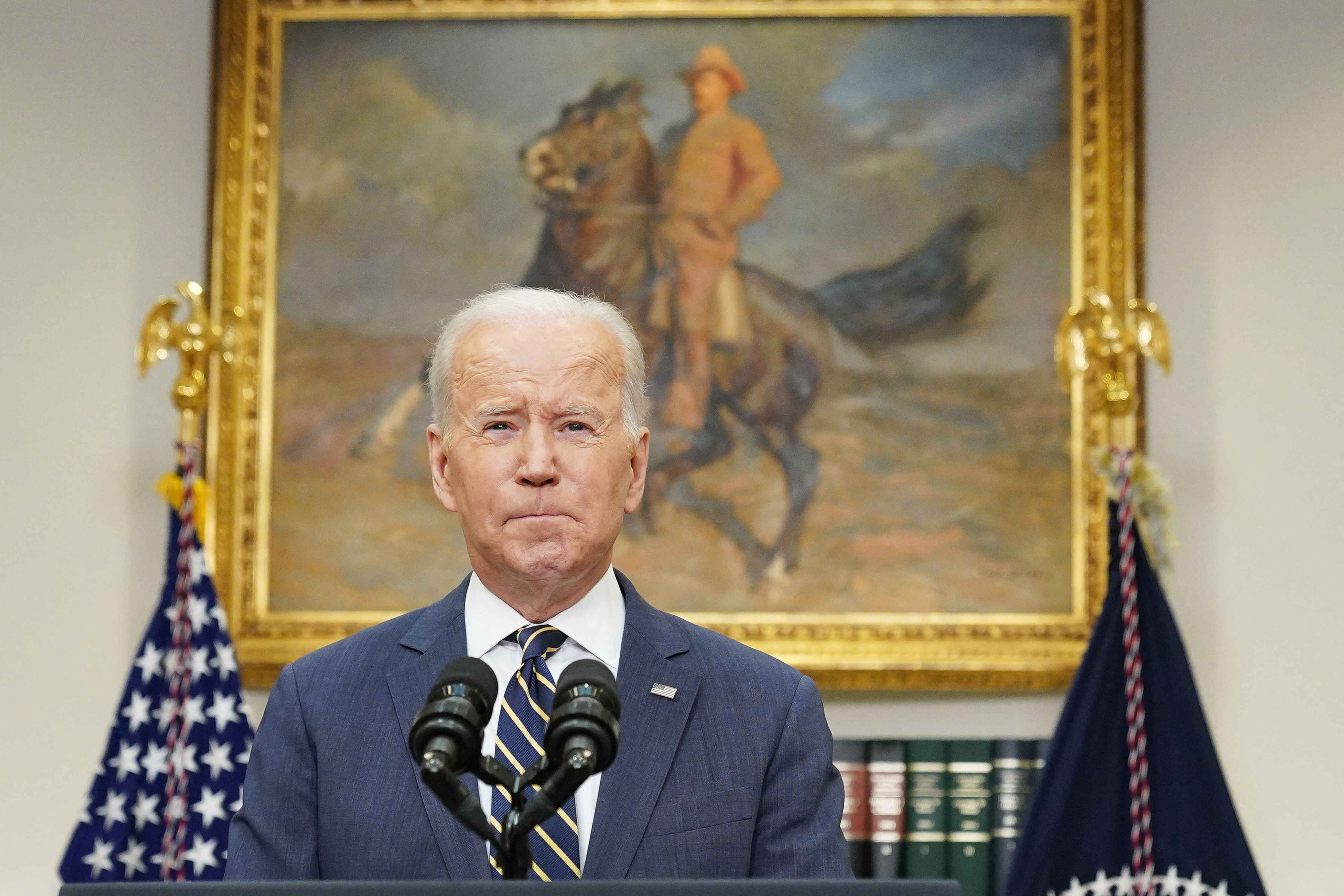
This approach — smart and pragmatic according to most American strategic analysts, weak and inconsistent according to Joe Biden’s critics — was symbolised in a series of decisions that the administration has taken in recent days and weeks.
On the one hand, in the past week, the US ramped up its sanctions against Russia. After cutting off Russia’s central bank from accessing its foreign exchange reserves, crippling Russia’s biggest banks, and imposing severe export control restrictions, the US banned the import of oil and natural gas from Russia on Tuesday. On Friday, along with other G7 countries, the US then decided to cut off normal trade ties with Russia, banned the import of its signature items (including vodka), banned the export of luxury items, and, most significantly perhaps, attacked Russia's ability to borrow from multilateral financial institutions. This has also coincided with continued, and enhanced, support to Ukraine. The US Congress passed a $13.6 billion dollar package that includes both humanitarian and security components.
The administration has also kept up its engagement with all of Europe. Biden speaks to Ukraine’s president Volodymyr Zelensky “almost daily”, as he put it on Friday: Vice President Kamala Harris has been in Poland, offering solidarity to the country that has received a large segment of Ukrainian refugees; Secretary of State Antony J Blinken just returned from a trip to Europe; and defense Secretary Lloyd Austin is heading for a North Atlantic Treaty Organization (NATO) ministerial meeting to Brussels. This political engagement is just a sliver of the nature of engagement, across agencies, at different levels, both in the civilian and military field, that is happening between the US and its European allies at the moment. This engagement is both to reassure allies, prod them to step up, and coordinate among them.
This approach is supplemented with high profile engagement with the rest of the world to sustain the public narrative and diplomatic momentum against Russia. In every regional theatre — be it with Indo-Pacific partners or with African nations; on every platform — be it the United Nations (UN) Security Council or the UN Human Rights Council or even the International Criminal Court, of which the US is not a member itself; and across the media — legacy and digital, American and foreign, old and new — the US is keeping up the pressure on Russia by showcasing its aggression and destruction and pre-empting its possible moves by public warnings.
To sum up, then, the components of America’s strategic aggression are the following — punish Russia, support Ukraine, engage with Europe, coordinate between allies, dominate info war, pressure partners to fall in line, and ensure all international institutions are in line with US policy stance.
At the same time, the US has maintained clear lines to ensure that the conflict does not escalate. It has, so far, kept up a straightforward policy position — the US won’t fight Russia in Ukraine, the US won’t mobilise its forces or send boots on the ground to Ukraine, but if Russia expands the theatre of conflict and enters any NATO country, the US will, under Article 5 of the North Atlantic Treaty that suggests that an attack on one member country is an attack on all and provides for collective defence, do everything within its power to fight off Russian aggression. In order to keep within the boundaries established by this framework, the US has also adopted a policy of restraint. This has taken many forms.
One, the US — despite Zelensky’s appeal — refused to enforce a no-fly zone. This was based on the recognition that doing so would mean shooting down Russian planes in a contested air space as well as entailing the protection of US air assets from Russian strikes — and thus run the risk of Washington becoming a direct party to the conflict.
Two, last week, it publicly snubbed Poland, when Warsaw unilaterally said it would hand over Mig-29 fighter jets to the US, and from a NATO base in Germany, the US could send it to Ukraine. Washington called the proposal untenable and said, first, that Ukraine did not need fighter jets and surface-to-air missiles were more effective in its defensive quest, but more significantly, indicated that supplying US-acquired jets from a NATO base would make it a direct party to the conflict. Washington announced additional assistance of $200 million to Ukraine on Saturday to help it meet the “armored, airborne, and other threats it is facing” — taking the total security assistance provided so far to $1.2 billion — but it did so on its terms, within the broad policy posture it had articulated.
Third, even as the US has warned about the possibility of Russia using chemical and biological weapons against Ukraine, it has desisted from saying that this was a redline that would invite direct US involvement in the conflict. Biden has gone as far as to say that the consequences would be “severe”, and both the White House and Pentagon have warned Russia from engaging in any such action. But unlike in the case of Syria, when the US warned that a chemical attack would be a redline and then failed to act on it, Washington has not made it a redline that would invite military retaliation yet.
Fourth, the US has kept open a deconfliction hotline with Russia — a line that allows both militaries to get in touch to avert any misunderstanding on tactical movements or clashes that may occur. According to the Pentagon, this line is tested once or twice a day, and the Russian side has often picked it up on the other end.
Fifth, the US did not respond in kind when Russia announced that it was putting its nuclear forces on alert. The US said it was confident of its strategic deterrent posture, kept a close watch on whether Russia’s announcement was followed up with any concrete change in its posture, and refrained from engaging in a war of words on the nuclear question.
And finally, while the US itself is not in direct high-level communication with Russia — either at the level of the president or Secretary of State — it has kept in close touch with all other actors who are speaking to both Moscow and Kyiv. This includes Israel, which is emerging as a key intermediary in the conflict between the two sides, Turkey, which recently hosted a Russia-Ukraine foreign ministers meeting, France and Germany, whose leaders have spoken to Vladimir Putin in the past week, China, which is seen as having arguably the most leverage over Russia, and India, where PM Narendra Modi has kept his channels of communication open with Vladimir Putin as well as Zelensky.
And so this approach of strategic restraint has the following elements — don’t take military steps that can be deemed escalatory, refrain from deploying air assets that can lead to direct conflict, offer calibrated assistance to Ukraine and don’t let Kyiv dictate terms of support, refrain from tit-for-tat measures, maintain clear military signals and channels of communication to defuse inadvertent tensions, and keep the diplomatic door open through allies.
As the war enters another week, civilian casualties mount, Russian aggression proceeds apace, and sanctions fail to change Putin’s incentives, whether the US is able to carefully maintain its delicate dance between aggression and restraint is to be seen. But the stakes are high, for, as Biden said, any direct NATO involvement opens up the prospect of a third world war.


