
 E-Paper



U.S. Manufacturing Is Adding Jobs Again, but the Hiring Rules Have Changed
While factory employment is on the rise, a shift toward high-tech automation is creating roles with greater barriers to entry.


 Prefer HTon Google


The U.S. is adding manufacturing jobs again. The catch: You might need a college degree to get one.
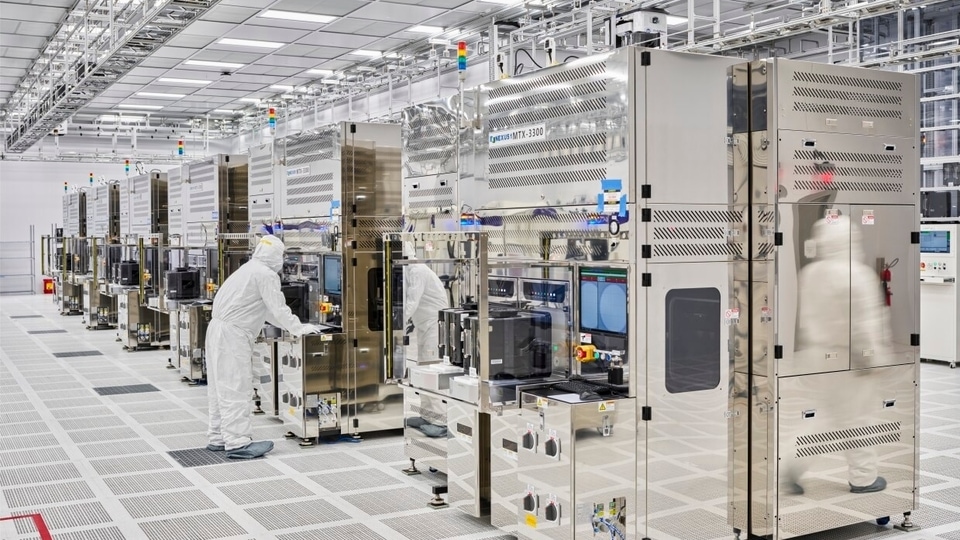
That shift has big ramifications for the U.S. economy. Higher-skill jobs tend to pay better and create greater profits for their employers, boosting growth. But because these roles require more education, companies risk a skilled-worker shortage if training programs don’t keep pace.
Swift Coat, a maker of antireflective coated glass for satellites, plans to hire two or three workers by the end of the year at its facility in a dusty industrial park in northern Phoenix. All positions will require an engineering degree.
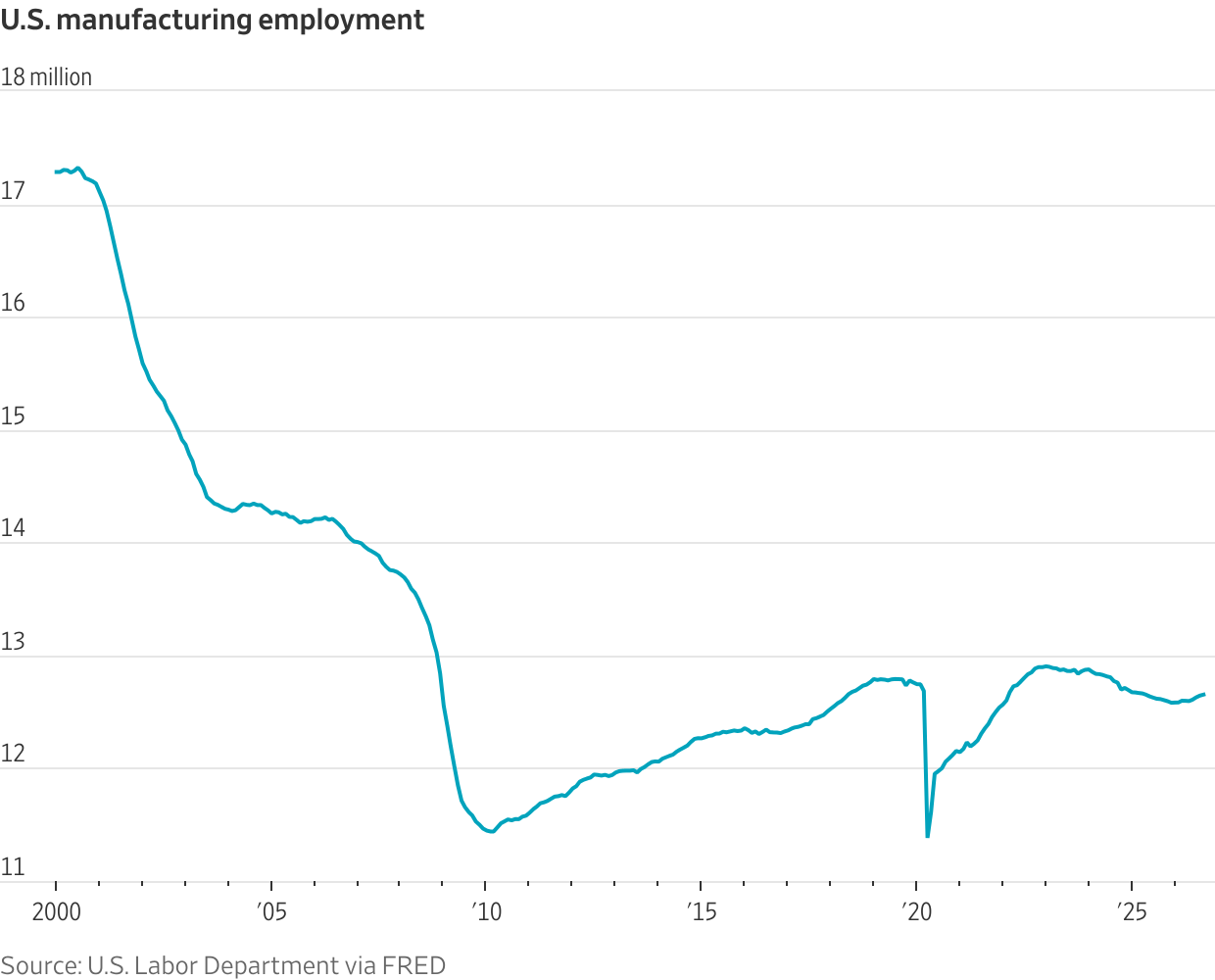
Swift is part of a broader shift in America’s factory landscape. U.S. manufacturers have increased their head count by 72,000 since December, a flicker of hope after years of declining employment. But these aren’t your grandfather’s factory jobs. Manufacturers are hiring more white-collar workers in management and business operations. And blue-collar roles increasingly require advanced training as factories become more automated and complex.
“The kind of manufacturing that is returning back to the U.S. is not the same as what we used to have in the ’70s or ’80s or ’90s,” said Binil Starly, director of Arizona State University’s School of Manufacturing Systems and Networks. “You need this new worker that is very technology-centric.”
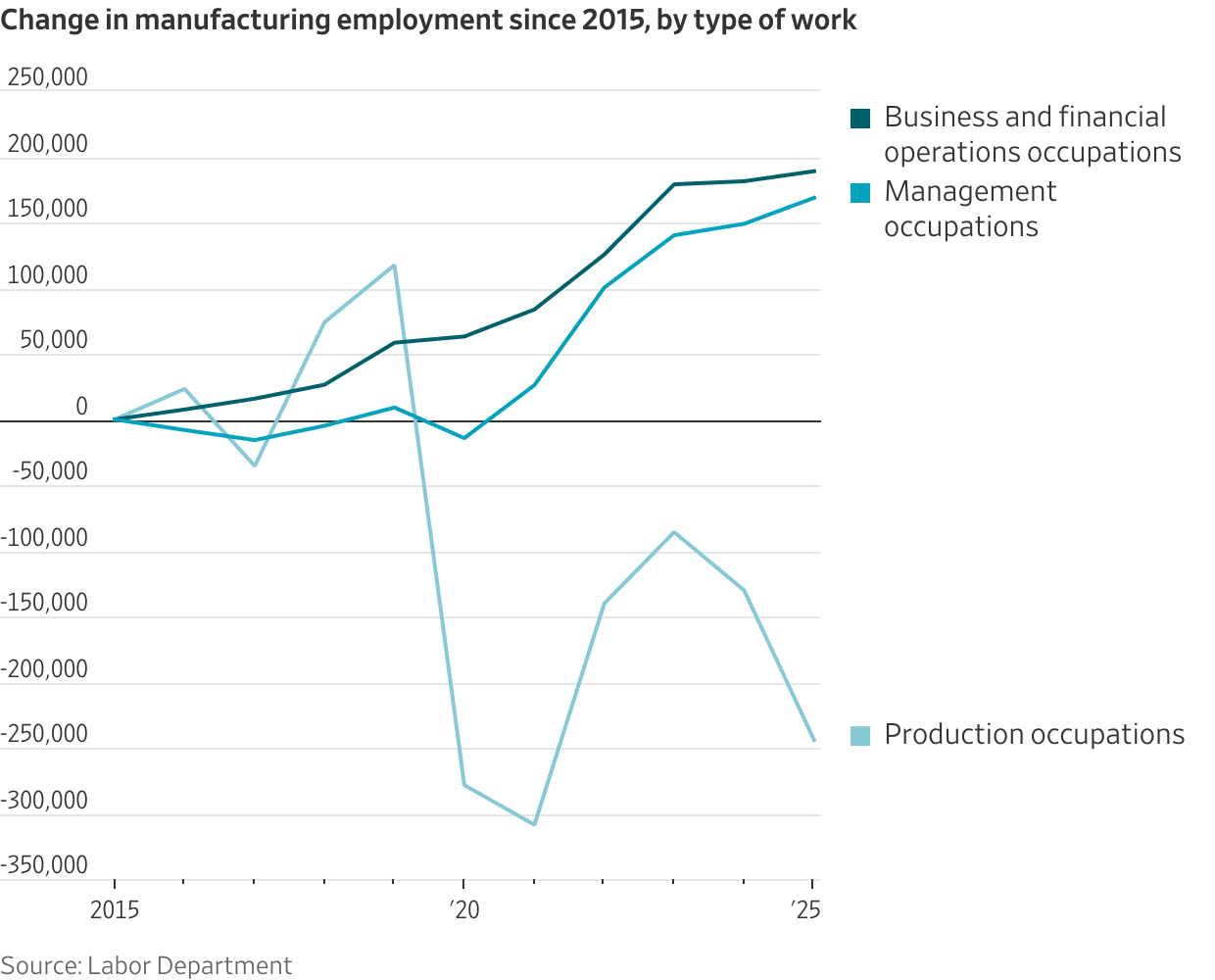
Between 2015 and 2025, U.S. manufacturers shed 244,000 jobs in so-called production occupations like assemblers and machine operators, according to Labor Department data. Over the same period, they added 358,000 jobs in management and business and financial operations. One factor driving the change is automation: Robots have replaced many shop-floor workers, but not managers and engineers, increasing their share of the workforce.
Automation has also made factory work more complicated. As companies rely more on sensors and data to track machines and spot potential problems, they need analysts to sift through the numbers. Robots require skilled technicians who can maintain them.
“Any factory you walk into right now, you just cannot function without at least an understanding of how these systems are operational,” ASU’s Starly said.
Phoenix-based Swift uses highly complex machinery to turn tiny particles called nanomaterials into antireflective coating, which can help make satellite-powered solar panels more effective, among other applications.
The startup’s seven-person full-time staff includes a physics Ph.D., two people with a master’s in mechanical engineering and one with a bachelor’s in chemical engineering, CEO Peter Firth said. They do work like running computer simulations, analyzing data, designing equipment and testing the coating. Of the three shop-floor technicians who handle and inspect samples, one has an associate degree, and another spent some time in college. They are also experienced.
“If everything is working perfectly, I could pull my mom in and she could do the work,” Firth said. “But we hire people in those roles to prevent and to identify problems. So you really want someone that has the right type of experience to be able to do that effectively.”
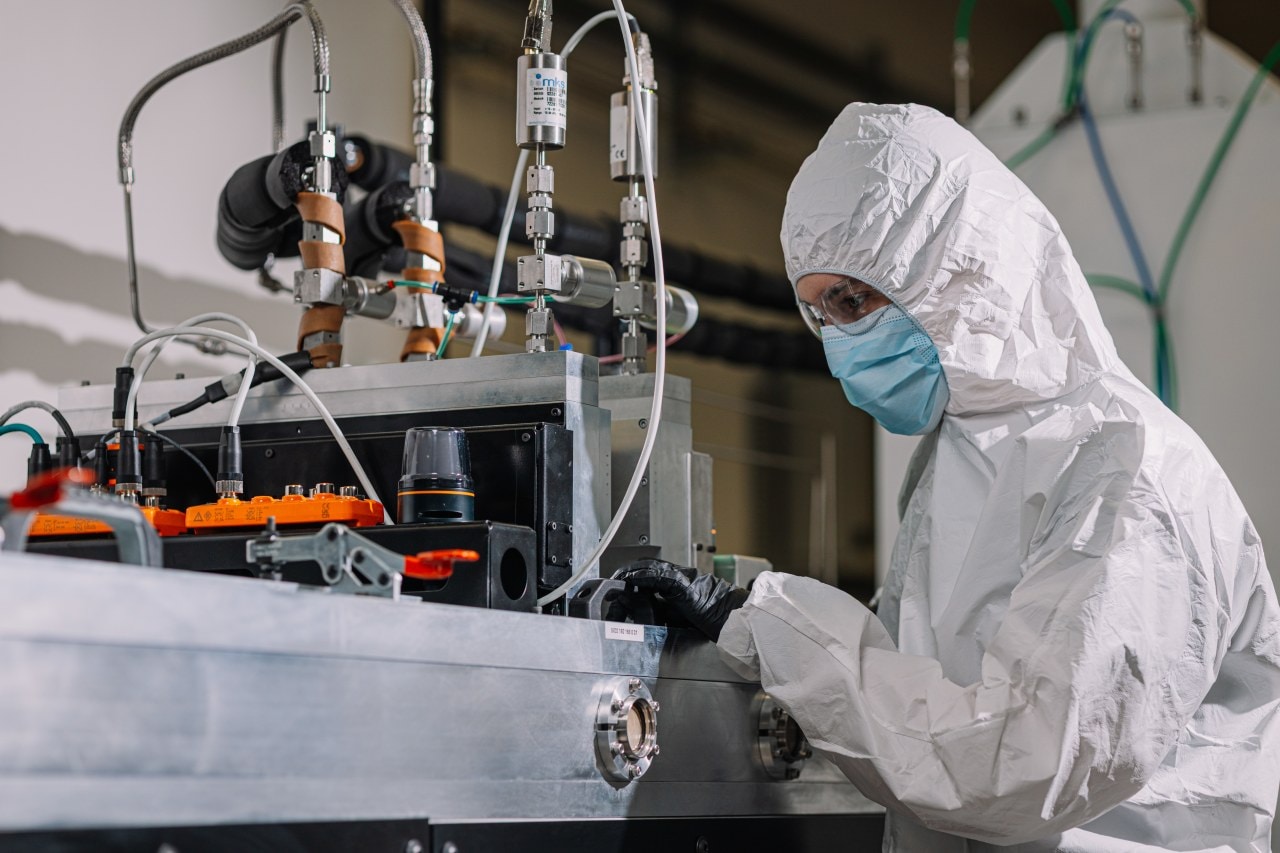
Swift is investing in a new assembly line that will be highly automated—robots load and unload samples, while one or two workers keep a watchful eye. That means that instead of hiring five technicians, the company might hire one technician and two engineers, who will be paid more, according to Firth. “We’re not necessarily spending less on people,” he said.
While older industries such as furniture making are shrinking, knowledge-intensive industries like aerospace, computers, electrical equipment and heating and cooling systems have been adding workers this year. In airplane manufacturing, more than half of workers have at least a bachelor’s degree, according to the Census Bureau. Meanwhile, semiconductor makers are more likely to hire college graduates than other manufacturers, according to a LinkedIn analysis.
These higher-skill jobs not only pay better, they often involve less “drudgery and mind-numbing tasks” than the assembly-line work of past decades, said Susan Houseman, an economist at the W.E. Upjohn Institute of Employment Research.
On the flip side, higher training requirements mean bigger barriers to entry. The days when people could walk out of high school and straight into a factory are increasingly over. “What I worry about is the access to good jobs,” said Susan Helper, an economist at Case Western Reserve University’s Weatherhead School of Management.
Companies and industry groups, worried about a skilled-worker shortage, are racing to expand training. The manufacturing trade group SME employs around 125 people in its workforce development division and sends equipment such as drone-coding kits and 3-D printers to middle schools in an effort to get kids excited about factory work. “Technology is now outpacing our people,” said CEO Jeannine Kunz. “There’s not a manufacturing sector that’s not starving for talent.”
In Mesa, Arizona, ASU’s school of manufacturing is training around 170 people to become equipment technicians at Taiwanese chip maker TSMC’s fast-growing Arizona plant and plans to increase that number to 800 next year. The school, which was founded five years ago, also has around 370 students studying for bachelor’s, master’s and doctoral degrees.
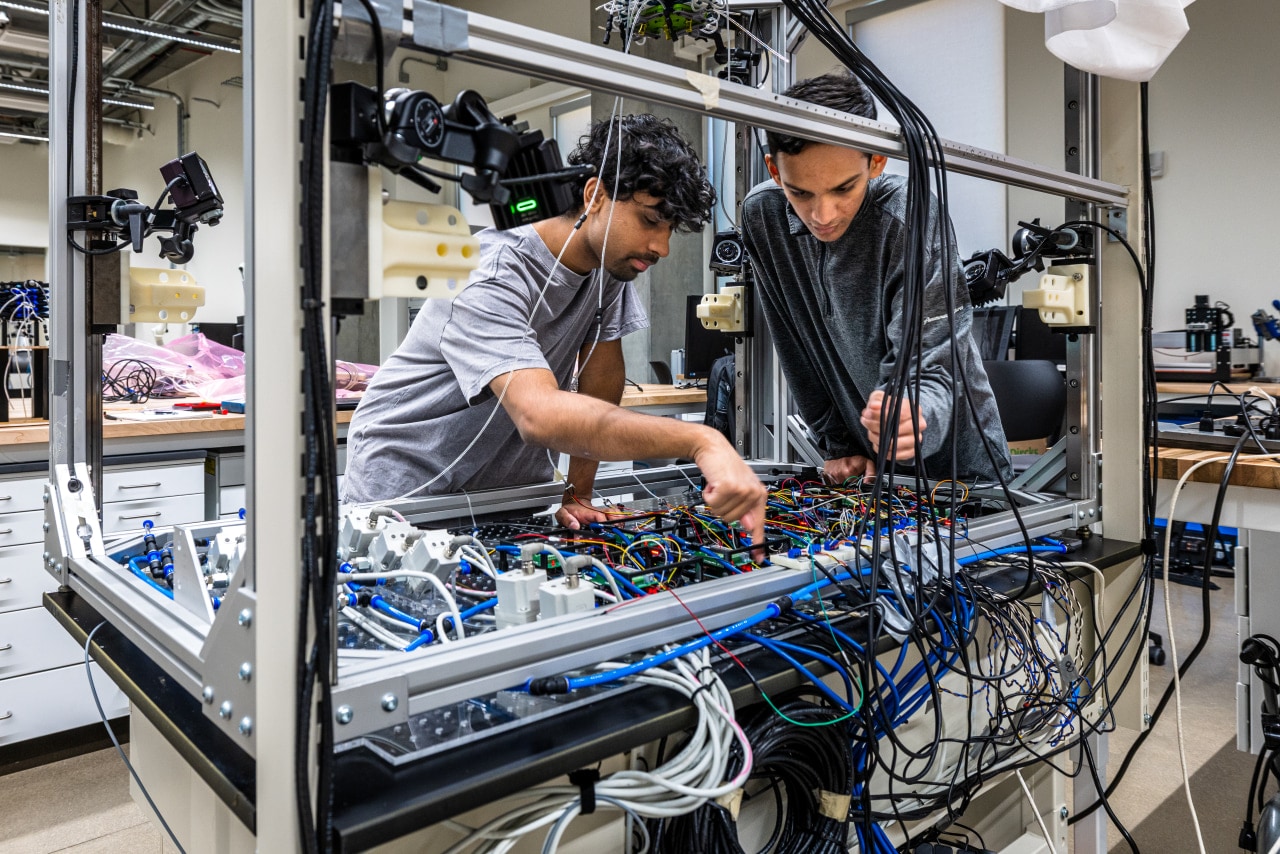
When Columbus, Ohio-based workforce development organization Aspyr Workforce Innovation launched a decade ago, factory work wasn’t as much of a focus. That changed in recent years as more advanced industry moved to the area. Now a big part of Aspyr’s work revolves around training locals for manufacturing jobs.
The region’s training programs are still able to keep up with demand from companies and workers, said CEO Lisa Patt-McDaniel, but that may change if local industry keeps growing. Chip maker Intel, for example, has announced plans for two factories with a combined 3,000 workers east of the city.
“Right now we’re good,” Patt-McDaniel said. “Call me in two years and we’ll see where we’re at.”
Write to Konrad Putzier at konrad.putzier@wsj.com


