
 E-Paper



US military might shows arrogant China its place during Pelosi's Taiwan visit
The Chinese belligerence during Speaker Pelosi's visit to Taiwan is a warning to other democratic nations against upgrading ties with Taipei, but it will also pose questions on President Xi Jinping’s ability to handle the US challenge in the Indo-Pacific.

 Prefer HTon Google


United States' commitment to defend Taiwan and the wolf-warrior response from the Chinese leadership over House Speaker Nancy Pelosi's visit to Taipei has made Indo-Pacific the new theatre of war with serious military ramifications for QUAD nations.
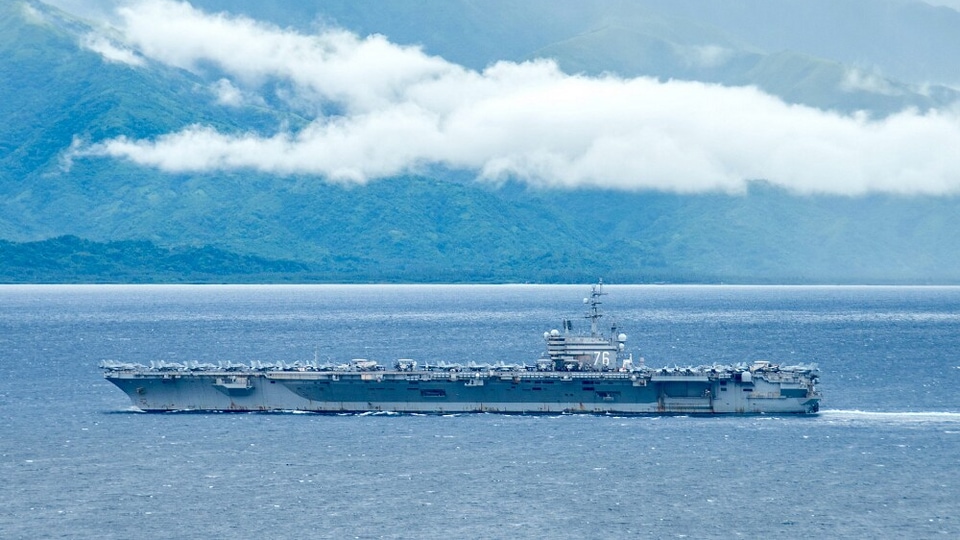
Just two months after US President Joseph Biden announced his commitment to militarily defend Taiwan from Chinese invasion, the House Speaker has gone a step further by promising an “iron clad” commitment to Taiwan during her historic one-day visit to Taipei. The Chinese response was essentially information warfare as conceptualized by the PLA, where the adversary is bombarded by half-truths and deterred by the extrapolated military prowess of the Chinese Communist Party through dedicated propaganda media and Twitter profiles.
The Chinese promise of retaliation and over-the-top threats to the US for going ahead with the Pelosi visit has upsides. It will make other democratic nations think 100 times before they have a diplomatic exchange with Taiwan as only the US has the military prowess to call the bluff of the Communist Party of China. Europe simply does not have the capability or appetite to take on China as for them trade with Beijing is a priority. The other positive for Xi Jinping regime is that it will reduce ASEAN to a non-aligned status as none of these countries want to get mashed in the fight between two mammoths apart from being historical members of the chopsticks club. It is not for any other reason that the Forbidden Kingdom opened its heavy metals doors for the visit of the Indonesian President on July 26.
Also Read | Xi uses Pelosi's Taiwan visit to evoke nationalistic fervour. It backfires
Another plus was Russia's payback to China for Ukraine war support by criticizing the US for escalating tensions by sending in Pelosi. Client states like Pakistan also raised their hands in support of Beijing by reiterating the “One China” policy which includes Taiwan as a part of the Middle Kingdom.
The Taiwan visit of Nancy Pelosi and the arrogant Chinese response has a downside too for the Xi Jinping regime also as it suddenly increases the risk profile of the Communist regime and will make the US, European and Japanese multinational companies think twice before investing more in China. Flight of capital is expected to follow from the Chinese mainland as military friction between Beijing and Washington, which now has bipartisan support on this vital issue, will increase by the day.
While the entire news of Nancy Pelosi's visit was virtually blacked out in the Chinese mainland, subsequent public knowledge of events that unfolded this week will make the Chinese public quietly question the gap between the PLA threat before Pelosi’s visit and its delivery on the ground. President Xi Jinping’s handling of the entire Pelosi visit will also pose questions about his ability to handle the complex relationship with the US in the future in the context of Taiwan and the Indo-Pacific. That the Chinese war dance did not deter Speaker Pelosi will make the pragmatists within the Communist Party think twice over the need to militarily confront the US over Taipei. This does not bode well for President Xi Jinping as the eternal leader seeks his third term later this year.
With US naval armada including Ronald Reagan Carrier Strike Group and Amphibious Assault Ship USS Tripoli in the Philippine Sea, the PLA will not aggravate the tensions around Taiwan apart from enacting live military drills and fighter aircraft trespass around the democratic island nation to appease the domestic audience. Given the military tempo that has been built up by the wolf warriors, the PLA may vent its aggression in a different theatre. And for that India and Japan should be on alert.


