
 E-Paper


Can Joe Biden's plans to reform Supreme Court, strip presidential immunity limit Donald Trump's powers?
Joe Biden called for crucial reforms to the Supreme Court. The US President seems to be considering reducing Donald Trump's authority should he succeed him.

 Prefer HTon Google


In a significant move, US President Joe Biden on Monday called for crucial reforms to the Supreme Court ahead of the November elections. In his proposal, the POTUS seeks a constitutional amendment that would restrict presidential immunity, set term limits for justices, and establish a binding code of ethics.
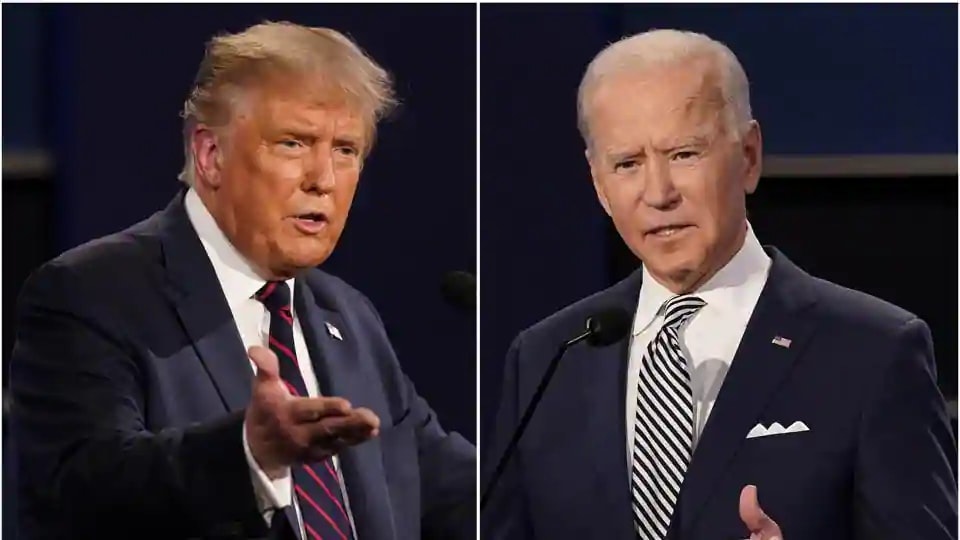
In an op-ed for the Washington Post, the 81-year-old Commander-in-Chief stated that “no one is above the law. Not the president of the United States. Not a justice on the Supreme Court of the United States. No one.”
His move comes as an attack on former President Donald Trump since Biden seems to be considering reducing his authority should he succeed him.
The Supreme Court decided in July that presidents are immune from prosecution for “official acts” committed while holding office in a major legal victory for GOP presidential candidate Trump.
Reflecting on the Supreme Court’s 6-3 decision to grant presidents broad immunity from prosecution for crimes they commit in office, Biden remarked that this means there are virtually no limits on what a president can do. “The only limits will be those that are self-imposed by the person occupying the Oval Office.”
The 46th US President, who served for 36 years in the Senate, further claimed in the op-ed that he has personally handled more Supreme Court nominations, vice president and president than any living being today.
“What is happening now is not normal, and it undermines the public’s confidence in the court’s decisions, including those impacting personal freedoms. We now stand in a breach,” the POTUS wrote.
Meanwhile, Kamala Harris, the US Vice President and the Democratic presidential candidate, issued a statement asserting that she supports the reforms since the American people have a “clear crisis of confidence” in the Supreme Court.
“These popular reforms will help to restore confidence in the Court, strengthen our democracy, and ensure no one is above the law,” she stated.
Also Read: Joe Biden says Supreme Court's immunity ruling on Donald Trump is a ‘dangerous precedent’
Can these measures impact Trump's advantages?
Raising an evident alarm at Trump's potential return to office, Biden said: “If a future president incites a violent mob to storm the Capitol and stop the peaceful transfer of power — like we saw on Jan. 6, 2021 — there may be no legal consequences.”
He further advocated for the president to be allowed to nominate a new justice to the Supreme Court in every two years, enabling them to serve for eighteen years in active service.
Calling the apex court's present voluntary ethics rule “weak and self-enforced”, he demanded a compulsory code of conduct for the justices, including disclosure of gifts, abstinence from public political involvement, and removal from cases involving financial or other conflicts of interest for themselves or their spouses.
Trump has gained a legal victory with the court's ruling, which he is now using to contest his recent criminal conviction in a hush money case and several other prosecutions.
The court's decision guarantees that Trump's federal interference in elections case won't go to trial this year. It also comes as a challenge to the prosecutors who are working on the criminal cases he is facing in Georgia, Florida, and Washington, D.C. They are now required to review if Trump is immune from 54 criminal counts against him in the three cases that are still pending.
The ruling is also affecting Trump's conviction in hush money. On July 11, he was supposed to be sentenced following his conviction on 34 felony counts. However, his sentencing has been postponed until September 18.
While the majority of the unlawful acts in the hush money case did occur before Trump became president, some of the evidence against him derive from his actions during his term in the office.
The defense team for Trump can claim that such evidence should be rejected due to the court's ruling.
Following Biden's proposal, there are speculations that it can have a negative impact on Trump's legal advantages as mentioned above. However, none of the legislative ideas have a possibility of getting passed in a divided Congress. In order to end a Republican filibuster, the measures would require votes from 60 Senators.
Meanwhile, Trump's reaction to the Biden's proposal is awaited.


