
 E-Paper


How Trump's new 'Gold Card' visa works: Cost, requirements and USCIS process
Immigrants can now donate $1 million and gain a U.S. green card-like status through Trump's proposal of the “Gold Card” pathway; form sent for federal review

 Prefer HTon Google


The U.S. Citizenship and Immigration Services (USCIS) is advancing with the proposed “Gold Card” visa pathway that would allow foreign nationals to obtain permanent-resident status by donating $1 million to the U.S. Treasury.
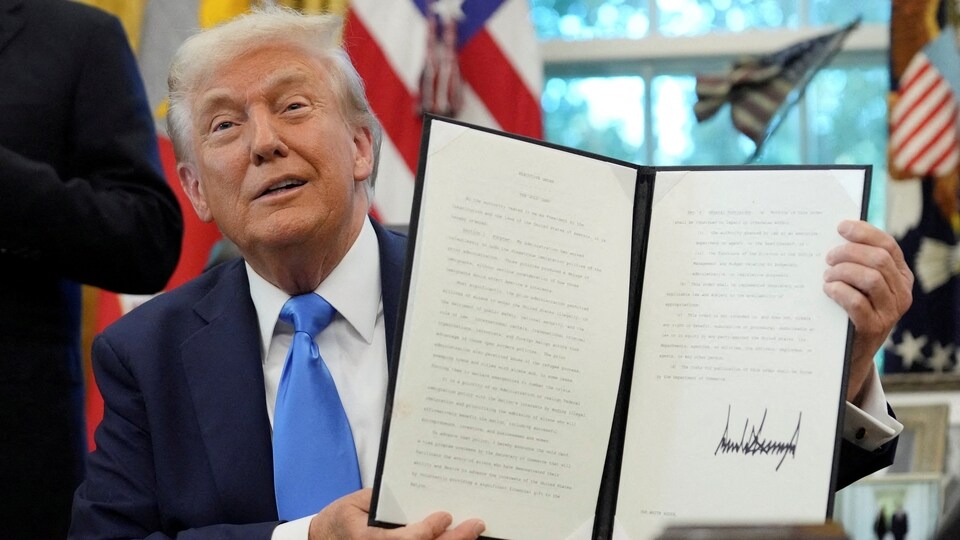
According to Fragomen, the draft form that would be used to apply for the Gold Card program is now under federal review.
Policy change and revenue goals
Replacing EB-5
This gold card initiative would significantly reshape or even replace the current EB-5 visa programme, which has been criticised for fraud and inefficiency. Under EB-5, foreign investors must invest in a U.S. business and create at least 10 full-time jobs.
At the time of the Gold Card program, Howard Lutnick, U.S. Secretary of Commerce, said that the EB-5 program is “full of nonsense, make-believe and fraud.” He further added, “So the President said, rather than having this sort of ridiculous EB-5 program, we're going to end the EB-5 program. We're going to replace it with the Trump Gold Card, which is really a Green Card Gold.”
Read more: Trump rolls out $1mn ‘Gold Card’: Check visa plan eligibility and other details
Price cut & demand surge
Initially priced at $5 million, the Gold Card's cost has been slashed to $1 million for individuals and to $2 million for corporate-sponsored applications.
According to CNBC, the lower cost of the card has reportedly driven strong interest from global high-net-worth individuals seeking access to U.S. residency, its education system and financial markets.
Gold Card Agenda
The individuals seeking the Gold card would contribute $1 million to the U.S. Treasury (or $2 million) along with a non-refundable $15,000 application fee attached to each request.
According to the law firm Fragomen, the draft highlights three phases of the Gold Card application process.
- Submit a Gold Card request with the U.S. Department of Commerce
- Pay the $15,000 application fee through pay.gov
- File the Form I-140G with USCIS, declaring the source of the donated funds and completing vetting for lawful origin
Once approved, the applicant must go through consular processing overseas before being admitted as a lawful permanent resident. The guidance does not yet clarify how adjustment of status would work for those already in the U.S., though it's expected to be permitted.
According to Howard Lutnick, Gold Card holders would be classified under EB-1 or EB-2 visa categories, depending on how USCIS assesses each case.
After Gold Card there is “Platinum Card”
Forbes reports that the U.S. government has pitched a “Platinum Card” for high-net-worth individuals, requiring a $5 million contribution, allowing up to 270 days a year in the U.S. and offering favorable tax treatment for non-U.S. income.
However, critics are not for the program and warn that this could disproportionately benefit the ultra-wealthy.
Read more: Trump gold card, platinum card in focus amid big H-1B visa move. What are they?
Criticism of “selling citizenship”
The Washington Post reported that critics view Trump's plan as “turning access to the U.S. into a commodity” rather than a merit- or need-based process.
Kate Hooper, a senior policy analyst at the Migration Policy Institute, told Money Control that the Gold Card Program is a “pay-to-play residency.”
In Bloomberg Law, immigration lawyers argue the Gold Card favours wealth over merit. “The gold card just attempts to treat a financial gift as equivalent proof,” says Becky Fu von Trapp, managing attorney at von Trapp Law.
She also warns that this could “crowd out skilled professionals” who qualify under traditional visa categories.


