E-Paper


US headed for a recession? 4 ways it could affect you at grocery stores
JPMorgan Chase & Co on Friday said that it expects the US economy to fall into a recession this year

 Prefer HTon Google


JPMorgan Chase & Co on Friday said that it expects the US economy to fall into a recession this year after President Donald Trump's reciprocal tariff announcement. The 78-year-old, earlier this week, revealed that the United States will charge at least a 10% tariff on practically all goods imported to the country. China retaliated by announcing 34% tariffs on American goods.
“We now expect real GDP to contract under the weight of the tariffs, and for the full year (4Q/4Q) we now look for real GDP growth of -0.3%, down from 1.3% previously,” JP Morgan's chief US economist, Michael Feroli, said Friday.
Read More: Canada hits back with 25% tariffs on US auto imports after Donald Trump's move
“The forecasted contraction in economic activity is expected to depress hiring and over time to lift the unemployment rate to 5.3%,” Feroli added.
Trump's announcement sent the US stock market plunging, with the Dow Jones index tanking over 2000 points on Friday. About $5.4 trillion of market value was wiped out in two trading sessions.
What is a recession?
The NBER's Business Cycle Dating Committee says that recession is a ‘significant decline in economic activity spread across the economy, lasting more than a few months, normally visible in production, employment, real income, and other indicators’.
Read More: Donald Trump reacts to China’s 34% tariff move: ‘Played it wrong, panicked’
How will the recession affect you?
If the US tips into a recession—defined by two-quarters of negative GDP growth—here’s how it could ripple through your grocery trips and home life:
1. Skyrocketing grocery prices
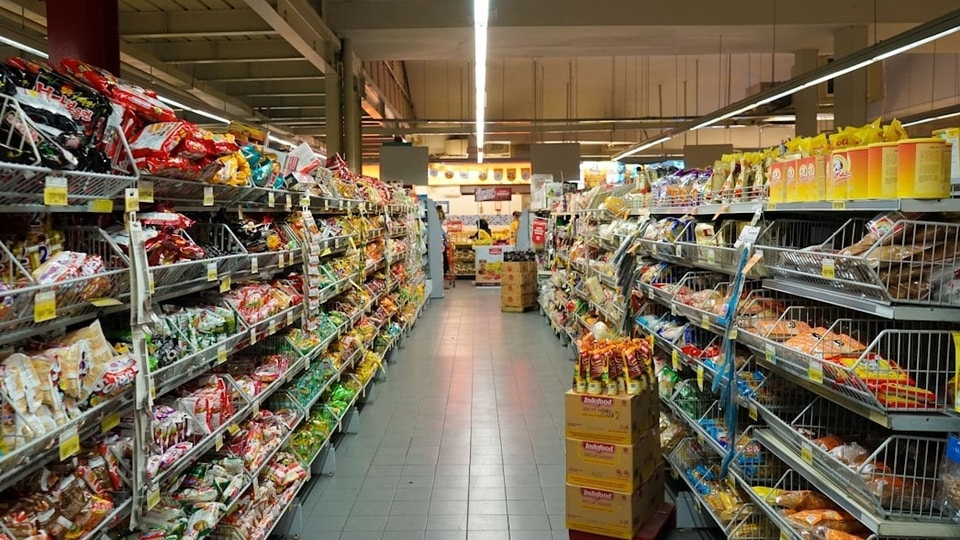
Trump's tariffs could jack up costs for imported staples like olive oil, coffee, or canned goods.
2. Shrinkflation
You could see smaller packages at grocery stores, like 10 oz cereal boxes instead of 12 oz.
3. Fewer discounts and deals
Retailers like Walmart or Kroger might slash promotions as margins tighten.
4. Decline in disposable income
Feroli said he expects the Federal Reserve to begin cutting its benchmark interest rate in June and rate cuts will follow at each subsequent meeting through January. This will come despite inflation soaring to 4.4% by the end of the year, from the current level of 2.8%.
With this, an American consumer's disposable income will decline.