
 E-Paper


US Supreme Court lets Trump administration cut $783 million in medical research grants
The court kept in place a block on NIH guidance documents that bar funding for research connected to DEI, gender-identity, vaccine hesitancy, and Covid.

 Prefer HTon Google


A divided US Supreme Court let the Trump administration at least temporarily cut off millions of dollars in medical research grants that government officials say don’t align with the president’s policies.
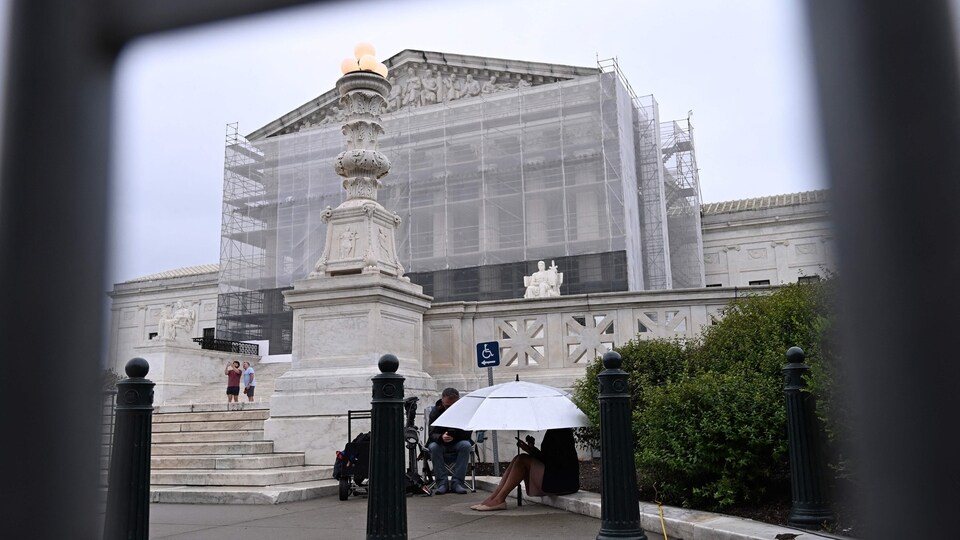
The justices partially put on hold a federal trial judge’s decision that the National Institutes of Health acted in an “arbitrary and capricious” manner when it terminated thousands of grants as part of President Donald Trump’s crackdown on diversity, equity and inclusion.
The decision wasn’t a total win for Trump. The justices kept in place a block on NIH guidance documents that bar funding for research connected to DEI, gender-identity, vaccine hesitancy, Covid or climate change.
But the court indicated on a 5-4 vote that US District Judge William Young in Boston lacked jurisdiction to order reinstatement of specific grants. Chief Justice John Roberts joined the court’s three liberals in dissent on that issue.
The challengers, which include research organizations and states whose universities rely on NIH funding, said the cutoff would set back crucial research by years, if not decades.
“A stay would abruptly, and in many cases permanently, halt lifesaving biomedical research that Congress has directed the NIH to fund, with irreparable consequences for scientific progress,” the groups, led by the American Public Health Organization, argued in court papers.
The administration told the Supreme Court the NIH was being forced to keep paying out $783 million, though the challengers questioned that figure.
“The government is irreparably harmed when forced to pay out millions of dollars on discretionary grants, with no guarantee of recouping the money,” US Solicitor General D. John Sauer wrote in court papers. Sauer is the administration’s top Supreme Court lawyer.
The case is National Institutes of Health v. American Public Health Association, 25A103.


