
 E-Paper


Where is Kamchatka, Russia region that saw quake leading to tsunami in US, Japan
Kamchatka, located in Russia’s Far East, sits along the volatile 'Ring of Fire', considered a seismically active belt that encircles the Pacific Ocean.

 Prefer HTon Google


A powerful 8.7-magnitude earthquake struck early Wednesday off Russia’s Far East, triggering tsunami warnings across the Pacific region, including Japan, Alaska, and Hawaii. Coastal areas of Russia’s Kuril Islands and northern Japan experienced the first waves shortly after the quake.
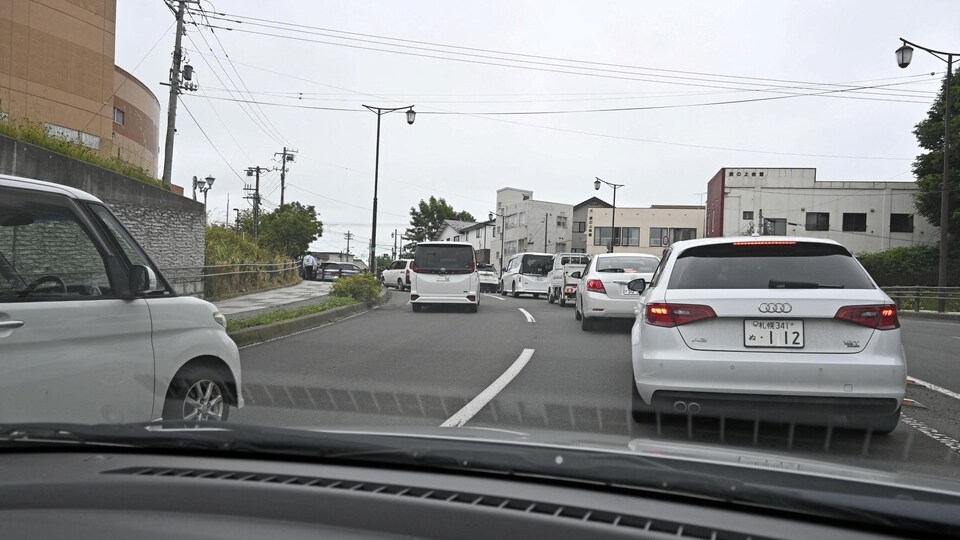
The quake’s epicenter was near the Kamchatka Peninsula, a region with a long history of seismic activity.
According to the US Geological Survey (USGS), the quake occurred at a depth of 19.3 kilometers (12 miles) and was about 250 kilometers (160 miles) from Japan’s northernmost island, Hokkaido. It struck at 8:25 AM Japan time.
Following the quake, tsunami warning sirens sounded across Honolulu on Tuesday evening local time, prompting evacuations in coastal areas, reported news agency Associated Press. Follow Tsunami warning live updates.
“Urgent action should be taken to protect lives and property,” the Pacific Tsunami Warning Center stated, warning that waves of 1 to 3 meters (yards) above tide level were possible in Hawaii, Chile, Japan, and the Solomon Islands. Waves exceeding 3 meters were forecast for parts of Russia and Ecuador.
The Japan Meteorological Agency confirmed the arrival of the first wave, approximately 30 centimeters high, at Nemuro, on Hokkaido’s eastern coast. Russia also reported that the first wave had reached Severo-Kurilsk in the Kuril Islands.
Valery Limarenko, governor of the Sakhalin region, said residents had moved to higher ground. “Everyone is safe. People are remaining on elevated areas until we’re sure there’s no second wave,” he said.
Scenes of panic in Russian Far East
In the Kamchatka region, the quake jolted residents into the streets. Russia’s Tass news agency reported that people fled homes in Petropavlovsk-Kamchatsky, which is the largest city near the epicenter.
Many locals ran without shoes or outerwear. “Cabinets toppled, mirrors shattered, cars swayed, and balconies shook,” according to eyewitness reports cited by AP.
There were also reports of power outages and mobile network disruptions. Authorities began evacuations on Sakhalin Island, and emergency services were operating at full capacity.
Widespread alerts across the Pacific
The US National Tsunami Warning Center in Alaska issued warnings for the Aleutian Islands and watches for parts of the US West Coast, including California, Oregon, and Washington. Hawaii was also under a tsunami watch.
Japan’s meteorological agency also issued a tsunami alert for the country’s Pacific coast, saying waves of up to 3 meters could reach the shoreline within 30 minutes of the alert.
Why Kamchatka is a seismic hotspot
Today’s quake adds to Kamchatka’s long history of seismic unrest. The Kamchatka Peninsula, located in Russia’s Far East, sits along the volatile "Ring of Fire" — a seismically active belt that encircles the Pacific Ocean. It is one of the most earthquake-prone regions in the world.
Earlier in July, the region experienced five significant offshore earthquakes, including a 7.4-magnitude quake just 144 kilometers (89 miles) from Petropavlovsk-Kamchatsky.
On November 4, 1952, a massive 9.0-magnitude quake struck Kamchatka, generating 30-foot (9.1-meter) waves in Hawaii. Despite the destruction, no deaths were reported in that quake.
(With AP inputs)


