
 E-Paper



Warm air from Africa compressed in a dome: The 'Omega block' that’s causing Europe heatwave
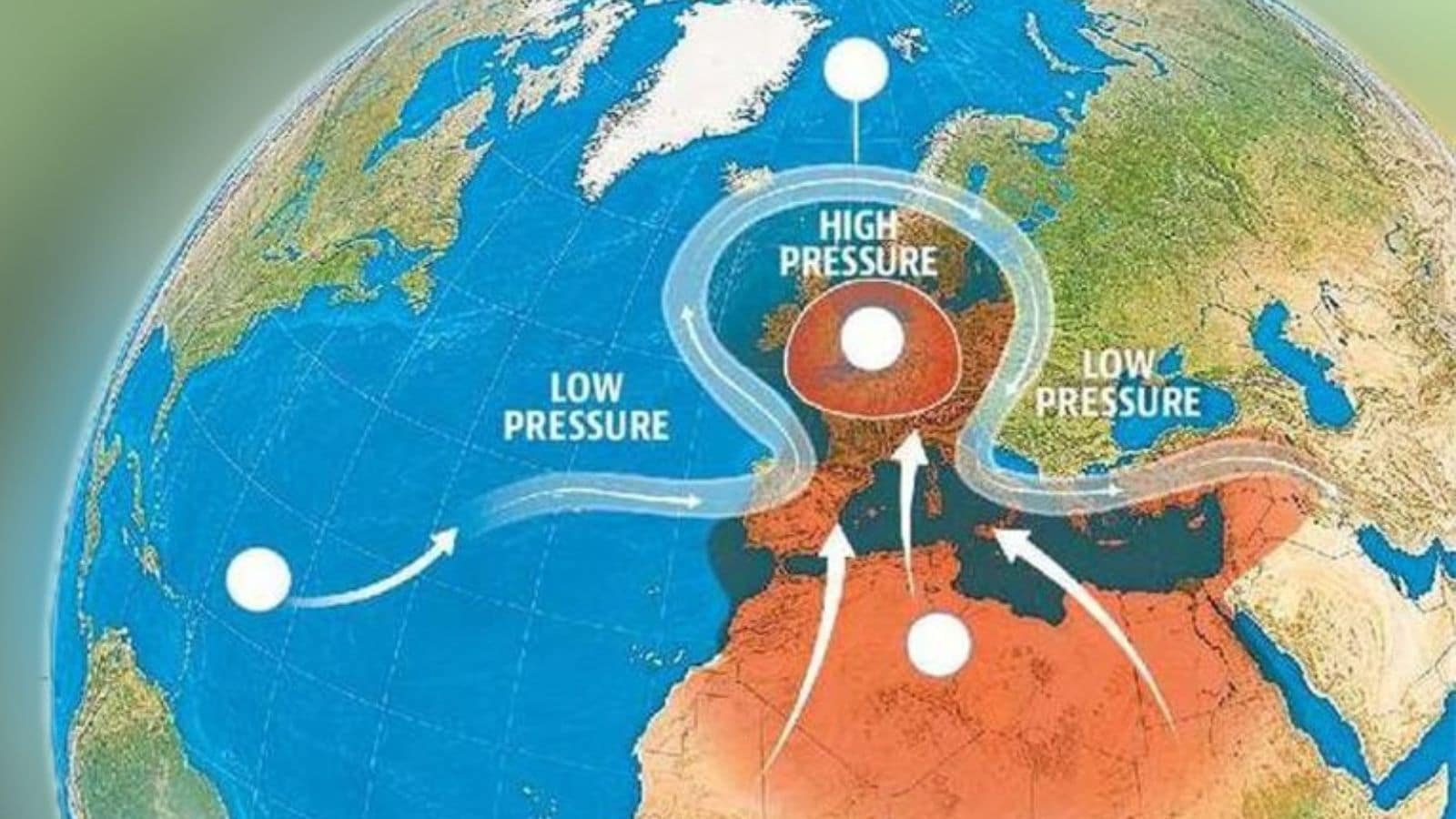
The Omega block pattern takes its name from the Greek letter Ω: a bulge of warm, high-pressure air held between two pockets of cooler, low-pressure air.

 Prefer HTon Google


Western Europe is in the grip of an early-summer heatwave that has shut schools, triggered red alerts across four countries and killed dozens of people.
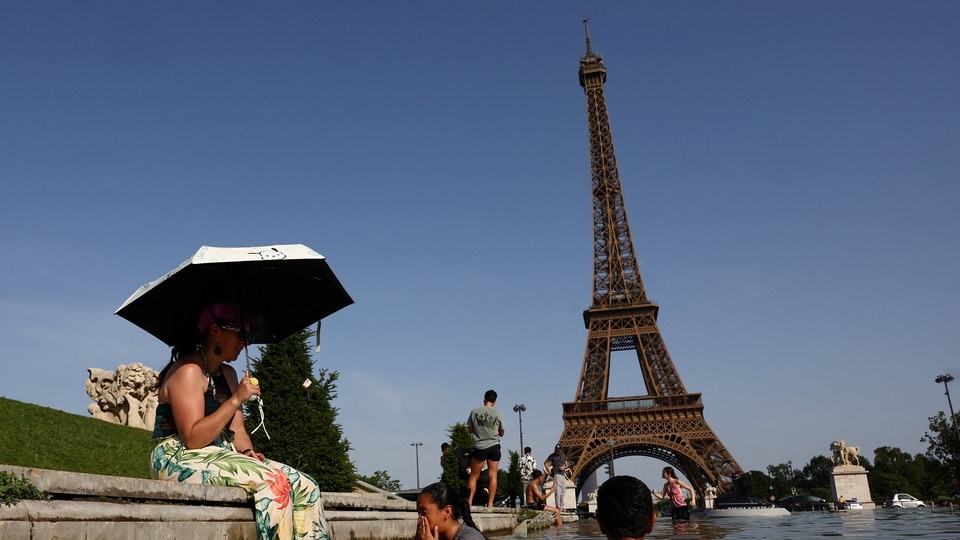
France has linked more than 40 deaths to the heatwave, most of them drownings, as people sought relief in rivers, lakes and the sea. Temperatures have crossed 40°C in France and Spain, while Britain has issued a rare red heat warning — only the second in its history — for parts of central and southern England.
Meteorologists trace the cause to a weather pattern called an ‘omega block’. Unpicking how it works explains why this heatwave is intense and why different parts of Europe are experiencing it so differently.
The block
The Omega block pattern takes its name from its resemblance to the Greek letter Ω: a bulge of warm, high-pressure air held between two pockets of cooler, low-pressure air, according to Reuters.
Also Read: The next heatwave will be won at night
Normally, the jet stream — the band of fast-moving air several kilometres up that pushes weather systems from west to east — keeps conditions changing every few days.

But, during an omega block, that flow buckles sharply northward and southward, forming the bulge like that of the symbol and isolating the high-pressure zone in place. Weaker steering winds, combined with sharper temperature contrasts in the atmosphere, lock the pattern further. The outcome is that hot air gets stuck over the same patch of ground for anywhere between three and ten days, and sometimes even longer.
Air beneath a high-pressure dome sinks rather than rises, a motion meteorologists call subsidence. As it descends, rising atmospheric pressure compresses that air, and compression heats it further. This sinking, warming column also suppresses cloud formation, leaving skies clear and letting the sun heat the ground unimpeded.
Research into earlier omega-block events, including the 2021 “heat dome” over the Pacific Northwest, had identified this sink-and-compress motion as the engine that turns a warm spell into a record-breaking one.
In western Europe this week
Météo-France forecaster Sebastien Leas told AFP that a cold front off Portugal had been “acting like the heat pump, drawing up warm air” from North Africa and feeding it into the high-pressure bulge sitting over France and Spain.
The two low-pressure systems flanking the bulge, by contrast, bring cooler, wetter weather — which is why Britain, sitting on the boundary between the warm bulge and the cooler air to its northwest, is recording searing heat in its south and east alongside cooler, rainier conditions in the north and west, per the UK Met Office.
Is climate change responsible?
Scientists have not reached consensus on whether global warming is making omega blocks themselves more frequent. What is settled, according to climate researchers, is that the heatwaves these blocks now produce run hotter than they would have a few decades ago.
Greenhouse gas emissions have already warmed the planet by roughly 1.3°C above pre-industrial levels, lifting the baseline temperature from which any heatwave begins.

Clair Barnes, a research associate in extreme weather and climate at Imperial College London, put the added effect at two to four degrees Celsius over what Europe would see without human-caused warming.
UN climate chief Simon Stiell, in a statement carried by AFP, called the event a "brutal reminder" of the climate crisis.
How countries are coping
France has shut hundreds of schools, cancelled more than 70 trains and convened a crisis unit under President Emmanuel Macron. Officials have linked at least 13 drowning deaths to the heatwave since the weekend, on top of the 40 reported earlier.
Spain's weather agency AEMET placed parts of the south and north under its highest "extraordinary danger" alert, with temperatures forecast to reach 44°C in some river valleys.
Also Read: China’s Latest Tool to Control a Disputed Atoll: a Strange Floating Platform
Italy declared red heatwave alerts in 15 cities, including Rome and Milan, where blackouts struck as air-conditioning demand spiked and a hospital in Parma logged more than a thousand heat-related emergency visits in three days.
Britain's Met Office issued red warnings for London and southern England, prompting early school closures and a "do not travel" advisory on a major rail line. Germany has reported heat-related drowning deaths over the weekend as well.
Power grids are under particular strain. In France, utility EDF has had to restrict output at some nuclear plants — including a reactor on the Garonne river — because the river water used for cooling has itself grown too warm, Bloomberg reported, with further curbs possible as the heat persists.
(With inputs from agencies)


