
 E-Paper



All about Pickaxe Mountain: Iran's under-construction secret nuclear site on Trump's radar
It remains unclear what exactly is housed inside the mountain, as inspectors from the International Atomic Energy Agency (IAEA) have never been granted access.

 Prefer HTon Google


US President Donald Trump has once again threatened to strike Pickaxe Mountain, an under-construction Iranian nuclear site buried deep beneath a mountain near the country's Natanz nuclear facility, as tensions between Washington and Tehran continue to escalate.
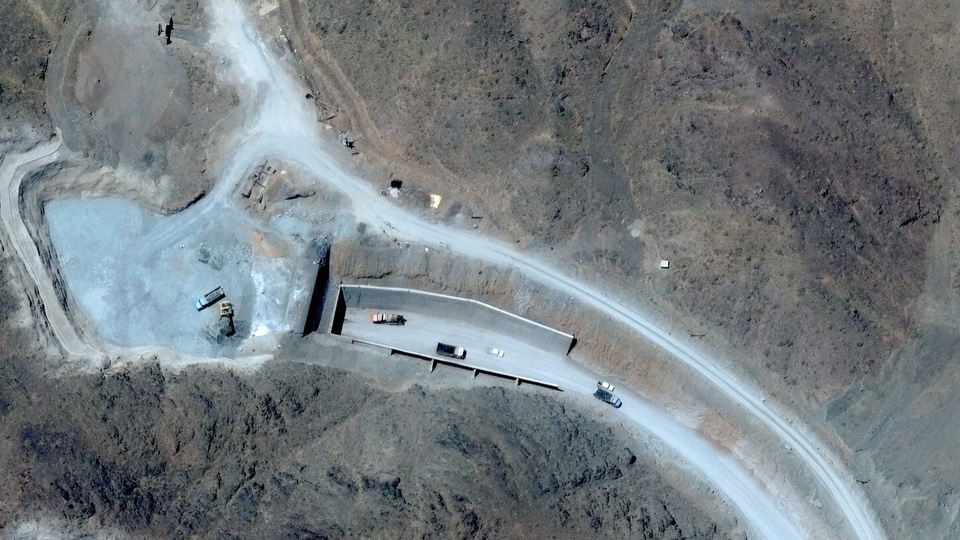
According to the Associated Press (AP), the site, formally known as Kuh-e Kolang Gaz La, has remained untouched despite the US bombing Iran's nuclear facilities at Fordo, Isfahan and Natanz during Operation Midnight Hammer in the 2025 12-day war between Iran and Israel.
It remains unclear what exactly is housed inside the mountain, as inspectors from the International Atomic Energy Agency (IAEA) have never been granted access.
Also Read: Trump approves deal between US, Saudi Arabia for nuclear programme | What it means
What is Pickaxe Mountain?
Located about 225 kilometres south of Tehran, Pickaxe Mountain is being built next to the Natanz nuclear enrichment complex, which has long been at the centre of international scrutiny. Construction on the underground facility began after repeated attacks on Natanz, including sabotage operations widely believed to have been carried out by Israel that destroyed a centrifuge manufacturing site.
The sprawling complex, spread across nearly 2.7 square kilometres, is protected by anti-aircraft batteries, fencing and Iran's paramilitary Revolutionary Guard. Satellite imagery shows multiple tunnel entrances, while experts cited by AP have estimated that the underground facility could lie between 80 and 100 metres below the surface. Excavation has continued since those estimates were made, leading some analysts to believe the site could now extend even deeper.
Why is the site important?
Experts believe the scale of the project suggests Iran intends to use the facility both for uranium enrichment and for manufacturing centrifuges. Centrifuges are tube-shaped machines that rapidly spin uranium gas to increase its level of enrichment.
Housing such operations deep underground would offer significant protection against air strikes and could allow Iran to continue expanding its enrichment capabilities even during a conflict, AP reported.
The depth of the facility has also raised questions about whether it can be destroyed using conventional bunker-buster bombs. The United States developed the GBU-57 Massive Ordnance Penetrator to target deeply buried facilities. According to the American military, the weapon can penetrate at least 60 metres of earth before detonating.
US officials have reportedly discussed using two such bombs in succession against hardened targets, though it remains unclear whether that would be sufficient to destroy a facility buried as deep as Pickaxe Mountain.
What did Trump say?
Speaking alongside Lebanese President Joseph Aoun on Tuesday, Trump initially downplayed the importance of the underground site, saying the United States was primarily focused on tracking Iran's stockpile of highly enriched uranium. However, he later identified Pickaxe Mountain as a potential target as exchanges between the US and Iran continued.
"We follow the material, that's where the action is," Trump told reporters before adding, “Normally I wouldn't say that. If I thought they could do something about it, I would never say that, but we'll be hitting that area pretty soon. And very heavily.”
(With inputs from AP)


