
 E-Paper



Years Late, Billions Over Budget: California’s High-Speed Rail Hasn’t Laid a Track
A push now aims to jump-start the project, but there are skeptics.


 Prefer HTon Google


SHAFTER, Calif.—Some 18 years after California voted to launch a bullet train that would travel between San Francisco and Los Angeles in under three hours, the project now costs billions more than planned, is years behind schedule and has yet to lay its first track.
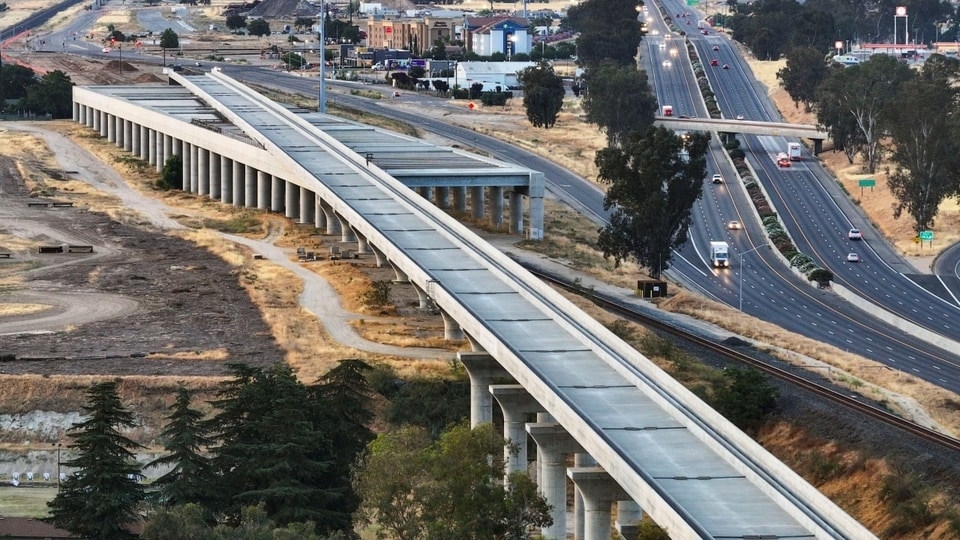
The 2008 ballot measure passed narrowly, 52.7% to 47.3%, kick-starting America’s largest active infrastructure project. A legislative bill said it should be completed by 2020, and the California High-Speed Rail Authority’s initial business plan estimated a cost of $33 billion. After years of legal battles, cost overruns, leadership changes and political fights, the price tag is up to $126 billion, with a high estimate of $231 billion, and it isn’t expected to be fully operational until 2040.
Since 2008, the authority has spent about $15 billion purchasing thousands of land parcels and building giant overpasses, rail beds, walls and other concrete structures that now loom over California’s Central Valley. The work has generated thousands of jobs.
But the Authority’s Inspector General estimated the project will “exhaust its current funding resources” as early as next year, according to its July report.
“This is a disaster,” Democratic state Sen. Catherine Blakespear said at a Transportation Committee meeting in April to review the project’s 2026 business plan. “I am such an enthusiast for rail and I really want this to be successful and just hearing these things makes it seem like we’re proceeding on a wing and a prayer.”
The authority is currently focused on completing an initial segment through Central Valley, then connecting it to San Francisco and Los Angeles later.
The topic is polarizing in the valley. “You can’t really talk about it too loudly until you know where people stand. I’m pro-train, but it’s a divisive issue,” said Constance Peters, a shift leader at The 18hundred restaurant in Bakersfield who grew up in the area. Before that, she worked for a concrete company that helped build some structures for the rail project. “Californians have money. We want to travel,” Peters said.
Construction hasn’t yet reached the southern end of this segment, where intense opposition remains. The project would cut through Shafter, a town of about 24,000.
The train would “divide our town in half,” said Gail Alvidrez, a retiree and longtime local resident. Shafter is the only city that would be bisected by the proposed route without getting a station.
On a warm summer evening in Shafter, kids played baseball, families strolled downtown for ice cream and men in cowboy hats watched the sunset from a park. Incorporated in 1938, Shafter has roots as a railroad depot; the high-speed rail project would replace existing Amtrak and freight tracks with a wider, elevated line surrounded by 35-foot walls.
Locals worry the project would hurt businesses, since the track’s footprint would displace some. As downtown closed for the night, one restaurant filled up: El Michoacano, a block from the tracks, where Alvidrez and her husband ate. “They’ll have to tear down stores,” she said. “We don’t have that many.”
They also say a bullet train, and all the construction, would disrupt their peaceful downtown. At a city council meeting last fall, rail officials presented alternatives aimed at accelerating construction. A packed audience voiced opposition to the new proposals and the tracks altogether. Of cities affected by high-speed rail, Shafter Mayor Chad Givens said, “none of them are being impacted to the degree that we are…There’s no benefit.”
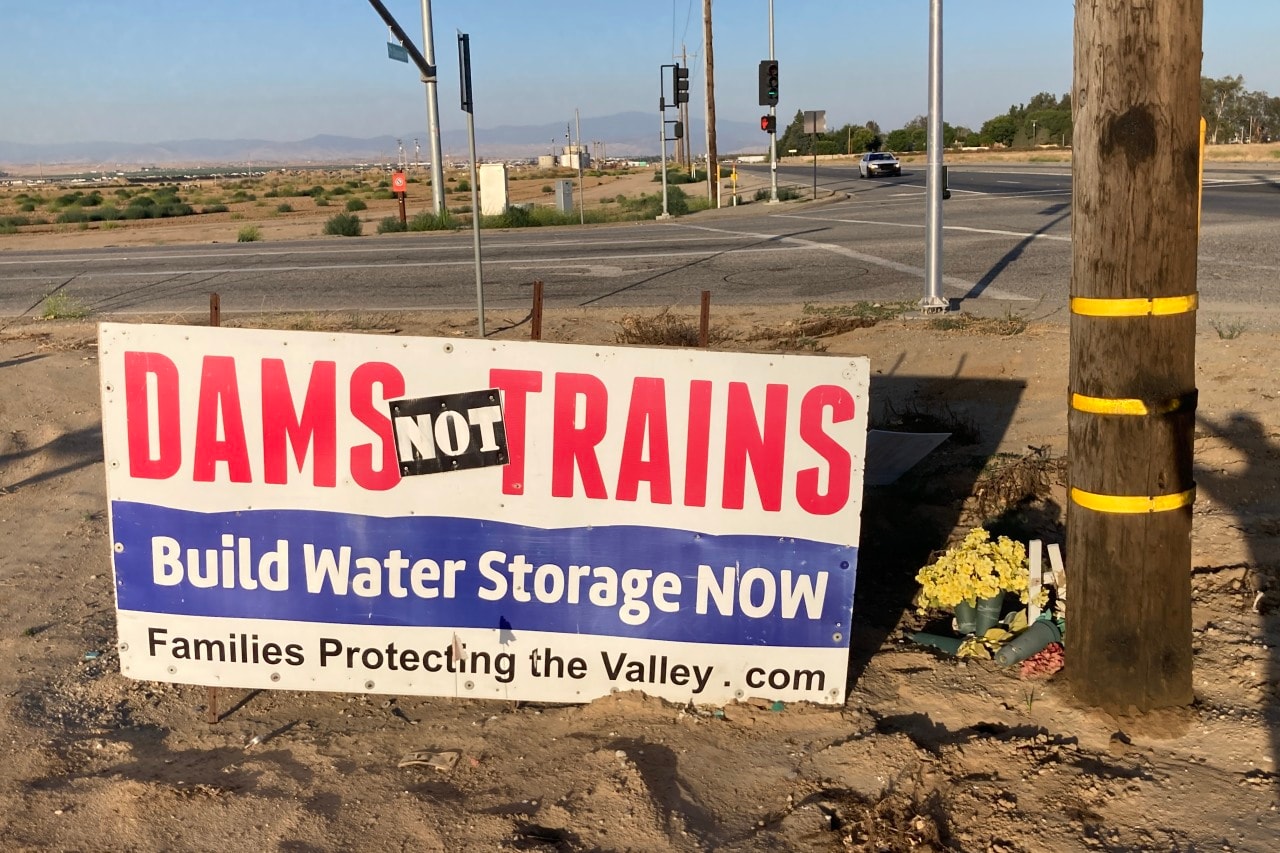
The council urged the state to find a route around the city.
Mayor Givens said it has been challenging to work with California’s High-Speed Rail Authority. “About every four to six months, they get somebody new in here and we have to start the process again,” Givens said. The authority’s chief executive officer, Ian Choudri, disputed that and said the agency plans on reaching out to the city in the coming weeks.
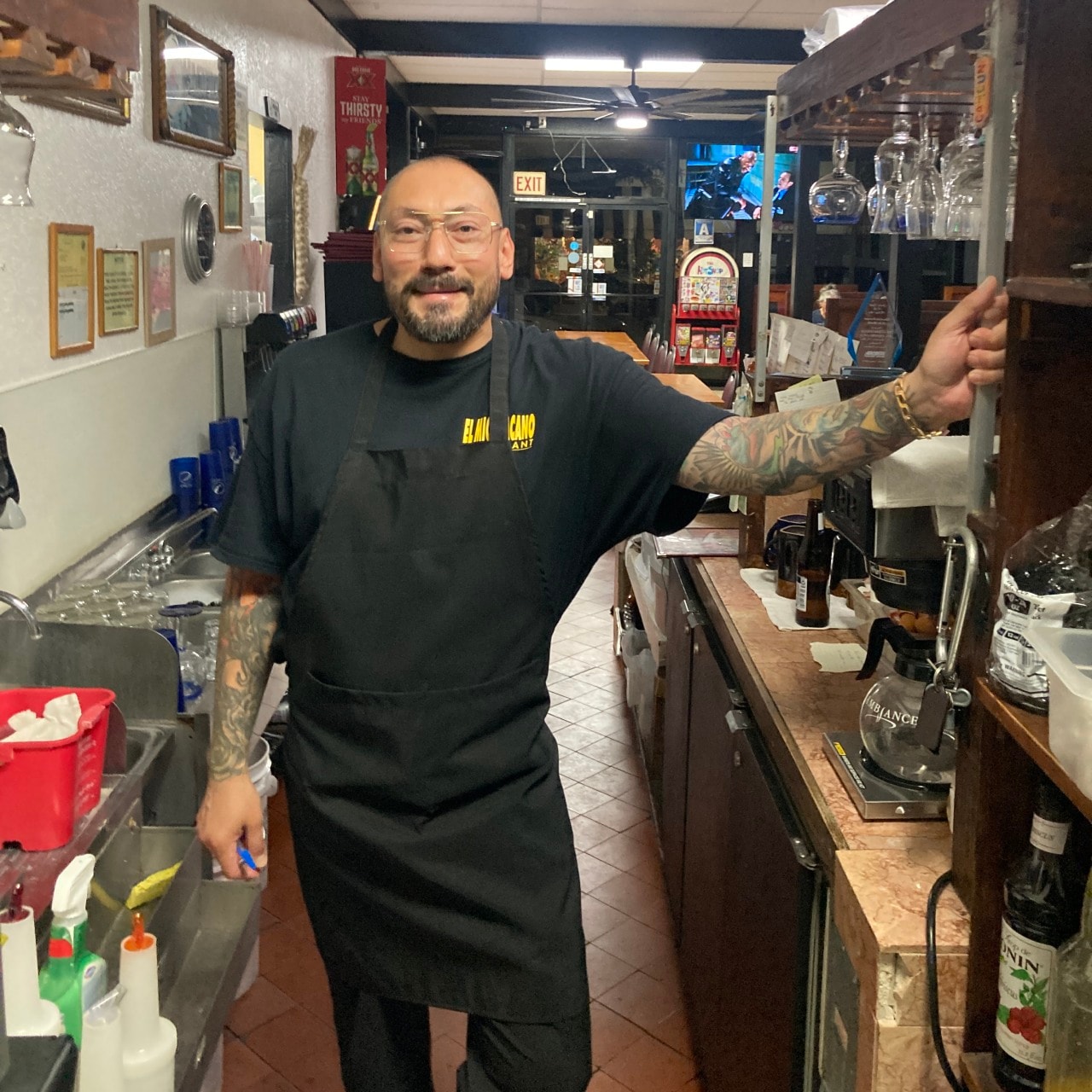
Some locals envision the benefits if the train is completed. “If I can get to San Francisco in two hours, I’d go on a Tuesday,” says Jeinner Aviles, a Bakersfield resident who runs the El Michoacano restaurant, owned by his father.
Aviles has his doubts though. He wonders, “Will I see it in my lifetime?”
The rail authority brought in Choudri in 2024. There were three prior chief executives of the project.
California Gov. Gavin Newsom called Choudri “the perfect steward” in a press release. The governor also pledged that “over the next few years, the dream of high-speed rail in California will become a reality, as we begin to lay track, design and build stations, and buy trains.”
Eager to get trains running, Choudri said he has shaved off 2½ years of time by buying commodities, such as concrete rail ties, wires, poles and ballast, and storing them at a yard so contractors and builders can just “pick the stuff up and start laying tracks.” He added that doing so has sped up the schedule—the rail project expects to lay the first track by the end of this year.
The initial section between Bakersfield and Merced is expected to cost $36 billion and open in 2033. While the line isn’t expected to be profitable on its own, officials view it as a foundation to build on.
“Nobody here in Bakersfield says, ‘Hey, I want to go to Merced,’” says Joe Pearson, a Bakersfield resident.
Nearly two-thirds of Californians want the high-speed rail project to continue, according to a Politico-Citrin Center-Possibility Lab poll conducted last year, though more than half believe it won’t be completed as planned.
Last summer, the Trump administration withdrew $4 billion in federal funding, citing the project’s failure to meet its obligations under the grant agreement. To help bridge the gap, California passed a bill last year to draw $1 billion a year through 2045 from its cap-and-trade program, which Choudri is trying to get an advancement on. Choudri is also seeking private investors to keep the project running. A global consortium that includes a pension fund manager from Quebec is currently assessing financing options for the rail project.
Choudri says the authority still needs to acquire some land for the Merced and Bakersfield extensions. Station sites haven’t been finalized yet.
In Bakersfield, the rail project is attempting to use buyouts and eminent domain to acquire properties for the station. Businessman Monty Singh said he is suing back. He owns a Mobil gas station on land where authorities want to build the Bakersfield station. “With the money they’re offering, there’s nothing else I could do,” Singh said.
In Merced, town officials are balking at station proposals.
State Sen. Tony Strickland, a Republican, said at the state Senate Transportation Committee meeting in April, “I don’t think this will ever be built as proposed to people in California. I know I wouldn’t put my money and invest in this, but I wish you luck,” he said.
Write to Taylor Umlauf at taylor.umlauf@wsj.com and Esther Fung at esther.fung@wsj.com


